
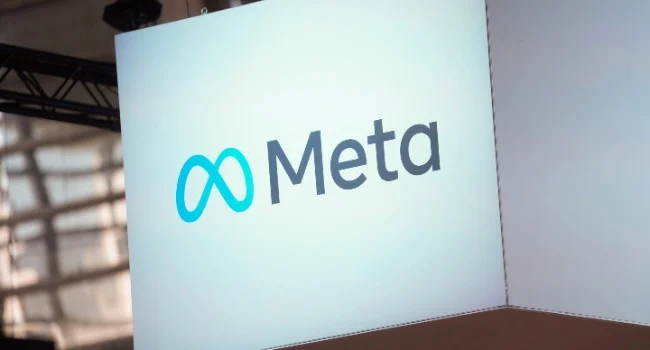
Meta has announced a $700,000 AI grant for Nigerian startups and developers, alongside innovators in six other countries, as the company expands its investment in artificial intelligence development across Africa, the Middle East and Türkiye.
The funding, unveiled on Tuesday, November 24, 2026, at Meta’s AI & Wearables Summit in Istanbul, will launch in 2027 under the AMET AI Impact Grant programme.
The initiative will support startups and developers building products using Meta’s AI tools and wearable technologies. Nigeria is eligible alongside Egypt, Kenya, South Africa, Saudi Arabia, Türkiye and the United Arab Emirates.
Importantly, the $700,000 represents the total funding commitment across all seven markets, not money reserved exclusively for Nigerian startups. Meta has not disclosed individual grant amounts, country allocations or application deadlines.
The announcement comes as global technology companies increasingly compete to attract developers who can turn artificial intelligence models into products for local markets.
How Nigerian startups can access Meta’s $700,000 AI grant
The Meta AI grant for Nigerian startups is intended to support developers creating practical applications with the company’s AI technologies, including its AI models and wearable devices.
While the programme is not expected to launch until 2027, Meta has already introduced the AMET AI Impact Hub, a platform bringing together educational resources, developer programmes, partnerships and examples of AI products being developed across the region.
The hub offers three major learning pathways.
AI Academy provides technical training for developers, students and entrepreneurs interested in understanding and building AI applications.
AI Literacy focuses on helping people understand artificial intelligence, including its opportunities, limitations and responsible use.
AI for Small and Medium-sized Businesses supports entrepreneurs seeking to apply AI tools to business operations, marketing and customer engagement.
Through these initiatives, Meta aims to reach more than five million people across Africa, the Middle East and Türkiye over the next three years.
The figure is a regional target, not a commitment to train five million Nigerians.
Kojo Boakye, Meta’s Vice President of Public Policy for Africa, the Middle East and Türkiye, said the investment is intended to help local innovators develop products that address the needs of their communities.
“The Impact Grant and Hub are about giving more builders the support, skills and resources to turn those ideas into useful products and services,” Boakye said.
For Nigerian developers, the immediate opportunity is access to technical resources and future funding. However, the actual financial benefit will depend on how Meta distributes the grants when applications open.
Meta is building on its existing AI investment in Nigeria
The new programme follows Meta’s partnership with Nigeria’s Federal Ministry of Communications, Innovation and Digital Economy to launch AI Academy Nigeria in August 2026.
That initiative, implemented with the 3 Million Technical Talent (3MTT) programme, the National Centre for Artificial Intelligence and Robotics and Robotics and Artificial Intelligence Nigeria (RAIN), was designed to strengthen Nigeria’s AI talent pipeline.
It combined technical training, a startup pitch competition and a six-week developer bootcamp.
Under the earlier initiative, two winning startups were eligible for $5,000 each in cash funding, $2,000 in Meta advertising credits and an opportunity to participate in Meta’s regional AI summit.
The newly announced $700,000 grant is separate from that programme.
The distinction matters because Nigeria’s AI ecosystem is increasingly producing developers and early-stage companies, but access to funding and commercial opportunities remains uneven.
In a previous analysis, TechSoma examined the gap between Nigeria’s high AI adoption and its limited ownership of AI technologies.
The challenge is not simply encouraging Nigerians to use artificial intelligence. It is enabling local developers to build commercially sustainable products and retain more of the economic value they create.
Meta’s new initiative could help address part of that challenge, particularly for startups already building applications using its technologies.
However, access to funding alone will not determine whether these businesses can scale. Computing costs, customer demand, local-language support and routes to market will remain important.
Nigerian AI startups are already building with Meta’s technology
At the Istanbul summit, Meta highlighted DAWN AI Study, a Nigerian education technology project using its Llama AI model to develop personalised learning experiences for school-age children.
The platform is designed to analyse speech and behavioural information to better understand individual learning needs and recommend tailored educational pathways.
It offers an example of how AI models can be adapted to address problems in Nigeria’s education sector.
Another Nigerian example is PublicaAI’s GovGuide, a multilingual assistant designed to help people access government information through chat and voice interactions.
As TechSoma previously reported, GovGuide supports English, Hausa, Igbo and Yoruba, demonstrating how locally adapted AI can improve access to public services.
These examples are significant because the usefulness of AI applications often depends on how well they respond to local languages, infrastructure and user needs.
For Meta, supporting such developers also strengthens the ecosystem around its technologies.
The more startups build useful products with Meta’s AI tools, the greater the potential adoption of those technologies across industries and markets.
This creates a commercial incentive for Meta to invest in developer communities, even when the immediate support takes the form of grants and training rather than direct product sales.
Meta announces separate $100,000-plus AI awards
Alongside the 2027 funding programme, Meta announced its AMET AI Awards 2026, featuring more than $100,000 in prizes across seven categories.
The awards recognise innovations emerging from Meta’s AI Academy and Wearables Studio initiatives, including projects focused on accessibility, economic development, wearable technology and startup innovation.
Categories include AI Builder of the Year, Startup of the Year, Emerging Innovator of the Year, AI for Accessibility and Inclusion, and AI for Social and Economic Impact.
The awards are separate from the $700,000 grant and should not be counted as part of its funding allocation.
What comes next for Nigerian developers?
For Nigerian startups interested in Meta’s new grant, several important questions remain unanswered.
Meta has not confirmed when applications will open in 2027, how much individual recipients could receive, or whether the funding will be distributed equally across participating countries.
The company has also not published detailed eligibility requirements or confirmed whether grants will be equity-free.
Until those details are released, Nigerian developers cannot determine precisely how much support they may qualify for.
Still, the programme reinforces Nigeria’s position as an important market in Meta’s regional AI development strategy.
The opportunity now extends beyond learning how to use existing AI tools. It is about whether more Nigerian startups can turn those tools into products that solve real problems, attract customers, and build sustainable businesses.
For Nigerian founders, that will ultimately be a more meaningful measure of success than the size of the grant announcement itself.