
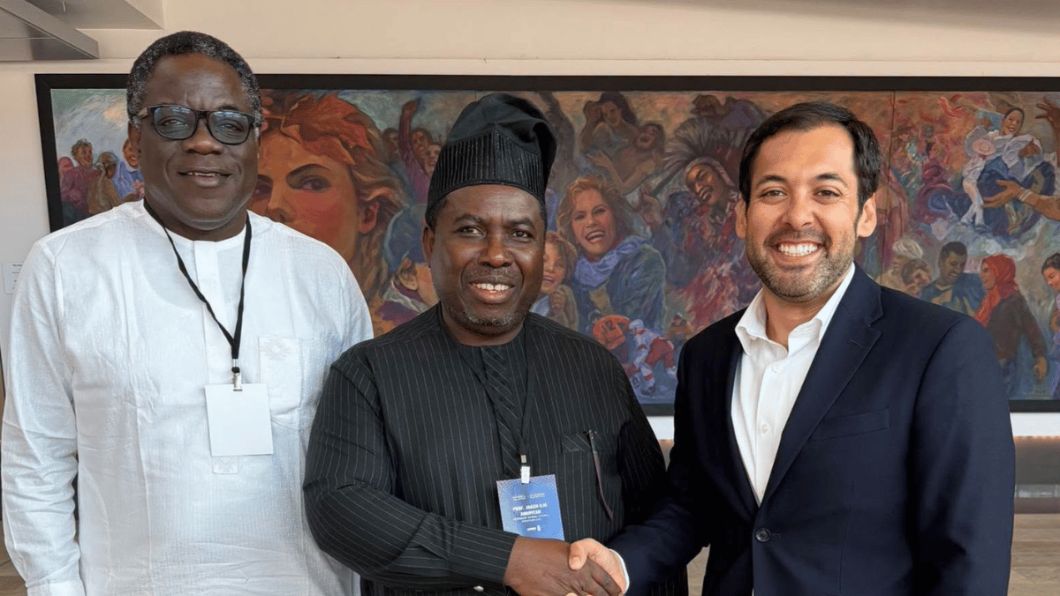
Nigeria’s electoral umpire has taken its AI conversations to the international stage. INEC Chairman Prof. Joash Ojo Amupitan met with Google’s Global Lead for Civic Responsibility, David J. Lopez, in Ottawa, Canada, as part of a broader push to strengthen the Commission’s technological readiness ahead of the 2027 general election.
A conference built around AI and elections
The meeting happened on the sidelines of the Global Conference on Responsible AI and Elections, a three-day gathering that ran from September 9 to 11 and brought together election management bodies, technology companies and international organisations to examine how artificial intelligence is reshaping electoral processes worldwide. The conference’s focus was twofold: exploring the opportunities AI presents for election administration, and confronting the risks it introduces, from misinformation to data integrity concerns.
Amupitan was accompanied throughout the Ottawa engagements by INEC’s Director of Information and Communication Technology, Dr Lawrence Bayode.
Amupitan’s message: readiness matters more than the tools themselves
Before the Google meeting, Amupitan used his conference address on September 10 to lay out INEC’s thinking on AI adoption. His central argument was that how well AI works in elections depends far more on institutional readiness, governance structures and safeguards than on how advanced the underlying technology is. He framed responsible AI as an organisational capability that has to be built deliberately, rather than something that can simply be bolted on as an IT project.
He reportedly outlined five guiding principles for INEC’s AI initiatives, among them human oversight, transparency and accountability, and data protection. He also pointed to areas where INEC is already exploring AI beyond core election operations, including AI-assisted responses to voter questions, tools to support the registration process, and faster ways for citizens to access electoral information.
Why this matters for 2027
Nigeria’s electoral process has faced persistent questions around technology reliability, from server capacity during results transmission to the security of voter data. Engaging directly with Google, Microsoft and IFES signals an attempt to draw on outside expertise before AI becomes a bigger factor in how elections are run and how misinformation spreads around them.
None of the reports out of Ottawa point to a specific product, tool or formal partnership agreement emerging from the Google meeting itself. What’s been confirmed is that the conversation happened, who was in the room, and the broad themes it covered. Whether it leads to a concrete collaboration, such as safeguards against AI-generated election misinformation or support for INEC’s planned citizen-facing AI services, is something to watch for in the coming months as the Commission firms up its 2027 technology roadmap.
For now, the Ottawa trip fits a pattern INEC has been building over the past year: positioning itself early in global conversations about AI governance, rather than reacting to problems after they surface during a live election cycle.