

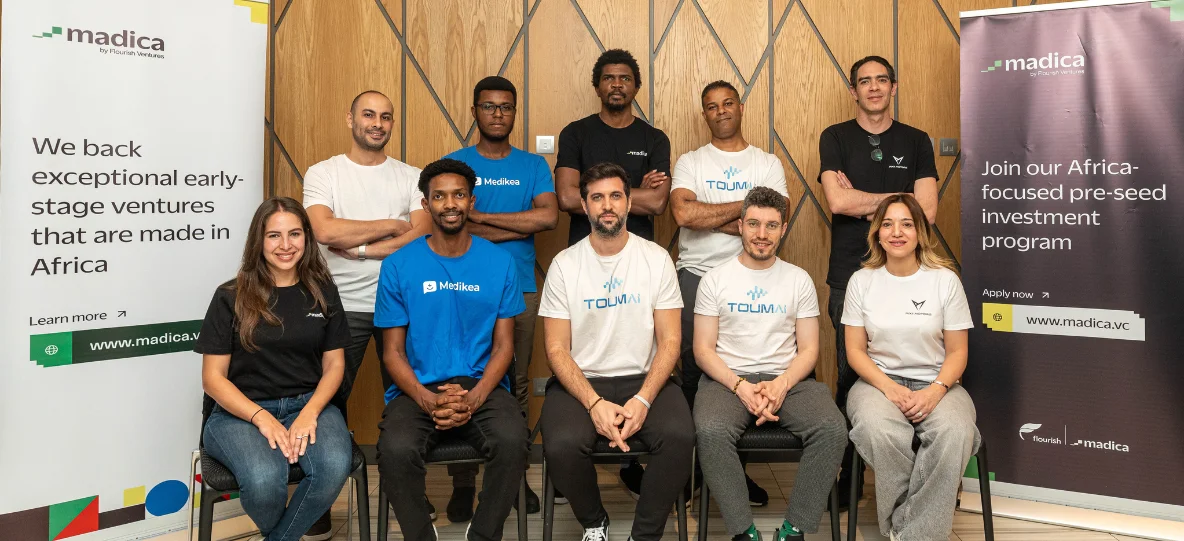
Madica, a structured pre-seed investment programme for African startups, has secured $6 million in fresh capital from Flourish Ventures. The money extends its investment pilot by three years and will fund 25 to 30 more early-stage companies across the continent.
What the funding does
Madica launched in 2022 and is led by Emmanuel Adegboye. It is sector-agnostic and affiliated with Flourish Ventures, a global early-stage venture firm. It pairs early funding with hands-on company-building support for founders that established venture networks tend to overlook.
The new capital extends that model for another three years and lets Madica deepen the support it gives each founder.
Track record so far
Madica has backed 18 startups across 10 African countries and 12 sectors. These include artificial intelligence, climate technology, semiconductors and biotechnology.
By Madica’s own account, its portfolio companies have attracted follow-on funding worth about twice its original investment on average. The programme reads this as an early sign of investor confidence, though it is a self-reported figure.
Who it backs
Every company in the portfolio is majority African-owned. More than half have at least one female co-founder, and 39 percent are led by female chief executives. Madica says this reflects a deliberate effort to find talent that traditional investment circles often miss.
An experiment with a bigger question
Madica describes itself as an experiment. It set out to test whether pairing capital with practical support can help overlooked founders build companies that deliver real venture outcomes.
Efayomi Carr, an investment partner at Flourish Ventures and a co-founder of Madica, said the first three years strengthened the team’s belief that African entrepreneurs can build globally competitive businesses when they get the right funding and support. The team also says the early lessons and signals are encouraging, but that building lasting companies and judging venture outcomes takes much longer than three years.
Why the extension matters
The longer timeline lets Madica track a bigger group of startups and see how early traction turns into sustained growth. It will also examine how much of that progress comes from its own model. A key test is whether the portfolio can generate venture returns through exits.
Madica expects its findings to help refine its approach and give other investors practical lessons for backing early-stage businesses in Africa.
What it means for founders
Pre-seed capital remains hard to find for many African founders, especially those outside the best-connected networks. The programme says it is still taking applications from early-stage startups headquartered in Africa, so founders can pitch through its website.
For the wider ecosystem, the real signal will come later. If the extended pilot produces strong follow-on rounds and exits, it could encourage more investors to back founders at the earliest stage.