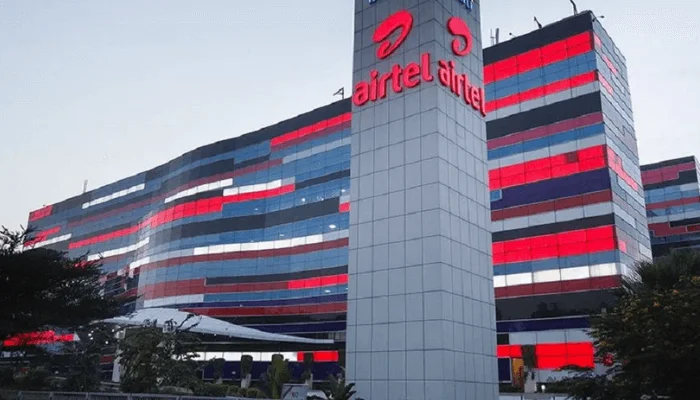
Airtel Nigeria deployed 200 solar-powered telecom towers between April 2025 and March 2026 across rural and urban areas in an attempt to reduce reliance on high-cost diesel and increase coverage. The results so far are operationally impressive: through these lean solar sites, uptime has increased by 21% and monthly maintenance costs have dropped by 90% in Nigeria.
That is the kind of infrastructure efficiency that gets boardrooms excited. But in Nigeria’s telecom market, efficiency gains mean very little if the competitor gap is still widening.
The Scale Problem
Nigeria is a market that rewards scale above almost everything else. MTN Nigeria holds over 95 million subscribers, representing 51.7% of the market, while Airtel Nigeria holds a 34.2% share. That subscriber gap translates directly into infrastructure investment capacity. MTN spent $580.4 million on infrastructure, including towers and fibre optic cables, in Q1 2026 alone.
Read that again. MTN spent more than half a billion dollars on infrastructure in a single quarter. Airtel deployed 200 solar towers in a full year. The ambition behind Airtel’s solar push is not in doubt, but the firepower behind it looks modest by comparison.
MTN is also cutting costs through its energy infrastructure at scale. MTN Nigeria cut annual tower-related operating expenses by $70 million through revised energy indexing, channelling savings into 2,500 new 4G sectors.
The Diesel Context Makes Airtel’s Move More Urgent
To be fair to Airtel, the pressure to go solar is very critical. Following the removal of fuel subsidies in 2023, diesel prices surged by as much as 200% within a year, and telecom operators in Nigeria now spend $400 million annually to keep towers running. Sitting on a diesel-heavy network in this environment is a slow bleed. Diesel in Nigeria is currently priced between ₦2,400 and ₦2,900 per litre.
Airtel is not alone in responding to this pressure. Working with ENGIE Energy Access, Airtel Africa has already reduced diesel use by more than half at sites in Zambia and Congo. The Nigerian solar push follows that same playbook, and the maintenance cost reduction of 90% at lean sites suggests the model works.
Revenue Picture: Strong, but Still Second
Airtel Nigeria’s underlying business performance is solid. Airtel Nigeria maintained its position as the company’s leading single market with $1.6 billion in revenue, representing a 25% share of Airtel Africa’s group revenue. Data revenue reached $820 million, accounting for 51% of total revenue, with data usage per customer increasing by 30.8% to 11 GB per month and smartphone penetration reaching 54.9%.
These are strong numbers. But MTN Nigeria remains the group’s most profitable single market on the continent, and the subscriber gap of roughly 37 million users means Airtel is generating its revenue from a structurally smaller base.
An Upgrade, Not a Game-Changer
Two hundred solar towers improve Airtel Nigeria’s cost structure and network uptime. In a market punished by grid instability and diesel inflation, that matters. But catching MTN requires more than operational efficiency; it requires the kind of capital deployment and coverage density that 200 towers, however smart, cannot deliver on its own.