

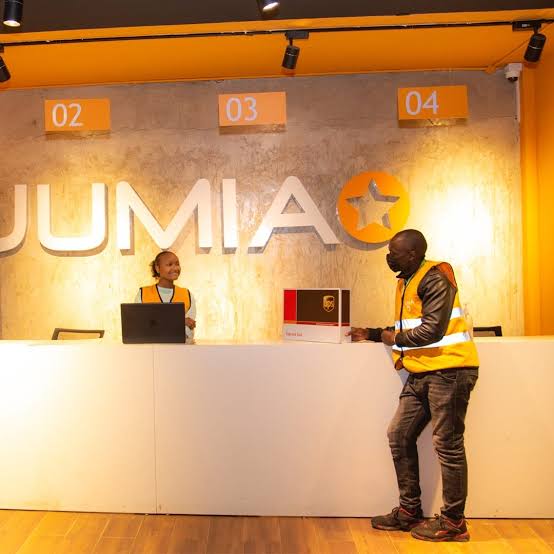
When Jumia hit the New York Stock Exchange in 2019, the pitch to global investors was as bold as the continent itself: “The Amazon of Africa.” A map-spanning ambition that promised to unite 14 disparate markets under one digital roof. Seductive stuff.
By early 2026, that continental dream has been replaced by something far more brutally practical.
While headlines keep focusing on multinationals like Procter & Gamble and GSK pulling out of Nigeria, Jumia’s doing something different. It’s not leaving. It’s doing a radical re-entry. By surgically exiting markets like South Africa, Tunisia, and Algeria through late 2024 and 2025, the e-commerce giant isn’t retreating in defeat. It’s building a fortress.
The “Amazon of Africa” is dead. What’s replacing it is a leaner, more aggressive “Amazon of Nigeria.” With a target to hit EBITDA breakeven by Q4 2026, Jumia’s leadership has arrived at a blunt conclusion: to save the company, they have to win Nigeria first.
The Death of the Pan-African Myth
For a decade, Jumia’s geographic footprint was its primary vanity metric. The problem? Operating across 11+ different regulatory and currency environments turned into a “Pan-African Tax” that the company’s bottom line simply couldn’t absorb. Every new border meant a new fight with fragmented payment systems and customs regulations that inflated overhead.
By February 2026, the data got impossible to ignore. The “long tail” of smaller markets was dragging down the whole engine. Markets like Algeria and Tunisia were contributing less than 3% of total Gross Merchandise Value (GMV) while eating up a disproportionate share of management focus.
Shutting them down was a strategic amputation to stop the financial bleeding.
This shift marks the end of “growth-at-all-costs.” They are consolidating everything into the Naira-denominated engine of Nigeria, betting that a 90% market share in one powerhouse is worth more than a 5% share scattered across a dozen underperformers.
Building the JForce and Starlink Moat
In this new “Fortress Nigeria” era, Jumia has positioned itself as a critical technology gateway. The centerpiece of that shift is its key distribution partnership with Starlink.
The deal expanded significantly through 2025, allowing Jumia to solve two problems at once: high-ticket revenue and user retention.
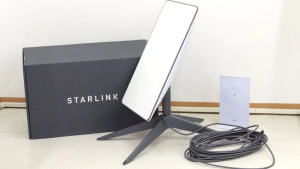
Selling hardware like Starlink kits is a smart hedge against Nigeria’s persistent currency volatility. Unlike low-margin consumer goods, tech hardware holds its value and pulls in a demographic with actual disposable income.
Every Nigerian who gets online through a Starlink kit bought on Jumia becomes a permanent resident of Jumia’s digital ecosystem.
The Upcountry Moat and Rural Logistics
While global competitors like Temu and Shein scrap for Lagos’s middle class, Jumia spent 2025 digging a moat in the Nigerian hinterlands.
Recent data shows that 61% of Jumia’s packages are now delivered to rural areas and secondary cities like Kano, Onitsha, and Aba.
That Upcountry dominance sits on two assets:
The JForce Network: An army of thousands of JForce sales consultants acting as the human face of e-commerce in regions where digital trust is low.
Proprietary Logistics: An integrated logistics network with hundreds of pick-up stations built specifically for navigating Nigeria’s infrastructure gaps.
Efficiency Over Expansion: The Path to Jumia’s 2026 Profitability
In 2026, Jumia is obsessing over cost per delivery. The company has transitioned into monetizing its supply chain more broadly, including Logistics-as-a-Service for third-party vendors.
The numbers back this up: Jumia reduced fulfillment expense per order to $1.97 in Q4 2025, a 12% year-over-year reduction.
By tightening the “last mile,” Jumia’s ensuring that even as the Naira fluctuates, the physical cost of moving a package stays competitive.
It’s about owning the most efficient physical network in a country where “getting there” is the hardest part.
Why the Jumia Fortress Nigeria Strategy is the Blueprint for African Tech
Jumia’s retreat from the rest of Africa isn’t a funeral; it’s a refining fire.
Heading into Q4 2026, the EBITDA breakeven target looks like a mathematical probability.
If Jumia pulls it off, it’ll prove that Nigeria isn’t just a difficult market to manage. It’s a large enough economy to sustain a standalone global tech giant.
The “Amazon of Africa” was a beautiful dream; the Amazon of Nigeria is a sustainable business.