

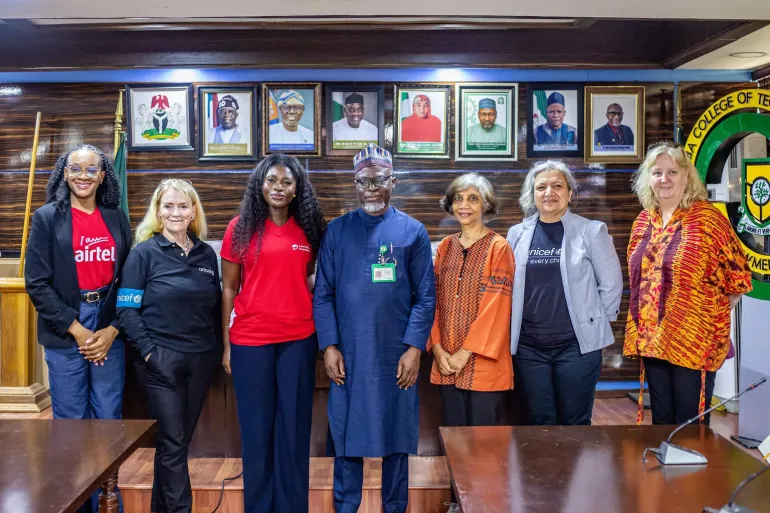
A partnership between Airtel Africa and UNICEF has now reached about one million students across Nigeria, according to a joint statement issued after a delegation visit to Lagos and Abuja on 21 October 2026. The programme has connected nearly 2,000 schools and reached more than 20,000 teachers.
What the partnership has delivered
More than 19,000 of those teachers have been trained in digital literacy. That matters because devices and connectivity achieve little if teachers are not confident using them in class.
The delegation visited schools and youth programmes to see how the work with the Nigerian government is widening access to free digital learning, skills and livelihood opportunities. Garreth Spillane, a Foundation committee member and Chief of Staff to the Chairman of Airtel Africa, led the Airtel side.
Why zero-rating is the key
Data costs keep many Nigerian families from using online learning tools, even when the content is free. The partnership addresses this by zero-rating key platforms, so students can open them without spending airtime or data.
The zero-rated platforms are the Nigeria Learning Passport, the Federal Ministry of Education’s Inspire and Ignite platforms, the Digital National Education Management Information System, and the Youth Agency Marketplace, known as YOMA.
The Nigeria Learning Passport alone has more than 2.5 million registered students and nearly 100,000 registered teachers. UNICEF’s earlier figures show how fast it has grown, from 117,585 registrations in 2022 to over 750,000 in 2023.
How it started
The current results trace back to a five-year Airtel Africa and UNICEF partnership announced in November 2021 across 13 African countries. In December 2022, Airtel Nigeria and UNICEF set a first-phase target of connecting 620 primary schools and reaching 300,000 students. Airtel committed about $1.3 million in free data for learners in the first year.
The programme has since grown to more than three times that student target.
Government alignment
UNICEF Nigeria’s Deputy Representative, Dr Rownak Khan, praised the Federal and Lagos State education ministries and Airtel for backing the initiative, especially the zero-rating. She noted that the Nigeria Learning Passport was introduced to keep learners engaged when COVID-19 closed schools.
The Minister of State for Education, Professor Suwaiba Sa’idu Ahmad, said transforming the sector requires partnerships that match government priorities and learners’ needs.
The scale of the challenge
The need is large. UNICEF data from February 2025 shows that about 10.5 million Nigerian children of primary-school age are out of formal schooling, with girls making up around 60 percent of that group. Only 36 percent of Nigerians use the internet. One million connected students is a real gain, but it covers a small share of the children who need support.
What to watch next
The five-year partnership is nearing its original end date. The key questions are whether it will be extended and whether the reach will move beyond urban and semi-urban schools into the underserved rural communities UNICEF says it wants to prioritise. Sustained funding for teacher training and device maintenance will also decide whether the gains last.