

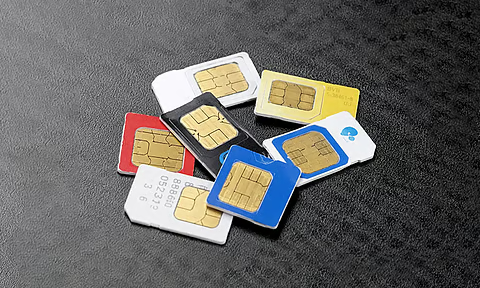
Your phone number already does more than make calls. It unlocks your bank account. It receives the one-time passwords that protect your online shopping. It verifies your identity when you log into government services.
In South Africa, that phone number is about to become something much more reliable. The government and mobile operators are overhauling the SIM registration system for the first time since 2009. The goal is to connect every SIM card directly to the Department of Home Affairs database in real time. This turns your mobile number into a trusted digital identity.
This is not just another bureaucratic update. It is a fundamental shift in how the country fights fraud, protects citizens, and builds a digital economy that actually works.
The Old System Was Never Built for This
When South Africa introduced the Regulation of Interception of Communications Act (RICA) in 2009, the world looked different. Smartphones were still new. Mobile banking was a novelty. Criminals had not yet figured out that a SIM card was the easiest way to steal money.
The old system worked like a document check. You showed your ID and proof of address. The mobile operator recorded your details. But the system verified the documents, not the person holding them. That created a massive loophole.
Criminals quickly learned to exploit it. They bought pre-registered SIM cards linked to someone else’s identity. They registered SIMs using stolen or fake documents. When they committed fraud, banks and police could not trace the crime back to the real culprit.
Telecommunications fraud costs South Africa more than R5.3 billion every year. Nearly 60% of mobile banking fraud comes from SIM-swap attacks. Criminals have used improperly registered SIMs in banking fraud, cash-in-transit heists, extortion, contract killings, and kidnappings.
The system was broken. The new approach fixes it at the source.
Real-Time Verification Changes Everything
Under the proposed reforms, mobile operators will verify your identity against the Department of Home Affairs database before activating your SIM. This happens in real time. The system checks your citizenship, immigration status, and official identity records directly against government data.
This makes one of the biggest registration scams much harder. Criminals can no longer register SIM cards using stolen or fake identity documents if operators must verify those documents against the official database. The verification happens instantly. There is no room for forged papers or stolen identities to slip through.
The Department of Home Affairs already stores this information. Births, deaths, marriages, identity records. All of it sits in a database that can now serve as the backbone for SIM verification. The technology exists. Banks already use similar verification systems. South Africa is simply applying the same standard to mobile phones.
This Makes Banking and Digital Services Safer
Your mobile number has become one of South Africa’s most trusted digital credentials. It secures access to bank accounts, online payments, and messaging platforms. But that trust was built on a weak foundation. If criminals could easily get SIMs linked to other people’s identities, the entire system was vulnerable.
The new registration system changes that. When every SIM is verified against government records, banks can trust that the number belongs to the person using it. Fintech companies can onboard customers with confidence. Government services can authenticate citizens digitally without worrying about identity theft.
This matters for South Africans. It means fewer scams. Fewer cases of someone stealing your identity to open accounts in your name. Fewer headaches when you try to prove who you are online. The system finally works the way it should have worked all along.
The Push for Biometrics Adds Another Layer
Some industry experts are calling for even stronger measures. Mobile industry veteran Johan van Graan wants Parliament to enforce biometric verification for all SIM cards, including prepaid ones. This means using a live photo or fingerprint to match the applicant against their ID in the Home Affairs database.
Biometric authentication is already used in Thailand, Nigeria, Uganda, Mozambique, India, the UAE, and Peru. The technology exists, and banks already use it widely. It adds a powerful weapon against identity fraud, which costs the South African economy at least R1 billion each year.
The government has not confirmed whether biometrics will be part of the final system. South Africa wants identity verification that is strong enough to stop criminals and simple enough for ordinary citizens to use.
This Connects to Digital Identity Vision
South Africa is not stopping at SIM cards. Earlier this year, the government published draft regulations for a national digital ID system. This system would let citizens verify their identities digitally while keeping their physical ID documents.
The SIM registration reforms fit directly into this vision. When banks, telecom operators, and government agencies all use the same high-quality identity infrastructure, the entire digital ecosystem becomes more trusted. A verified SIM becomes a credential you can use across private and public services.
This matters for the digital economy. When identity is trusted, more services move online. More people feel safe using digital banking. More businesses invest in digital products. The entire economy benefits from a system where everyone knows who they are dealing with.
What This Means for You
For most South Africans, the change will be invisible. You will register your SIM the same way you always have. The difference is what happens behind the scenes. Instead of just checking your documents, the operator will verify your identity against government records.
Your SIM becomes more than a way to make calls. It becomes a trusted credential that banks, government, and businesses can rely on. Your identity is protected. Your money is safer. The criminals who used fake SIMs to commit fraud lose their easiest tool.
This is not about surveillance. This is about fixing a broken system that has cost South Africans billions and enabled serious crime. The technology exists. The database exists. The only thing missing was the political will to connect them.
South Africa now has that will.