


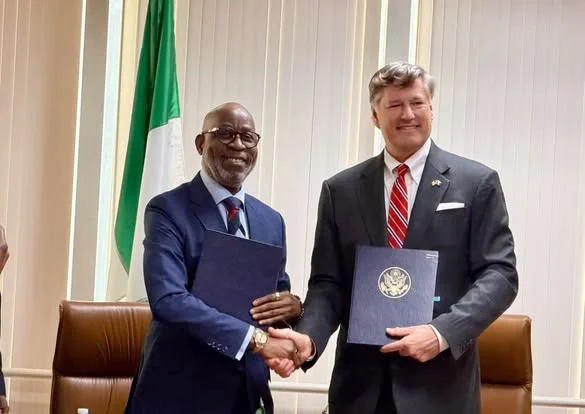
Nigeria and the United States have signed a framework to bring more American investment into the country’s mining sector. The Minister of solid minerals, Dele Alake, signed it in New York with US Deputy Secretary of State Christopher Landau. It covers geological data, exploration, mineral development and processing, infrastructure, and technical capacity building.
The headline figure of $700 billion is the official estimate of Nigeria’s mineral wealth. It is not money anyone has promised. No projects, investors or firm timelines have been made public, and the minister has said the two governments still have to identify viable projects and commercial partners in the coming months.
So the deal is an opening, and what Nigeria does with it will matter more than the signature.
Lithium is where the stakes are highest
Lithium is a core ingredient in the batteries that power electric vehicles and store renewable energy. Nigeria has deposits, and foreign interest has followed, including from Chinese firms, which have been among the most active investors in the emerging lithium sector.
Now a second major power is arriving. Competition for Nigeria’s lithium is no longer a possibility. It has started.
Raw rock earns little
Digging up lithium ore and shipping it out is the least profitable step in the chain. The real money sits in refining, processing and battery manufacturing. A country that only exports ore watches the value of its own resource get captured abroad.
The minister has said as much, stressing that Nigeria wants more local processing, better jobs and stronger skills rather than a role as a raw material supplier. That is the right goal. But processing needs technology, and technology needs people who can run it.
Money alone will not close the gap
Investors can fund a plant, but they cannot make Nigeria a capable operator of one. Without trained geologists, chemical engineers, metallurgists and technicians, foreign partners will bring their own staff and their own methods. Nigerians end up as labourers on projects they do not control.
The framework’s mention of technical capacity building is encouraging, but it needs to become specific. That means named training programmes, university partnerships and technology transfer written into every investment contract.
What Nigeria should demand
Nigeria has leverage because these deposits cannot be replaced. It should use that leverage to secure a few concrete things:
- Processing plants built inside the country, not promised for later
- Mandatory training and hiring of Nigerian engineers and technicians
- Shared access to geological and processing data
- Support for research centres focused on battery materials
The government has also launched a grant programme to fund up to 70 percent of exploration costs for licence holders. That helps find reserves, but finding lithium is the easy part. Refining it is where the skill lies.
Choosing the next chapter
Nigeria has watched oil leave as crude and return as expensive fuel. Lithium offers a chance to avoid the same mistake, but only if the technology is built at home.
The framework with Washington is a useful start. If Nigeria turns it into factories, training and local expertise, it will have captured the value of its lithium. If not, the deal will be remembered as another way raw materials left the country.