

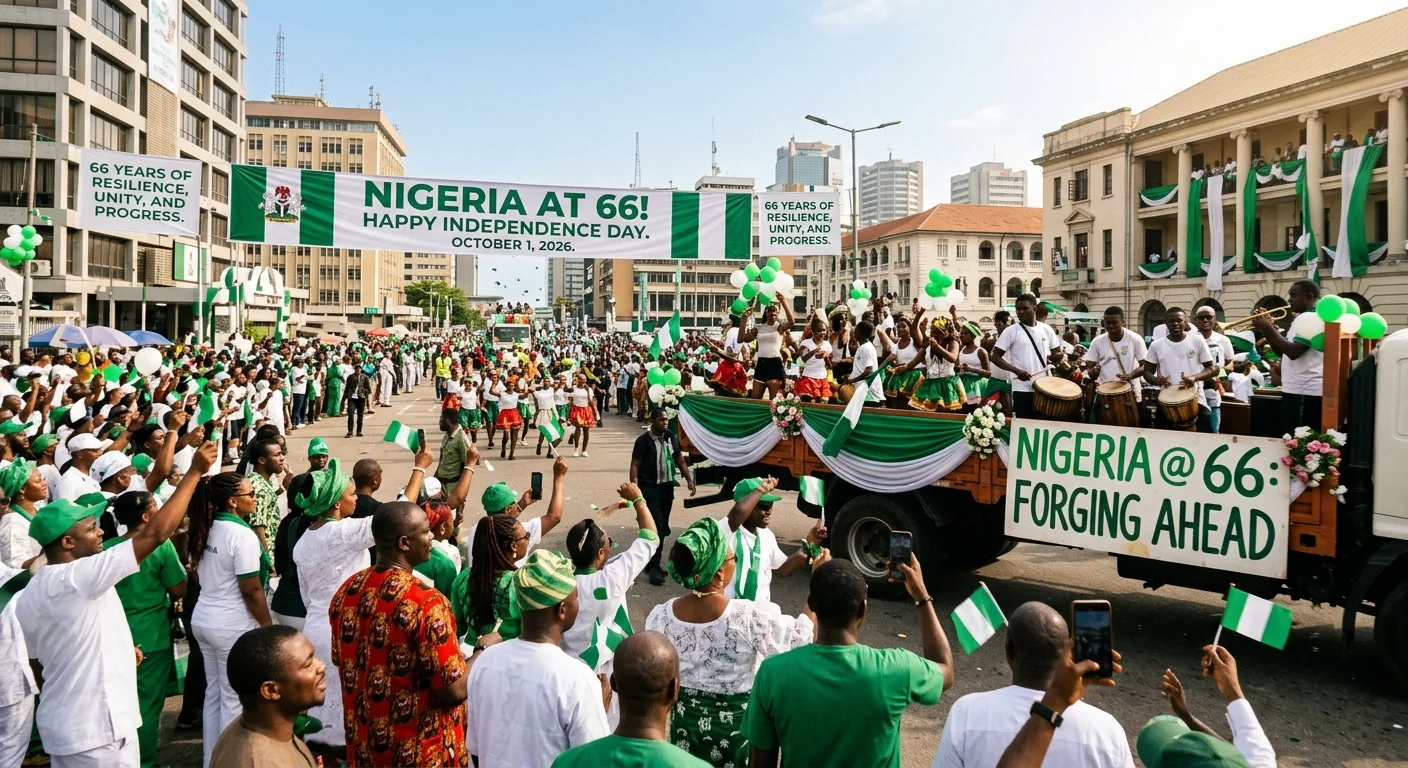
When Nigeria became independent on October 1, 1960, the idea of a billion-dollar company built on software would have sounded like fiction. Sixty-six years on, startups are among the country’s most visible exports of ambition, and the numbers show how far the sector has travelled.
From Scarce Landlines to Lagos Tech Hubs
For decades, owning a phone in Nigeria was a privilege. That changed when GSM services launched in 2001, putting connectivity within reach of ordinary people for the first time. Entrepreneurs followed the networks. Payments companies emerged to solve everyday problems of trust and access, and Interswitch became the country’s first unicorn in 2019. Flutterwave reached a multibillion-dollar valuation in 2021, and Moniepoint joined the unicorn club in 2024. Lagos is now spoken of alongside Nairobi and Cape Town as a place where serious companies are built.
A Law That Gave Founders Legal Footing
Policy has caught up, if slowly. The Nigeria Startup Act, signed into law in 2022, gave startups formal recognition and a framework for incentives. For founders who spent years operating in regulatory grey areas, this was a milestone. Implementation still determines whether the promise holds, but the principle that government should support the sector is now settled.
Investors Are Back, but They Are Choosier
After a difficult stretch of subdued venture activity, the first half of 2026 brought encouraging figures. Nigerian startups raised about $254 million, according to continental deal-tracking data. That is the first time the country has passed the $250 million mark in a six-month period since 2022. Equity funding reached $214 million, the highest of any African country, and Nigeria also had the most startups raising at least $100,000, with 40 companies crossing that line.
The spread of that money matters as much as the total. Fintech still attracts the biggest share of funding across Africa, but investors are backing other sectors too. Deeptech company Terra Industries raised significant funding, and mobility startup MAX secured about $32 million in equity and debt. The founders behind Terra were in their early twenties, which tells you something about who is now building in Nigeria.
The Gaps Independence Has Not Closed
The picture is not all bright. Funding is concentrating in larger, more mature companies, while early-stage founders struggle to raise the small seed cheques that keep new ideas alive. Unreliable electricity still adds cost to every business. Currency swings make dollar-denominated investment harder to price. And the steady departure of skilled engineers abroad drains the talent pool that the ecosystem depends on.
These are not new problems, which is the uncomfortable part. A country that has waited 66 years for stable power cannot treat it as a footnote in a startup story.
What the Next Chapter Demands
Nigeria’s tech story is one of people solving problems the state and the market left unattended. The next stage needs patient early-stage capital, reliable infrastructure and regulation that rewards builders instead of burdening them. If those pieces come together, the founders of today could do for the economy what the telecoms revolution began, and give a new generation a stake in the country’s future.
Independence Day is a good moment to celebrate that progress. It is also a fair moment to ask what the next 66 years should look like.