
Namibia embraces artificial intelligence to change how millions of African children learn. The southern African nation launched YYeni AI Lüderitz in July 2025, a five-month pilot program that puts AI tutors alongside human teachers at Lüderitz Secondary School. Unlike flashy tech promises that never materialize, this experiment comes with real backing from Telecom Namibia and direct support from the Ministry of Education.
The stakes are high. If this works, 25 schools and 2,500 students will get AI-powered learning by 2026. If it fails, Namibia joins the long list of countries where education technology promises fell flat.
Small Town, Big Tech Experiment
Lüderitz sits on Namibia’s southwestern coast, far from major tech hubs. The town’s secondary school now hosts one of Africa’s most ambitious education experiments.
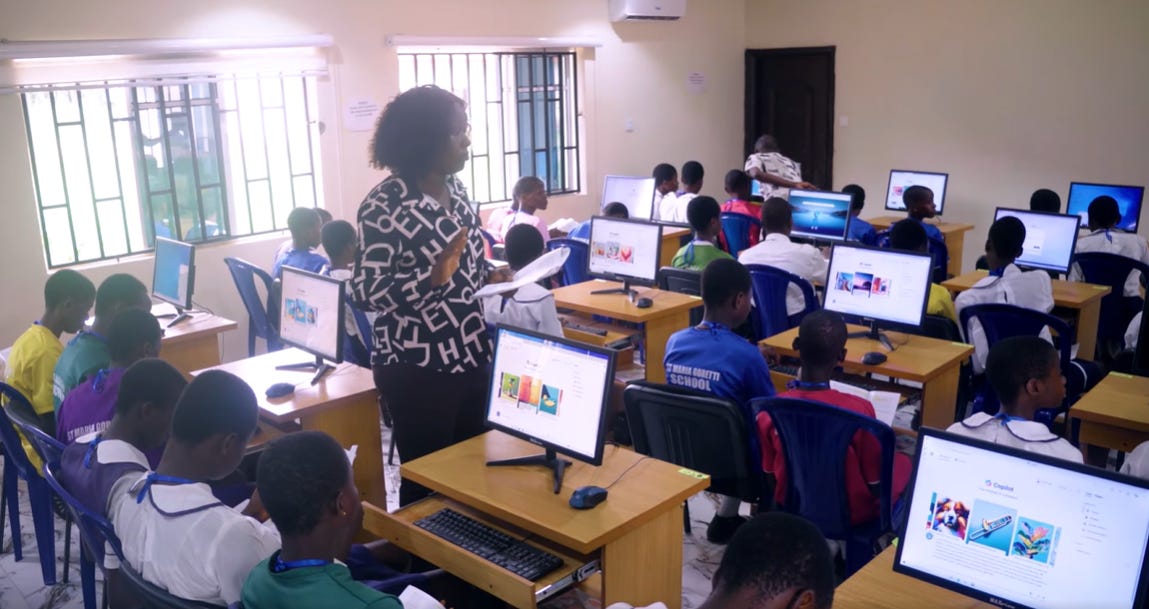
The pilot doesn’t replace teachers with robots. Instead, AI tutoring systems work alongside human educators to deliver personalized learning experiences. Students get instant feedback, customized lessons, and support that adapts to their individual learning pace.
“Our goal is to enable progress through reliable, high-speed connectivity,” said Dr. Stanley Shanapinda, CEO of Telecom Namibia. The telecommunications company provides the digital infrastructure that makes the AI systems work.
This measured approach reflects hard lessons learned from previous education technology failures across Africa. Rather than wholesale replacement of traditional teaching, the program integrates AI tools into existing classroom structures.
Why Namibia Needs This Now
Namibia faces serious education challenges that make AI tutoring particularly attractive. Recent research shows the country struggles with infrastructure gaps, socio-economic inequality, teacher digital competency gaps, and policy implementation problems that worsen educational outcomes.
Less than 2% of Namibia’s 804,000 students in state and private schools currently have adequate access to digital learning tools, according to data from New Era.
The AI pilot addresses these problems directly. AI tutors don’t get sick, don’t need salaries, and can work 24/7. They provide consistent quality instruction regardless of location or resources.
This matters because traditional solutions aren’t working fast enough. Training more teachers takes years. Building schools takes even longer. AI tutoring can scale immediately once the technology proves effective.
Africa’s Growing AI Education Movement
African EdTech investments reached $200 million in 2024, signaling global confidence in technology-driven education solutions, according to Disrupt Africa.
Google committed $37 million in cumulative contributions to support Africa’s AI advancement, including education initiatives. The tech giant also funded AI training for 12,000 young Africans through South Africa’s WeThinkCode academy.
However, Africa still receives just 0.3% of the $184 billion in projected global AI investments for 2025, according to World Economic Forum analysis. This funding gap makes locally-driven initiatives like Namibia’s pilot even more important.
The African Union declared AI a strategic priority in May 2025, noting that “over 83% of AI startup funding in Q1 2025 went to Kenya, Nigeria, South Africa, and Egypt.” The organization warned that “AI should help narrow the digital divide, not widen it.”
Real Problems, Practical Solutions
The YYeni AI Lüderitz pilot tackles specific educational challenges with targeted technology solutions.
- Personalized Learning: AI systems adapt to each student’s learning style and pace. Struggling students get extra support and practice. Advanced learners receive challenging material that keeps them engaged.
- Teacher Support: AI tools don’t replace educators but enhance their capabilities. Teachers get real-time data on student progress, automated grading for basic assignments, and insights into where students need help.
- Access and Equity: AI tutoring works regardless of location. Rural students get the same quality instruction as urban ones. Language barriers decrease as AI systems support multiple local languages.
- Cost Efficiency: Once developed, AI tutoring systems cost much less than hiring and training additional teachers. This makes quality education more affordable at scale.
Technology Meets Reality
Telecom Namibia’s infrastructure investment makes the AI tutoring system technically feasible. The company provides dedicated high-speed internet connections that enable real-time AI interactions without frustrating delays.
This infrastructure focus reflects lessons from failed technology projects across Africa. Reliable connectivity forms the foundation for any successful AI education initiative.
The pilot program collects detailed data on learning outcomes, student engagement, and teacher satisfaction. This evidence-based approach helps identify what works and what needs improvement before scaling up.
What Success Looks Like
The pilot’s success depends on measurable improvements in student learning outcomes, teacher satisfaction, and operational efficiency. Clear metrics help determine whether AI tutoring delivers promised benefits.
Early indicators include student engagement levels, test score improvements, and teacher feedback on AI tool effectiveness. The five-month timeline provides enough data to make informed decisions about expansion.
If successful, the model scales to 25 schools and 2,500 students by 2026. This expansion tests whether promising results from one school translate to diverse educational contexts across Namibia.
The YYeni AI Lüderitz pilot offers a practical test of whether AI can solve real education problems in resource-constrained environments. Results from this small coastal town could influence education policy across Africa and beyond.
For now, students and teachers in Lüderitz are writing the first chapter of Africa’s AI education story. Their success or failure will determine whether artificial intelligence becomes a tool for educational equity or another unfulfilled promise.