


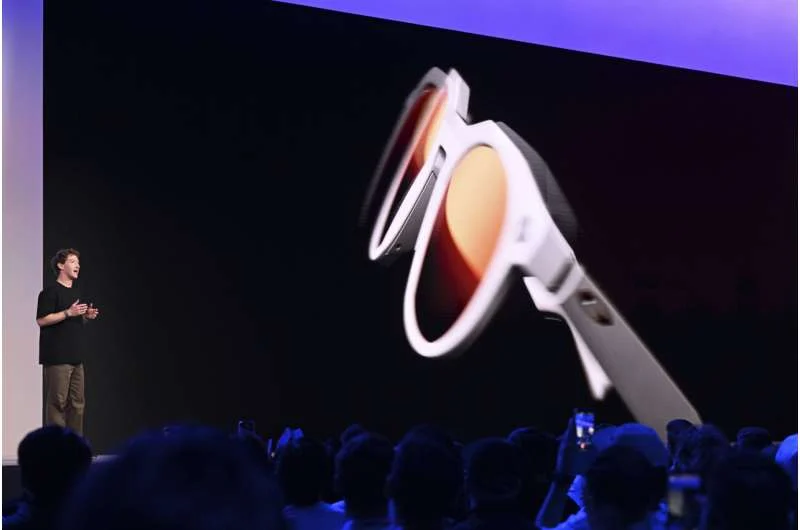
Meta wants your next video call to happen without you holding a phone. At Connect on September 23, the company announced Hologram, a photorealistic avatar feature for its new Meta VR Glasses and the Meta Ray-Ban Display frames.
What Meta Is Actually Launching
Hologram is the new name for what Meta previously called Codec Avatars. The idea is simple. Instead of showing your face on camera, a lifelike digital version of you appears in the call.
Ray-Ban Display users should get it first, with Meta pointing to the coming months. The VR Glasses follow in spring 2027. Meta says the glasses weigh about 100 grams and start at $1,299.
How You Create Your Hologram
On the Ray-Ban Display, setup happens through your phone. You scan your face from several angles with the camera in the Meta AI app. The app then asks a few conversational questions, such as what a perfect day looks like to you, so the system can learn how your voice sounds in different moods.
That second step matters because the Hologram is driven by audio, not a face camera. Meta says its model works out your expression from what you say and how you say it. Early hands-on reports describe the result as convincing, and in some cases convincing enough that a reporter did not immediately realise they were talking to an avatar.
Different Experiences on Different Devices
The two devices do not offer the same thing. On Ray-Ban Display, the Hologram appears as a flat, slightly dimensional image on a call. On the VR Glasses, Meta demonstrated a full-size, full-body Hologram standing in the room with you. The VR Glasses also track your eyes and face, which helps make that version more lifelike.
There is a catch for now. VR Hologram calls are limited to glasses-to-glasses conversations, and someone on Ray-Ban Display cannot call a person wearing VR Glasses.
Where You Can Use It
Meta says Hologram will work with the calling app you already use, including WhatsApp and Zoom. People joining from a phone or laptop will see your Hologram on their screen, so they do not need special hardware. Meta has not yet said when Zoom support will arrive or how it will work.
Built-In Transparency
Meta has added safeguards that tell people when they are not looking at a real face. A small ghost icon stays in the corner of the call, and a notice tells participants when someone has switched their Hologram on. The call can also be restarted without the Hologram at any point.
Why This Matters
Meta’s earlier avatars often looked cartoonish, and critics tied them to a metaverse vision that failed to catch on. Hologram appears to be a deliberate reset toward something more grown-up and practical, aimed mainly at one-on-one conversations.
The real test will come when ordinary users, not demo staff, try it. Setup quality, call stability and the price of the hardware will decide whether Hologram becomes a daily tool or stays a tech showcase.