

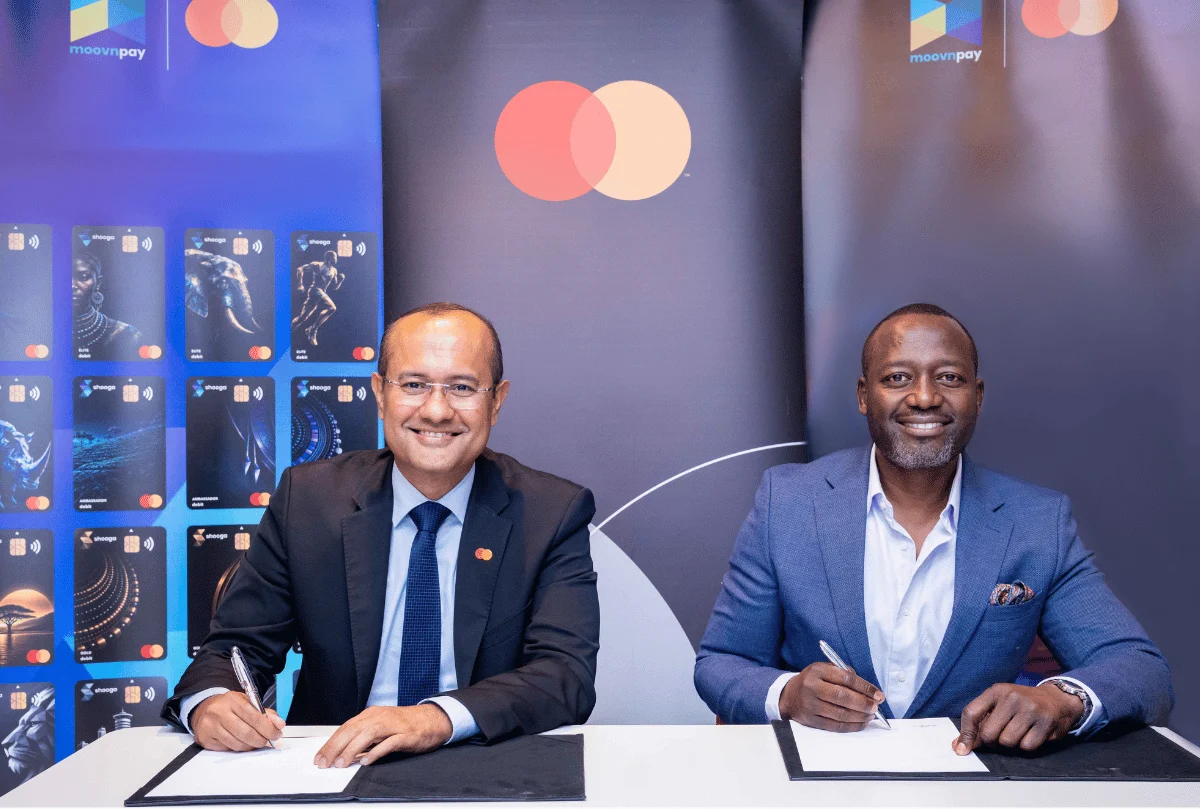
Mastercard and Moovn Technologies have signed a five-year strategic agreement to widen digital payments in East Africa. The deal pairs Mastercard’s global payments network with MoovnPay, the digital wallet at the centre of Moovn’s mobility, delivery and commerce platforms. Its immediate focus is Kenya and Tanzania.
What Users Will Get
Under the agreement, MoovnPay will offer virtual and physical prepaid Mastercard cards inside the same wallet. The package also covers online and in-app payments, tokenisation, peer-to-peer transfers and eligible international remittances.
The aim is to put several services in one place for riders, drivers, merchants and small businesses on the Moovn platforms. For users in largely cash-driven markets, that means paying, receiving and sending money without leaving one app.
Pay Local Moves to the Front
A key part of the plan is the expansion of Pay Local in Kenya and Tanzania. The service lets participating merchants accept payments directly from MoovnPay users, which gives the wallet a practical use beyond rides and deliveries.
Merchant acceptance is where many wallets stall. A wallet with cards but few places to spend is hard to grow, so the focus on connecting small businesses is the most important part of the announcement.
From Start Path to Commercial Rollout
The agreement builds on an existing relationship. MoovnPay was selected in September 2025 as one of 11 fintechs in Mastercard’s Start Path Emerging Fintech programme. The companies have since moved from early engagement to commercial integration, including Moovn’s launch of Mastercard Payment Gateway Services in Kenya.
The next phase will introduce the Shooga prepaid Mastercard portfolio, advance Pay Local, and expand payment gateway, tokenisation and wallet capabilities as Moovn scales across the region. The agreement was signed by Shehryar Ali, Mastercard’s senior vice president and country manager for East Africa and Indian Ocean Islands, and Godwin Gabriel, Moovn’s founder and group chief executive.
Why the Timing Makes Sense
Mastercard’s 2026 SME Confidence Index found that 95 percent of small and medium-sized businesses in Kenya accept mobile payments. It also found that 80 percent see simple, user-friendly payment methods as a key requirement for future growth. Because those figures come from Mastercard’s own research, they are best read as the company’s case for the partnership rather than independent validation.
Moovn’s story helps explain the fit. The Seattle-founded company began as a ride-hailing service, expanded into Kenya and Tanzania, and later grew into a multi-service platform covering rideshare, e-commerce, package delivery and digital payments. MoovnPay grew out of the challenge of operating in markets where cash remains common.
What to Watch
Several things will show whether the deal delivers. These include how quickly the Shooga prepaid cards launch, how many merchants join Pay Local, and whether the wallet’s reach extends beyond Kenya and Tanzania. Both companies have described ambitions in other African markets, though no timelines have been shared. Financial terms had not been disclosed at the time of writing.
The agreement also reflects a wider pattern. Global networks are increasingly working with homegrown platforms that already have users and daily habits, rather than relying only on banks to reach new customers.