

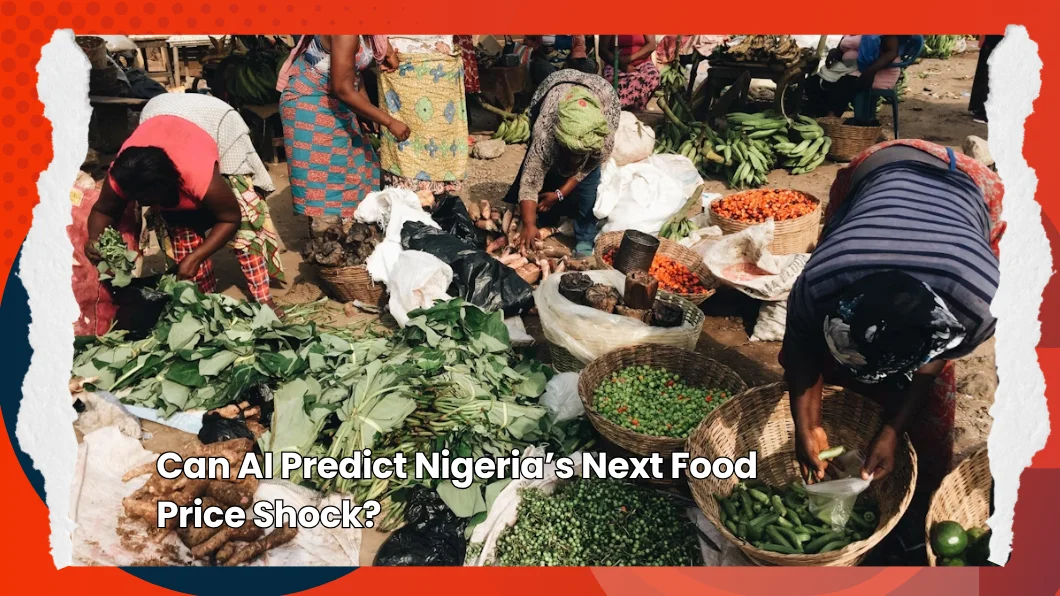
Across markets in Lagos, sacks of rice sit untouched. Only a few weeks ago, traders sold a 50 kg bag for around ₦85,000. Today, prices hover between ₦55,000 and ₦70,000.
For buyers it is an unexpected relief. Traders have the other side of the coin, they call it a disaster.
Across the stalls, the complaints sound the same: margins gone, stock bought at high rates now selling at a loss. Yet no one saw it coming. Imports increased, supply surged, and within weeks the market flipped.
This is how most food markets across Africa operate: by surprise. Prices move first, explanations follow later. The Lagos rice episode is a symptom of how reactive our food systems remain. We track the past but rarely anticipate the next swing.
Imagine if traders, buyers, and policymakers had known a drop was coming weeks earlier. With better foresight, warehouses could have adjusted supply, households could have delayed bulk purchases, and panic would have been replaced with planning.
The Pattern of Unpredictable Markets
Food-price volatility is not new. From maize spikes in Kenya to tomato surges in northern Nigeria, every season brings its own shocks. Prices rise after fuel shortages, fall after sudden imports, or swing with rainfall and exchange-rate changes. Each time, both consumers and traders scramble to react.
Part of the problem is information lag. Nigeria’s National Bureau of Statistics publishes a monthly “Selected Food Price Watch,” but by the time those averages reach the public, the markets have already moved on. Traders in Mile 12 learn more from word of mouth than from any official data.
This lack of real-time insight keeps the food economy unstable. When information is delayed or incomplete, every actor in the chain, be it farmer, transporter, retailer, or consumer, works blind. What if technology could see the next turn before it happens?
Across other sectors, artificial intelligence already does this. It predicts weather, demand, even traffic. There is no reason it cannot do the same for food if we give it the data to learn from.
How AI Can See Ahead
Artificial intelligence works best where patterns exist, and food prices are full of them.
Machine-learning models can study years of market data alongside rainfall, import trends, fuel costs, and exchange rates to forecast where prices will go next.
In Nigeria, researchers have already tested this idea. A 2023 study applied LSTM and XGBoost models to predict staple-food prices across states. The algorithms outperformed traditional trend lines, correctly flagging short-term rises and drops.
Another project by Omdena trained data scientists to build predictive tools for Nigerian food markets using open data and Python.
Globally, the FAO and World Bank have been experimenting with AI-driven monitoring to detect price spikes before they hit consumers. The concept is simply to feed enough accurate data into a model, and it learns to spot patterns humans miss.
In practice, this could mean an SMS alert telling a Lagos trader that rice is likely to drop ten percent in two weeks, or a dashboard showing policymakers where maize will get expensive before it does.
The technology already exists. What is missing is local integration: a system trained on African markets, not imported datasets.
The Platforms Filling Half the Gap
Africa’s agritech sector has seen a boom in logistics and digital marketplaces, but few tools tackle price prediction directly.
Vendease, a Nigerian B2B startup, uses predictive analytics to help restaurants and hotels buy food at stable prices. Its algorithms forecast demand so clients can restock efficiently. But this intelligence stays behind corporate dashboards. The average trader in Lagos never sees it.
Pricepally connects consumers to wholesalers online, listing current prices for bulk groceries. It is convenient but static. It shows today’s cost, not tomorrow’s direction.
In Kenya, Twiga Foods digitises supply chains for small retailers, using data to smooth out price differences between rural producers and city vendors. Yet even Twiga does not provide open, predictive insights for public use.
Across these platforms, one thing stands out: data is being collected but not shared or modelled for market-level forecasting. The infrastructure exists; the transparency does not.
The Missing Piece

Nigeria’s markets still lack a simple, real-time way to see where food prices are heading.
Imagine a platform that gathers daily input from traders through WhatsApp, merges it with weather and import data, then uses AI to predict next week’s prices for each market.
That kind of tool could prevent panic buying, guide inventory planning, and give consumers a fairer sense of value. If traders knew a rice drop was coming, they could adjust early. If households saw price warnings, they could plan bulk purchases before a surge.
Right now, the information loop is broken. Data exists at every layer, in trader notebooks, NBS spreadsheets, and private dashboards, but it never meets in one place.
An AI-powered price-prediction platform could be the missing link between these scattered insights. It would turn reactive markets into proactive systems.
The Challenges Ahead
Prediction sounds easy on paper, but food markets are messy.
Data quality is the first hurdle. Market prices are still written by hand, updated irregularly, or kept private. Any algorithm built on that base will inherit its errors.
Then there is coverage. Lagos alone has dozens of major markets, each with different grades, brands, and sellers. Capturing representative data for one city, let alone a country, is complex.
Incentives matter too. Traders will not share price data for free. Without clear value exchange participation will stay low.
Finally, volatility. Policy shifts such as sudden import bans or currency fluctuations can disrupt even the best-trained models. AI can flag trends, but it cannot predict politics.
Yet these challenges do not cancel the opportunity. They define it. Each limitation points to what the next generation of African agritech platforms can solve.
Building Africa’s Food-Price Forecast Engine
The next breakthrough in agritech may come from data.
A continental food-price prediction engine could start small, Lagos first, then expand. It would collect daily prices via WhatsApp or USSD from verified traders, cross-check submissions with NBS data, and apply models like LSTM or XGBoost to forecast short-term changes.
With those insights, traders could plan stock better, families could time their purchases, and government agencies could step in early when warning signs appear.
Users would get simple outputs: “Prices expected to fall by eight percent next week” or “Stock early, rising trend likely.” Policymakers could get dashboards showing where interventions are needed.
Revenue could come from pro analytics for businesses, API licensing for retailers, or sponsorship from logistics and FMCG firms that rely on stable pricing.
It is not just a product idea. It is an economic tool that could stabilise local markets, empower small traders, and turn Africa’s informal data into structured intelligence.
Seeing Tomorrow’s Prices Today
Back at the markets traders still argue over whether rice will fall further. Some blame imports; others think the naira’s next move will send prices back up.
Everyone has an opinion. No one has the data.
That gap between guesswork and knowledge is where the next wave of agritech will grow.
Africa’s food markets do not lack activity. They lack prediction.
The future of agriculture will not just be about planting better or moving faster, it will be about seeing sooner. When technology finally helps Africa predict its plate, everyone, from the trader to the buyer, eats better.