

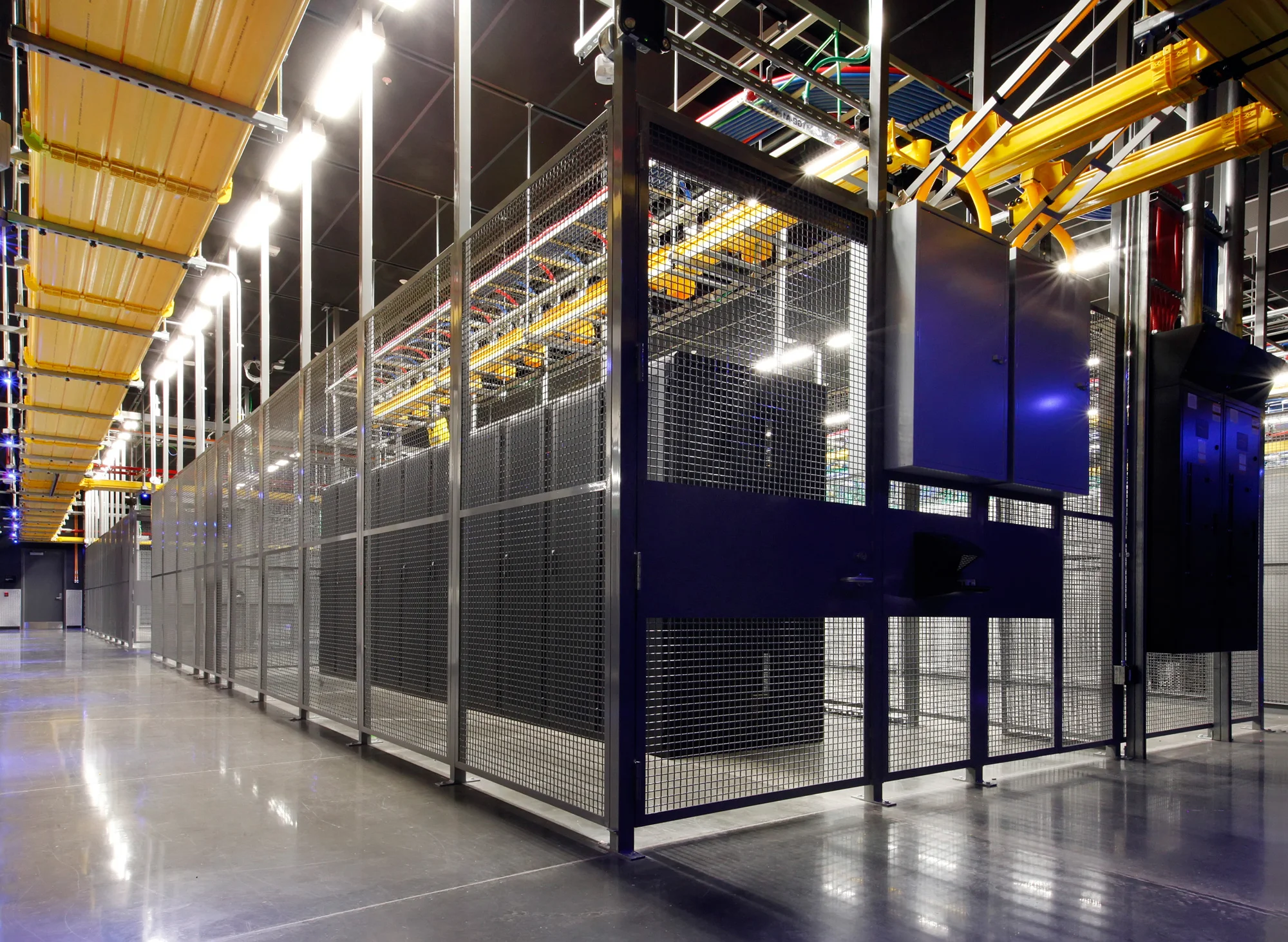
The numbers tell a stark story. Africa accounts for roughly 0.6% of global installed data centre capacity, yet it holds over 17% of the world’s population, a rapidly expanding internet base, and a digital economy projected to reach $721 billion by 2050. That mismatch is no longer just a development problem. For investors with patience and an appetite for frontier infrastructure, it is one of the clearest opportunities on the planet right now.
A Market Undersupplied by Design
Africa’s data centre market currently has about 360 megawatts of operational IT capacity, with an additional 238 MW under construction and roughly 656 MW in planned projects as of early 2026. That pipeline signals momentum, but the continent is still far behind where demand is heading.
The demand drivers are structural. Growing data sovereignty regulations are forcing companies to store and process data locally. Rising latency requirements and new mandates increasingly make offshore hosting unsustainable, pushing global cloud providers to adopt pan-African strategies and accelerate demand for domestic capacity.
The AI Factor
Artificial intelligence is reshaping the urgency of this investment cycle. AI workloads demand higher power density, advanced cooling solutions, and greater network resilience, reinforcing the need for modern, scalable facilities designed with future demand in mind. Global technology companies are already positioning accordingly. In July 2025, NVIDIA announced a partnership with Cassava Technologies to build AI-ready data centres across Egypt, Nigeria, Kenya, and Morocco, for a total investment of around $700 million.
The AfCFTA’s chief has put a specific figure on what digital trade at a continental scale demands: at least 700 data centres built and digital infrastructure localised to support platforms, financial systems, and emerging AI workloads. Africa currently has nowhere near that number.
Where the Returns Are
Africa’s data centre market was valued at $2.22 billion in 2026 and is projected to reach $4.36 billion by 2031, growing at a compound annual rate of 14.46%. South Africa leads in utilisation and investor confidence, but the opportunity is broadening. Kenya is emerging as East Africa’s fastest-growing hub, with around 40 MW of IT load capacity and a projected 30% CAGR through 2028, driven by proactive digitalisation policies including the Konza National Data Centre under Vision 2030.
Nigeria, Kenya, Egypt, and Morocco are the four markets attracting the most capital, while secondary hubs are gaining traction as regulatory clarity improves.
The Risks Are Real
The investment case carries honest caveats. Energy reliability remains the central operational variable. In several markets, national grids lack the stability required for mission-critical infrastructure, forcing operators to invest heavily in on-site power redundancy, including diesel generation, hybrid systems, and renewable integration. In Nigeria, especially, energy costs can consume a significant share of total operating expenses.
Unlike mature hyperscale markets, where facilities are often pre-leased before commissioning, outside South Africa, occupancy growth remains gradual, resulting in longer revenue stabilisation timelines. This is not a market for investors chasing quick exits.
Patient Capital Wins Here
The smart money moving into Africa’s data centre sector is not betting on short-term returns. It is securing a position in infrastructure that will underpin fintech, e-commerce, cloud services, and AI adoption for the next two decades. For investors, hyperscalers, and infrastructure funds, success will depend on capital discipline, local execution capability, and resilience planning.