

Written By Fikun Aluko
For 3 days in Lagos, 20 teams started from a blank canvas with a deadline, a laptop and no access to live banking infrastructure. By the end, they had developed working prototypes. Nobody in that room was waiting for permission to begin. The more useful question came afterward: what did those prototypes prove?

This season, Zecathon 6.0 received nearly 3,000 applications across 3 streams, with more than 5,000 individuals participating in the application process. I have spent a decade building innovation, hackathon, accelerator and talent development programs across EMEA, leading more than 15 initiatives. I led Zecathon in 2024 and 2025, and this year marks my 3rd year with the program, this time as co-lead. Working alongside Zenith Bank, the host, and Beyond Limits Global, the implementation partner, to design and deliver all 3 streams.
Zecathon 6.0: The season in review
In the Future Innovators Challenge, 9 finalists emerged from 114 applications, with Caleb British International School, Lagos, taking the top prize of ₦5 million. Queen of the Rosary College, Onitsha, came second with ₦3 million, while Regina Pacis International School, Onitsha, placed third, receiving ₦2 million.
The Hackathon attracted 1,213 applications, from which 20 teams were selected to compete. Team Solo emerged as the winner, taking home ₦35 million, followed by 10x Brains with ₦20 million and Rumour Hunters with ₦15 million. Òmìnira and Team Avera also received ₦10 million each in recognition of their work.
In the Startup Pitch Competition, 5 finalists emerged from 1,609 applications to share ₦90 million in prize money. Cutstruct Technology Limited took the grand prize of ₦35 million, followed by Sproutly with ₦20 million and PharmaRun with ₦15 million. AUI BRAND and ProDevs each received ₦10 million.
Judgment is the new credential
AI has made building faster, which is good news for anyone who has waited on a developer to get started. But it has also made the prototype a weaker signal of capability. When teams can generate working code in a weekend, a demonstration alone tells us less about the thinking behind the product.
What tells us more is whether a team can frame and validate a problem, build solutions that deliver tangible value, defend its technical architecture, articulate its assumptions and iterate when those assumptions are challenged. At the Hackathon, teams used AI to support their development, and some trained their own models and built simulated infrastructure because a hackathon cannot provide access to live banking systems. Judges asked teams to explain their decisions, and the strongest answers came from those who understood the technical and product choices they had made, as well as the customer needs they were trying to address.
As AI makes prototyping more accessible, innovation programs need to look beyond demonstrations and assess the problem-solving ability, product thinking and technical judgment behind them. The credential that matters most now is the ability to defend work you can explain, understand and improve.
Access is worth more than a prize
Prize money is visible, and it is the part of a program that gets announced. Access is what can change a business’s trajectory. Banks, telecommunications companies, manufacturers and other large institutions have domain expertise, established customer bases, infrastructure and distribution capabilities that can help startups validate solutions and reach markets faster.
A startup that gets the chance to collaborate with an established institution, or to speak directly with industry decision-makers, gains something a cheque alone cannot provide.
The Zecathon winners were offered strategic collaboration opportunities with Zenith Bank and exposure to investors. That is where a platform like this can create lasting value. The same logic applies to institutions. External innovators widen the range of ideas available to address corporate challenges, but both sides need to consider due diligence, commercial viability and strategic fit from the start.
Access works best when it is deliberately created, not simply assumed.
Programs decide whom they are built for
Every innovation program makes a strategic choice about the problems it puts forward, the users it prioritizes and the solutions it rewards. Those choices quietly shape what gets built.
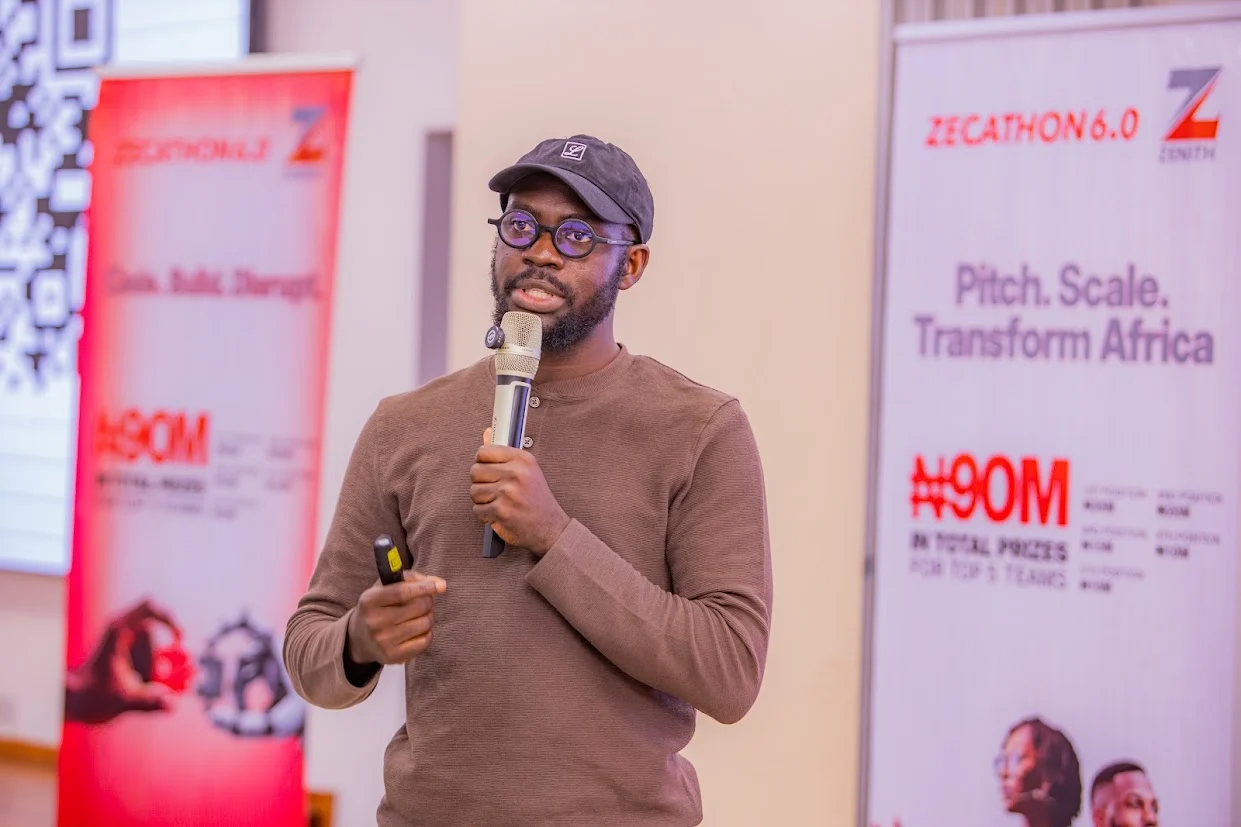
Students in this edition focused on developing solutions around education, climate and environmental sustainability. Several Hackathon teams also explored financial inclusion, designing solutions that addressed the needs of underserved groups, including people with visual impairments.
Those outcomes are shaped by the challenges programs define and the evaluation criteria they establish. The first-principles thinking that young Africans demonstrated in tackling fundamental problems this year is a capability that innovation programs can help develop. Inclusion, too, is a design decision that programs must make deliberately, and the challenge brief is one of the first places to start.
Zenith Bank has been a steady champion of this platform. For 6 years, it has backed Zecathon and invested in its growth. This season, it expanded the program to secondary school students and placed greater emphasis on growth-stage businesses, allowing innovation to start earlier and reach further. I am grateful to Zenith Bank’s leadership for its vision, trust and steadfast support.
Beyond Limits Global has been an exceptional implementation partner. Turning an ambitious vision into 3 program streams, engaging thousands of applicants and coordinating diverse stakeholders requires expertise, discipline and care. I am grateful to the wider Beyond Limits Global team for their dedication and for helping bring this year’s program to life.
Africa’s builders are already here, and they are learning to think as well as build. The responsibility now is to give them the technical support, collaboration opportunities, access to resources and honest feedback they need, alongside programs that connect their talent with meaningful opportunities. That is how promising ideas become scalable ventures, and how thriving ventures can contribute to transforming Africa.