Nigeria’s military just dealt a serious blow to two of West Africa’s most feared terrorist groups. Troops operating under Sector 2 of Operation Hadin Kai seized more than 400 Starlink satellite internet terminals linked to Boko Haram and the Islamic State West Africa Province (ISWAP) in the country’s troubled North-East region. The discovery shows that these groups are no longer relying only on guns and bombs. They are now relying on commercial tech to stay connected and coordinate attacks.
What Nigerian Troops Found in Sambisa Forest
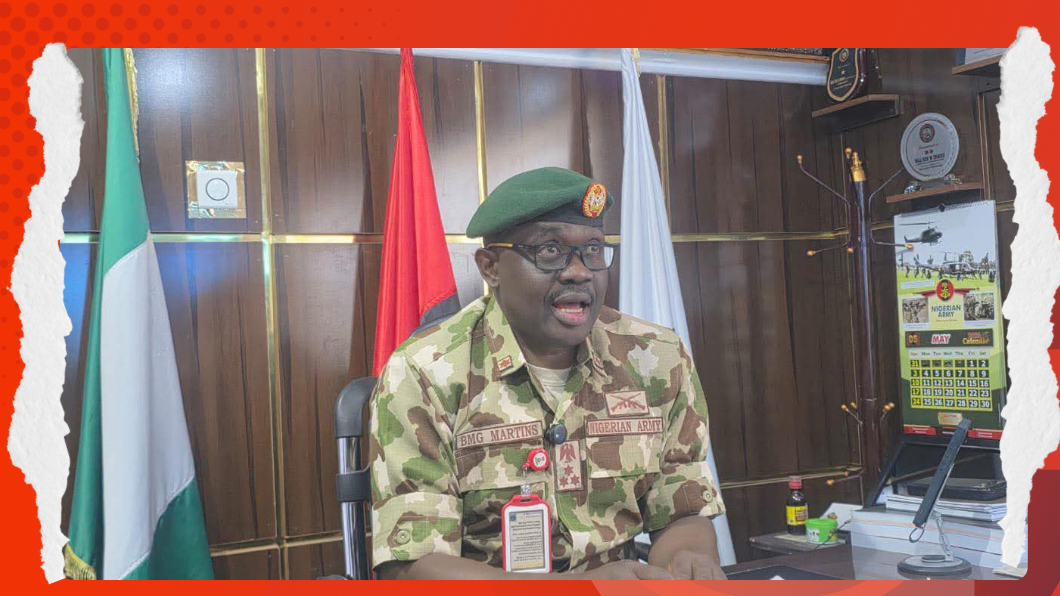
Brigadier General Beyidi Martins, Commander of Sector 2, Operation Hadin Kai, announced the seizures while briefing defence correspondents in Damaturu, Yobe State, on Tuesday, May 12, 2026. He confirmed that troops recovered the devices during sustained intelligence-led operations across Sambisa Forest, the Timbuktu Triangle, and other known terrorist hideouts in the North-East.
The Starlink terminals, linked to Elon Musk’s SpaceX satellite internet service, gave insurgents a major communication advantage. Starlink uses low-Earth orbit satellites to deliver fast, reliable internet to nearly any location on the planet, including deep forest territories where there is no mobile network coverage. That made it the perfect tool for groups trying to operate in remote, hard-to-reach areas without being detected by conventional intelligence systems.
“The lifeblood of terrorist activities is logistics resupply, and we are deliberately denying them freedom to move supplies, communication equipment, fuel and other operational items across the theatre.”
Why Boko Haram and ISWAP Were Using Starlink
Most people associate Starlink with remote farming communities getting internet access for the first time, or researchers working in off-grid areas. Armed groups in Nigeria’s North-East found a different use for it entirely.
Boko Haram and ISWAP operate across vast stretches of territory in Borno, Yobe, and Adamawa States, where traditional mobile networks are unreliable or non-existent. Standard phone networks and internet connections can be monitored and traced by security agencies. Starlink bypasses all of that. Because the service communicates directly with satellites in orbit, it does not pass through local telecom infrastructure. That makes it far harder to intercept or trace.
A presidential aide to President Bola Tinubu, Daniel Bwala, publicly acknowledged this problem in December 2025. He stated: “If you’re using Starlink, we cannot trace it because Starlink is not registered in Nigeria, it is in the space.” His admission confirmed what security experts had suspected for months, that terrorist groups in Nigeria were using the technology specifically to evade intelligence gathering.
This Is a Growing Problem Across Africa
Nigeria is not alone in dealing with this. Security researchers tracking armed groups across the Sahel region of Africa published findings in May 2025 showing that multiple violent extremist groups, including ISWAP and Jama’at Nasr al-Islam wal Muslimin (JNIM), were using Starlink to coordinate in real time and avoid detection.
The same report noted that even after Niger and Chad moved to legalise Starlink in March 2025 to bring the technology under regulation, smuggling networks continued to traffic devices into the region through Nigeria and Libya. Armed groups were reportedly paying inflated prices on black markets just to keep access to these devices, which shows how valuable the technology was to their operations.
This trend goes beyond Africa. In the Russia-Ukraine conflict, both sides have dealt with the challenge of Starlink terminals falling into the wrong hands. Russian forces obtained and used Starlink terminals through illicit means until SpaceX enforced stricter verification controls in early 2026 to block unauthorised use. The situation in Nigeria mirrors this same challenge on a different continent.
Are Terrorists Becoming Tech-Savvy?
Insurgent groups in Nigeria’s North-East are adopting commercial technology to sustain and expand their operations.
Earlier in 2025, ISWAP carried out its first-ever offensive drone attack on a Nigerian military forward operating base in Borno State on March 24. Before that attack, the group had used drones only for surveillance. The move to armed drones marked a clear shift in the group’s capabilities, and the stockpiling of Starlink terminals reinforces that the same groups are actively investing in off-the-shelf technology to make themselves harder to fight.
Beyond communication devices, Brigadier General Martins also disclosed that troops intercepted consignments of Premium Motor Spirit, medical supplies, drugs, food items, and motorcycle spare parts believed to be headed for terrorist camps. The military traced many of these seizures to supply corridors running from Kano through Nguru into Sambisa Forest and the Timbuktu Triangle.
How the Military Cut Off the Supply Chain
The Nigerian military built intelligence networks specifically to track and disrupt how Boko Haram and ISWAP receive their supplies.
Martins revealed that insurgents continued to exploit civilian supply chains and use collaborators to move goods into remote camps. He described two types of collaborators. Some work with terrorist groups voluntarily. Others cooperate under threats and intimidation. “There is a high level of collusion between some members of the civil populace and the terrorists. Some do it willingly, while others are forced through threats and coercion,” he stated.
In response, troops infiltrated multiple transport and logistics networks used by insurgents. Security operatives arrested hundreds of suspected collaborators and logistics suppliers linked to terrorist resupply operations. The military also worked with local livestock market authorities to introduce verification measures requiring proof of ownership before animals could be sold, closing a loophole that insurgents used to convert rustled cattle into operational cash.
The result of this pressure has been sustained. Martins confirmed that continued military operations had forced several insurgents and their family members to surrender, and that the operational capacity of both groups had weakened significantly.
Is Starlink’s Future in Nigeria Now at Risk?
SpaceX has not officially commented on the Nigerian situation at the time of publication. However, the question of how Starlink terminals end up in terrorist hands points to a gap between the technology’s global availability and the ability of governments to regulate its use locally.
Starlink’s terms of service prohibit use for military or offensive operations. But the company, like most tech firms, has limited control over what happens after a device enters the black market. In Ukraine, SpaceX addressed the problem by introducing a whitelist system that required verified registration for terminals to function. A similar approach in Nigeria and across the Sahel region could help, but the volume of smuggled devices already in circulation makes it a difficult problem to contain.
Security analysts point out that disrupting supply chains, as the Nigerian military is doing, remains one of the more effective strategies in the short term. Seizing 400+ terminals does not permanently solve the problem. Still, it slows down insurgent communication and forces groups to spend resources finding replacements, which stretches their capacity and creates operational disruptions.
Nigeria’s Military IS Shifting to an Intelligence War
Operation Hadin Kai, which translates to “Collective Effort” in Hausa, has been the primary Nigerian military framework for counter-insurgency operations in the North-East since 2021. The seizure of these Starlink devices represents the kind of intelligence-driven work that goes beyond battlefield engagements.
Brigadier General Martins made clear that his sector’s approach is systematic. Every intercepted terminal, every arrested logistics supplier, and every disrupted supply route weakens the ability of Boko Haram and ISWAP to operate at full capacity. The military’s goal is not just to engage the enemy directly but to strip away the infrastructure that keeps these groups functional.
The North-East insurgency has lasted over 15 years and claimed tens of thousands of lives. The adaptation of terrorist groups to commercial satellite technology shows the conflict is evolving. The Nigerian military’s ability to recognise and respond to that evolution, as demonstrated by these seizures, is what keeps the pressure on.