
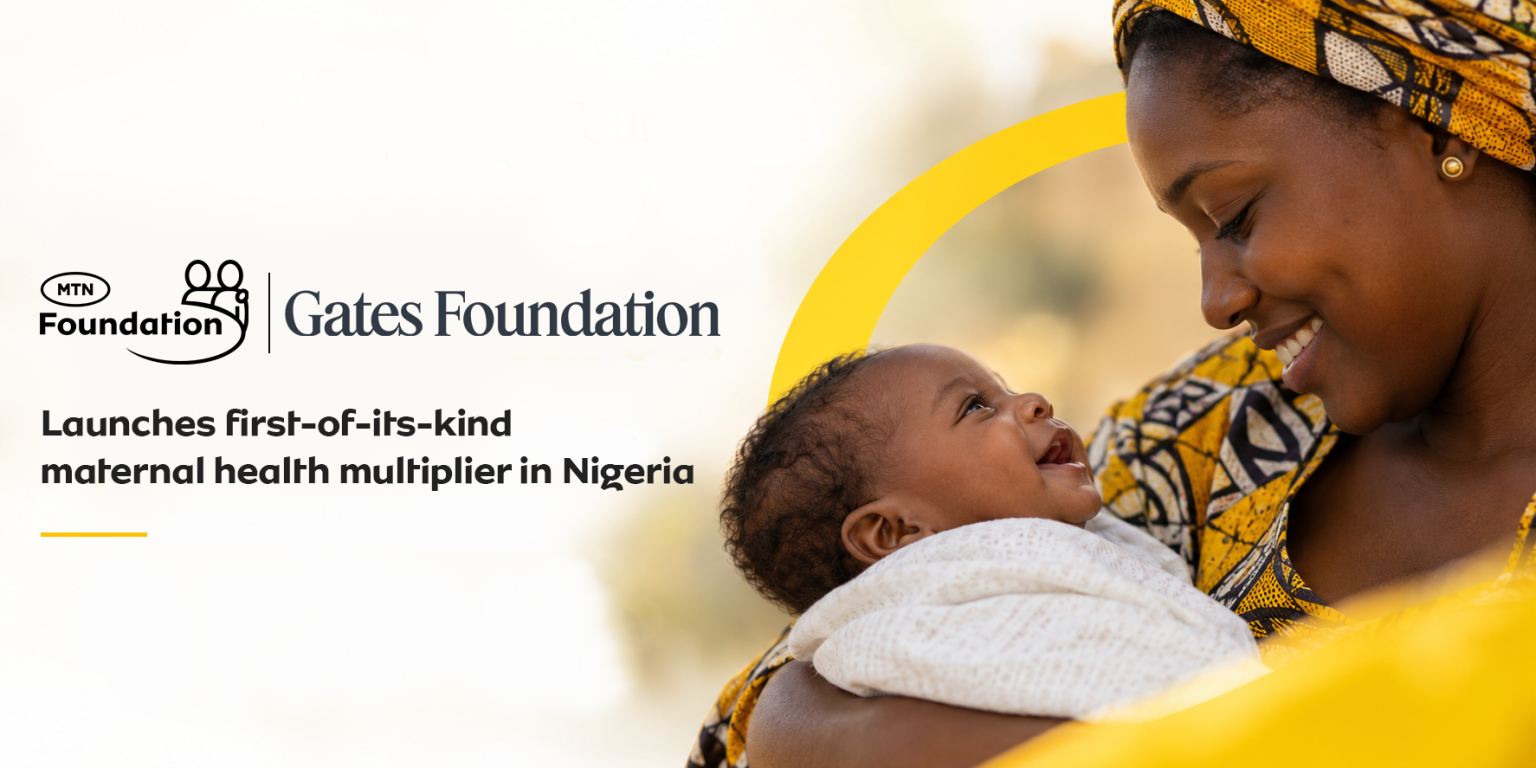
MTN Group Foundation and the Gates Foundation have announced a new partnership to roll out an AI-powered maternal health platform in Nigeria. The initiative, called the Nigeria Maternal Health Multiplier, was unveiled in New York on the sidelines of the 81st United Nations General Assembly and aims to help 500,000 Nigerian women access better maternal care by 2030.
Why Nigeria was chosen
Nigeria accounts for nearly 30 percent of maternal deaths recorded worldwide, even though the country has reduced its maternal mortality rate over the past decade. Globally, maternal deaths have fallen by roughly 40 percent since 2000, but that progress has slowed, and a woman in sub-Saharan Africa still faces a risk of dying in childbirth that is around 250 times higher than in Western Europe.
Part of the problem is early detection. Only 59 percent of Nigerian women complete four or more antenatal care visits, which means warning signs of complications often go unnoticed until it is too late to intervene safely.
What the platform actually does
The Multiplier is built around three components. The first is AI-enabled, phone-based decision support that helps both frontline health workers and expectant mothers recognise pregnancy and childbirth complications earlier. The second is access to affordable smartphones and mobile data, since the tools only work if women and health workers can actually reach them. The third is improved connectivity at primary healthcare facilities, particularly in underserved communities where network access has historically been weak.
By the 2030 target date, the partners expect the programme to reach 500,000 women, equip 5,000 frontline health workers with digital diagnostic tools, and connect 500 health facilities to more consistent care standards.
Built on existing government infrastructure
Rather than starting from scratch, the platform is designed to plug into Nigeria’s existing Maternal and Neonatal Mortality Reduction Innovation Initiative, which runs under the Federal Ministry of Health and Social Welfare’s Sector-Wide Approach. That framing matters, since it positions the AI platform as a layer on top of government health systems rather than a parallel structure competing for the same resources.
The money behind the programme
The partnership runs for four years, from 2026 to 2030, with MTN and Gates committing an initial combined investment of about 25 million dollars in direct funding and in-kind contributions. MTN’s contribution centres on its connectivity infrastructure, device distribution networks, mobile financial services and local execution experience, while the Gates Foundation brings its track record in maternal and child health, digital health innovation and responsible AI deployment.
What to watch next
The real test for the Multiplier will be execution because Nigeria has seen ambitious health-tech partnerships before, and the gap between pilot programmes and nationwide scale is often where such initiatives struggle. With a defined four-year window and specific, measurable targets, this partnership at least gives observers a clear yardstick to track progress against by 2030.