


YoLa Fresh, the Moroccan agritech startup that set out to fix the country’s fragmented fresh produce supply chain, has ceased operations. Its two co-founders confirmed the closure, which comes less than three years after launch.
What Happened
The founders say the company could not raise the capital needed to continue its development. The closure was confirmed on October 8, 2026. They have said that they and the company’s shareholders are consulting advisers on next steps. It is not yet clear whether that means selling assets or a full wind-down.
What YoLa Fresh Set Out to Do
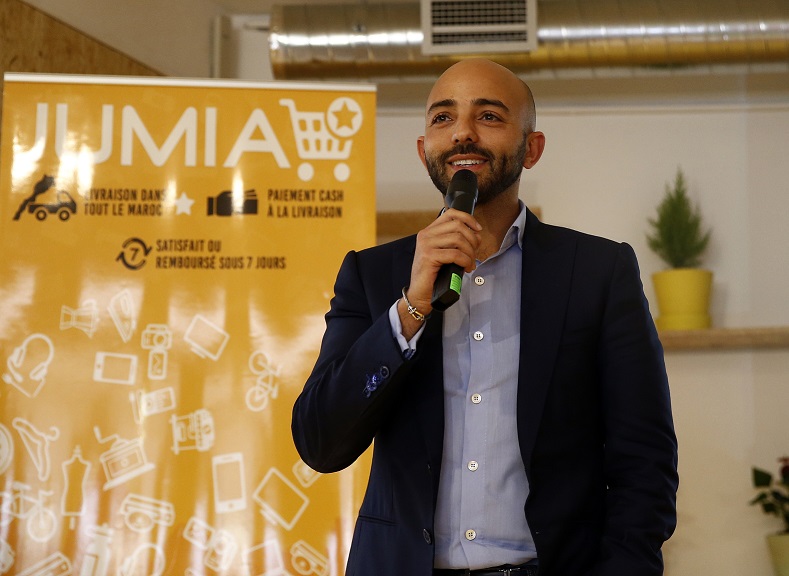
Founded in 2023 by Larbi Alaoui Belrhiti, a former Jumia executive, and Youssef Mamou, the Casablanca-based startup connected smallholder farmers directly with retailers and food service businesses. The aim was to cut out layers of middlemen, give farmers fairer prices, and give retailers a steadier supply. The company also pitched its platform as a way to reduce food waste.
It was part of a wider global wave of agritech models built around the same idea, and Morocco’s startup scene was watching closely.
The Numbers Behind the Shutdown
YoLa Fresh raised $2 million in March 2023, followed by a $7 million pre-Series A round announced in May 2024. That round was led by Al Mada Ventures, with participation from Algebra Ventures, E3 Capital, Janngo Capital and Dutch development bank FMO.
That brings publicly reported funding to $9 million. The founders have publicly disputed claims that the company received $20 million, calling the figure inaccurate.
Operationally, the company reported more than 1,000 retail customers and monthly gross merchandise volume of about $1 million. It also reported an 85 percent customer retention rate.
Those are respectable figures for a young company. They were also far from the ambitions set out in 2024, when the company projected annualised revenue of $40 million to $50 million by 2026. A business doing roughly $1 million a month in gross merchandise volume is running at about $12 million a year, and that is the value of goods moved, not the company’s own earnings.
Why Strong Traction Was Not Enough
The founders have not detailed what went wrong behind the scenes, so any explanation is informed analysis rather than confirmed fact. Several pressures are well documented in this kind of business.
Fresh produce is a low-margin, high-wastage trade. Running your own logistics and competing with entrenched informal markets is expensive, and those costs tend to grow with volume. Investors who backed the company at an early stage may also hesitate to write much larger cheques for a model where operating overhead can outpace margin gains.
This is a common problem across African tech, sometimes described as a funding gap between early-stage rounds and growth capital. Many startups can win seed or pre-Series A funding but struggle to attract the larger round needed to scale.
What the Closure Means
The problem YoLa Fresh targeted has not gone away. Smallholder farmers in Morocco still struggle with storage, price access and dependence on intermediaries, and retailers still face unreliable supply. Other founders will keep trying to solve it.
For investors and founders, the lesson is about capital discipline. Growth that depends on a steady stream of new funding is fragile when that funding tightens. Unit economics have to improve alongside traction, not after it.
The remaining questions are what happens to the retailers and farmers who relied on the platform, and what the founders reveal about the final months.