Millions of Africans use mobile money every day to send cash, pay bills, buy airtime, and move money across borders in seconds. The growth has been fast enough to turn mobile wallets into one of the continent’s most important financial tools.
But one of Africa’s biggest mobile money businesses is now slowing down its next major expansion step as global market conditions become harder to predict.
Airtel Africa has delayed the planned IPO of Airtel Money, pushing the listing to the second half of 2026 as it waits for stronger market conditions. The decision says something larger about where African tech is right now. Growth is still happening across the continent’s digital economy, but companies that want to access public markets now have to move with more caution.
Airtel Money Became Too Big To Ignore
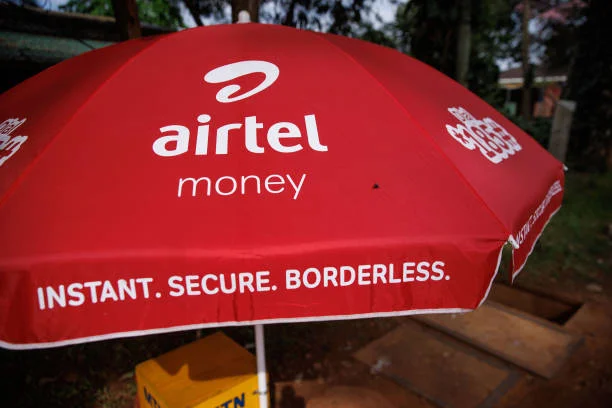
Airtel Money is no longer a side product attached to a telecom business. It has become one of Airtel Africa’s strongest growth drivers across several African markets.
According to Airtel Africa’s audited financial statement for the year ended 31 March 2026, Airtel Money now contributes more than 21% of group revenue, supported by rising smartphone adoption and growing demand for digital financial services across East and West Africa.
The platform allows users to transfer money, pay merchants, purchase airtime, and access basic financial services directly from their mobile phones. In regions where traditional banking infrastructure remains limited, mobile money services have increasingly filled the gap.
That shift has transformed telecom companies into financial infrastructure providers.
Across markets like Kenya, Uganda, Tanzania, and parts of West Africa, mobile money now supports everything from small business payments to transport fares and household transfers. For millions of users, these platforms are often more accessible than conventional banking systems.
Airtel Africa’s IPO plans reflected how valuable the business has become. A public listing would not only raise capital but also test how global investors currently view African fintech and digital payment infrastructure.
Why The IPO Was Delayed
Airtel Africa has not framed the delay as a problem with Airtel Money itself. The business continues to grow steadily across several African markets. Instead, the company said it wants to wait for more favourable market conditions before proceeding with the listing.
Public markets have become significantly more cautious over the past two years as investors respond to inflation concerns, high interest rates, currency volatility, and wider geopolitical uncertainty. Companies preparing for IPOs are now facing heavier scrutiny around profitability, long-term sustainability, and exposure to unstable markets.
Many international investors still view African businesses through a higher-risk lens because of currency fluctuations, regulatory uncertainty, and macroeconomic instability across several markets. That can affect how aggressively investors price African companies during public listings, even when underlying user growth remains strong.
The timing of Airtel Africa’s delay reflects how sensitive public market activity has become globally. Companies are increasingly choosing to postpone listings rather than enter uncertain markets with weaker investor confidence and lower valuations.
African Tech Is More Connected To Global Markets Than Before
The delay also highlights how deeply African tech companies are now tied to global financial systems.
A decade ago, many African startups operated largely within regional funding ecosystems and private investor networks. Today, some of the continent’s largest digital businesses are preparing for international listings, attracting institutional investors, and expanding across multiple markets simultaneously.
That growth has brought visibility and capital. It has also increased exposure to global economic shocks.
When inflation rises in the United States or energy prices surge globally, African tech companies now feel the effects more directly through investor sentiment, foreign exchange pressure, operating costs, and access to capital.
Mobile money businesses sit at the centre of that shift because they increasingly function as core financial infrastructure. Millions of users depend on these platforms daily for transactions that would previously have required traditional banks.
As a result, Airtel Money’s IPO delay is not just a telecom story or a fintech story. It reflects a larger reality about African tech’s evolution. The sector is no longer developing in isolation from global markets.
The Era Of Easy Growth Stories Is Fading
For years, African fintech attracted investor attention largely through growth metrics. User numbers climbed rapidly. Transaction volumes expanded across markets. Mobile money adoption accelerated as smartphones became more accessible.
That momentum helped position African fintech as one of the continent’s strongest technology sectors.
But public markets tend to ask different questions from venture capital firms.
Private investors often focus on expansion potential and long-term market opportunity. Public investors usually pay closer attention to profitability, operational resilience, regulatory exposure, and how businesses perform during periods of economic instability.
That shift is becoming more visible across the global tech industry, and African companies are not exempt from it.
The environment surrounding technology funding has also changed significantly since the peak venture capital years of 2020 and 2021. Investors have become more selective, capital has become more expensive, and companies preparing for public listings now face pressure to prove they can navigate difficult economic conditions without sacrificing long-term stability.
For Airtel Money, the delay may ultimately be less about weakness and more about timing. Entering public markets during periods of uncertainty can affect valuation, investor appetite, and long-term performance after listing.
A Different Phase For African Fintech
Mobile money continues to expand across Africa despite economic pressure in several markets. Demand for digital payments remains strong, particularly in regions where traditional banking infrastructure still struggles to reach large parts of the population.
But the conditions surrounding African tech growth are changing.
The continent’s largest digital businesses are now operating in an environment shaped not only by local adoption trends but also by global investor behaviour, currency volatility, and broader economic uncertainty.
That creates a different challenge from the early startup growth era.
Scaling quickly is no longer enough on its own. Companies also have to convince increasingly cautious markets that they can remain resilient when global conditions become unstable.
Airtel Money’s delayed IPO reflects that transition. African fintech is still growing, but it is now entering a phase where sustainability, timing, and investor confidence may matter just as much as expansion.