
Paga wants to solve a problem millions of Africans know well. Cross-border payments still move slowly, cost too much, and lose value during conversion. Its new partnership with Sui targets that pain directly. The plan centres on stablecoin rails that let people and businesses move dollar value faster, then settle into local currency when needed.
Stablecoins are now a serious topic in fintech conversation because they settle quickly, run all day, and reduce dependence on slow banking chains. Stripe recently completed its Bridge acquisition to scale digital dollar infrastructure, while Chainalysis says stablecoins already support trade flows and merchant payments in Sub-Saharan Africa.
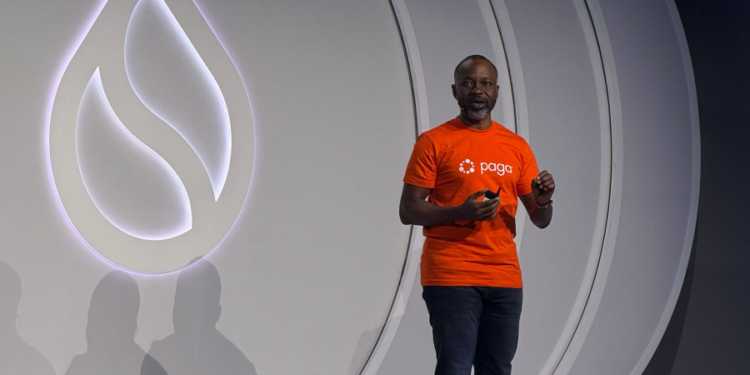
Tayo Oviosu, Founder and Group CEO, Paga Group, at Sui Live
What Paga wants to fix
Many African businesses still depend on correspondent banks for international settlement. That setup adds delays, extra fees, and foreign exchange stress. Tayo Oviosu said Nigerian importers often wait three to four days to complete payments and pay an average cost of 6.4 percent. In the third quarter of 2025, the global average cost of sending $200 stood at 6.36 percent, while Sub-Saharan Africa remained the most expensive region at 8.46 percent.
Paga also brings scale to this effort. The company says it processed $11 billion across 169 million transactions in 2025. It also says it now handles about $1.5 billion in monthly payments. That matters because stablecoin products need real users, real merchants, and real payment volume to prove value. Paga already has that base.
What Paga and Sui plan to offer
Paga says it will add Sui Dollar, known as USDsui, into its consumer app and enterprise API suite. The company plans to offer dollar accounts that earn yield, on-ramp and off-ramp tools with deeper liquidity in African markets, faster cross-border settlement, and access to tokenised assets. Some of those investment products may start at $100. Sui says Bridge, now part of Stripe, issues USDsui as a native digital dollar for scalable finance and global payments.
In January 2026, Paga launched PayPal account linking in Nigeria. That service lets users receive international payments, withdraw in naira, and use the funds inside the Paga ecosystem. The Sui deal builds on the same core idea. Paga wants to connect global money with local use in a simpler way.
The hard part is execution
The product story sounds strong, but execution will decide everything. Stablecoin payments still face real limits in merchant acceptance, wallet design, user education, compliance, and liquidity. Reuters noted that many users want stablecoins inside the financial tools they already use, yet limited acceptance in shops and online still slows wider day-to-day spending.
Oviosu said Paga will execute this partnership through the group’s UK entity and begin services through its US operations, not directly through its Nigerian business. He also said any funds that enter Nigeria and convert into local currency will pass through Paga Remitt and be reported to the Central Bank of Nigeria. That approach shows Paga understands a basic truth in African fintech. Better rails do not remove the need for licensed local settlement.
What this says about African fintech
African fintech has moved beyond simple wallet growth. The next contest will focus on cross-border commerce, treasury efficiency, dollar access, and products that help users protect value in weak currency cycles. That is why stablecoins keep appearing in serious payment strategies. Stripe’s Bridge move, Sui’s push into native digital dollars, and Chainalysis data on trade-linked transfers all point in the same direction. The market wants faster settlement and lower friction.
Paga still needs to prove that this model can work at scale under African rules, with strong liquidity and consumer trust. Yet the company is chasing a real problem with tools the market already understands. If it executes well, users will care less about the underlying chain and more about the results. They will notice faster settlement, better value retention, and lower costs.