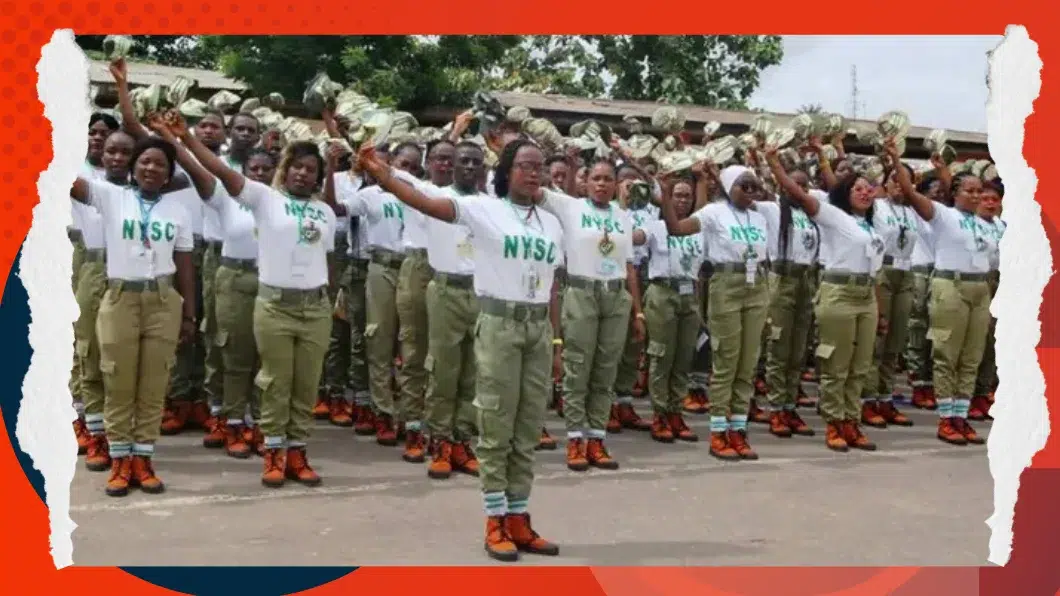
The National Youth Service Corps mobilisation has resumed again, as it has every few months since 1973. Thousands of graduates are packing up to travel across Nigeria for three weeks of camp and a year of service.
What we often overlook is the NYSC portal, one of Africa’s largest digital onboarding systems, actively processing hundreds of thousands of young Nigerians at once. Yet, while the system has gone digital, the purpose hasn’t. Camps still train the “leaders of tomorrow” without teaching the skills of tomorrow.
The future is here, but NYSC hasn’t caught up. As someone who’s been through the camp experience myself, I can say this with certainty: the training curriculum is stuck in time.
From Orientation Camp to Opportunity Gap
NYSC, if you’re not familiar, is a one-year national programme for Nigerian university graduates. Its aim is to promote unity and national service by posting young people to different states to work, learn, and contribute to local development.
The idea is solid. The camp experience can be fun and surprisingly insightful, from morning drills to orientation classes and the Skill Acquisition and Entrepreneurship Development (SAED) programmes. During my own camp, we had options like tailoring, makeup, paint production, and fish or poultry farming, amongst others.
There was also a small class meant for digital skills where one tutor was assigned to teach design, coding, data analysis, and every other tech-related course imaginable. Anyone familiar with tech knows that’s impossible. No single person can teach all those disciplines effectively, especially to hundreds of people. That was the first problem. The second was demand. So many corps members wanted to join that the classroom couldn’t contain us. We eventually moved under a tree.
The interest is there. The infrastructure isn’t.
The Lost Potential of 300,000 Graduates a Year
Every year, more than 300,000 graduates pass through the NYSC system. That’s 300,000 trained minds with fresh ideas, many of them already curious about technology. For a country chasing digital transformation, that number should mean something. It should be a talent pipeline, not a pause button.
During camp, you can feel the hunger. People talk about tech jobs, remote work, AI tools, and coding bootcamps. Some already freelance online, others run small businesses from their phones. Yet NYSC still treats technology like an optional hobby instead of a national priority.
Imagine if every corps member left camp with a basic digital certificate in data literacy, design, or cloud computing. In one year, Nigeria would have produced a small army of tech-ready youth. Instead, we’re letting that energy fade after campfire nights and parade rehearsals. The world is moving fast, but our service year is still marching in circles.
Why Digital Literacy Training Matters
Nigeria keeps saying it wants to build a digital economy, but there’s no stronger foundation than its youth. The Ministry of Communications and Digital Economy has launched policies and partnerships aimed at driving digital inclusion. Big names like Google, Microsoft, and Coursera already offer free courses to young Africans, and some state governments have started small digital hubs for training. Yet none of these efforts match the scale NYSC already commands.
NYSC reaches every graduate in the country, every batch, every year. If that structure carried proper digital training with real classes, not the under-the-tree kind, it could bridge the digital divide faster than any policy memo. The infrastructure is already there: orientation camps in every state, a functional online portal, and a massive pool of willing learners. What’s missing is integration.
The world’s digital shift isn’t waiting. Countries like Kenya and Rwanda have already embedded technology into their national service and youth programmes, producing cohorts ready for remote and hybrid work. Nigeria could easily replicate that. Turning NYSC into a digital literacy gateway wouldn’t just modernise the programme, it would prepare an entire generation for jobs that actually exist.
Tech-Savvy Youth in Analogue Camps
While serving as part of the media team in camp, I met some of the brightest people I’ve ever worked with. Graphic designers who could turn in full designs minutes. Photographers who understood lighting like second nature. Videographers who edited clips on their phones before the parade ended. Social media managers planning mock campaigns for imaginary clients just to stay sharp. Writers creating stories between drills. Every one of them had dreams rooted in the tech space: marketing, design, film, data, and digital storytelling.
And yet, when it came to official training, we were told to choose between tailoring, bead-making, and crochet. Making dresses is fine, but in 2025, you can learn that on YouTube, a digital classroom built by people who saw the future and decided to prepare for it. In camp, we had that same future in our hands, our phones, our laptops, our ideas, but not enough systems to help us use them well.

There’s no shortage of talent in NYSC camps. The problem is that we’re not being challenged to build with it. What could happen if the next batch of corps members used their service year to create digital solutions for local problems? What if the same energy that goes into parade rehearsals went into coding, design sprints, or startup incubation?
The answers are already sitting in those tents, waiting for someone to take them seriously.
Reimagining NYSC for a Digital Future
If NYSC is meant to prepare young Nigerians for national development, then it has to evolve with the times. The digital economy isn’t a side topic anymore, it’s the new foundation of work, communication, and problem-solving. And NYSC already has everything it needs to become a bridge into that world.
Imagine if the Skill Acquisition and Entrepreneurship Development (SAED) programme were redesigned with partnerships from global tech firms and local startups. Corps members could earn certifications in design, analytics, or cloud computing during service. Orientation camps could become innovation hubs where bright minds test ideas that solve real community problems.
NYSC doesn’t need to abandon its core mission of unity and service. It just needs to recognise that service now looks different. Today, it could mean training teachers to use AI tools in rural schools, helping small businesses digitise their records, or developing simple web platforms for local health centres.
The NYSC portal already proves that large-scale digital systems can work in Nigeria. The next step is making sure the people using it , the corpers themselves, are not just data entries in a database, but active builders of the country’s digital future.