
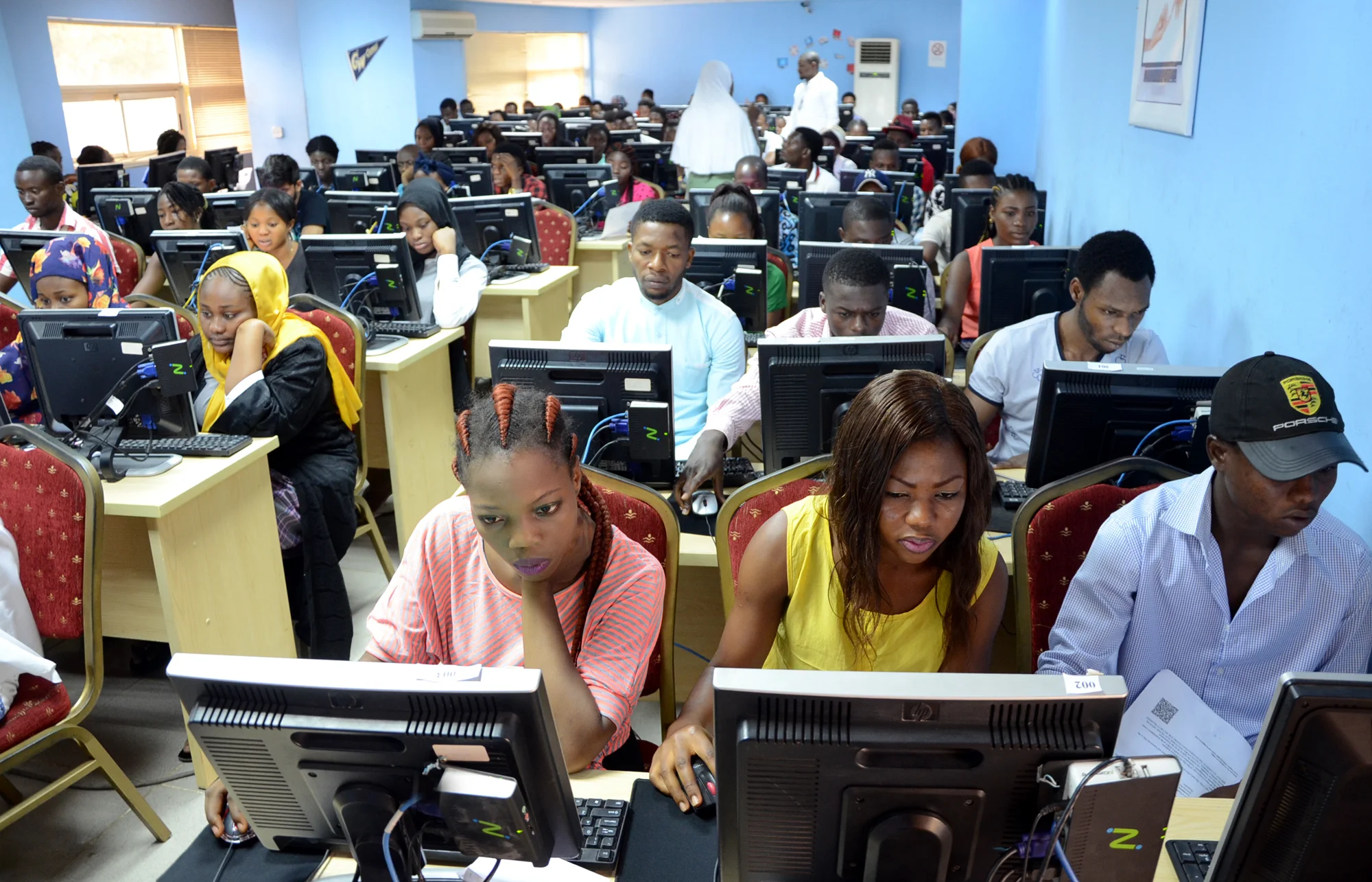
For decades, the best scores in Nigeria’s Unified Tertiary Matriculation Examination (UTME) were almost always followed by one announcement: Medicine and Surgery. That script is changing.
When JAMB released its 2026 top scorer list at the Policy Meeting on Admissions to Tertiary Institutions in Abuja on Monday, the highest mark went to Owoeye Daniella Jesudunsin from Ekiti State, who scored 372 out of 400 and chose the University of Lagos to study Medicine and Surgery. That part felt familiar, but what followed did not.
The second-highest scorer, Enwere Kingsley Ikenna from Imo State, with 370, chose Nile University to study Computer Science. Third place went to Bamisile Ayomide Emmanuel from Ondo State, with 369, who listed the Federal University of Technology, Akure, as his first choice for Software Engineering.
Further down the list, the pattern holds. Of the ten highest-scoring candidates, courses like Mechatronics Engineering, Electrical/Electronic Engineering, Computer Engineering, and Software Engineering dominated the choices, with at least seven of the top ten opting for technology or engineering programmes. Just one (the overall leader) chose medicine.
A Generational Shift in Aspiration
It wasn’t always this way. Looking back at UTME’s computer-based era, the 2016 co-toppers both chose Medicine and Surgery, one at UNIBEN and the other at the University of Jos. The very first CBT-era topper in 2013 chose Medicine at the University of Ibadan and went on to qualify as a medical doctor.
The shift reflects how the ambitions of Nigeria’s brightest secondary school leavers are evolving. Tech careers (once seen as niche or uncertain) have become aspirational, driven by the visible success of Nigerian founders, engineers, and developers on the global stage. The rise of a thriving domestic startup ecosystem, remote work opportunities, and the real possibility of building or joining a company worth hundreds of millions of dollars has reshaped what “making it” looks like for the generation now sitting for the UTME.
There’s also a practical logic at play. Medical training in Nigeria is long, expensive, and increasingly frustrating, burdened by strikes, infrastructure gaps, and a japa wave that has drained the sector of senior professionals. Technology, by contrast, offers a faster path to financial independence, with coding bootcamps, internships, and open-source contributions creating entry points even before graduation.
The Bigger Picture
Nigeria’s tech sector has spent the better part of a decade cultivating local talent pipelines. If the country’s top academic performers are now self-selecting into Computer Science, Software Engineering, and related disciplines, it suggests that the pipeline is starting to feed itself. Universities and policymakers should take note, and so should the tech companies and investors eyeing Nigeria’s next generation of builders.
The stethoscope is no longer the only symbol of ambition in Nigeria. For the class of 2026, the terminal and the code editor are just as compelling.