

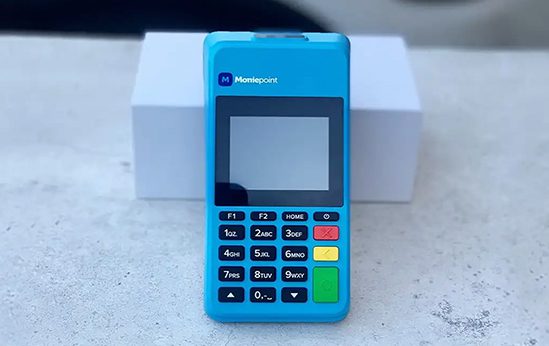
Nigerian merchants can finally stop matching receipts to sales records manually. Moniepoint launched Moniebook, a software that makes every POS terminal track inventory, process payments, and print receipts all at once.
The fintech unicorn tested this system with over 4,000 businesses during its beta phase. Results show restaurants processed hundreds of daily orders, fuel stations logged every liter pumped, and even a toll gate operator used it to count different vehicle types passing through.
Smart POS Terminal Features Change Nigeria’s Retail Game
Moniepoint’s new touchscreen POS terminals do more than accept card payments. The integrated Moniebook software tracks stock levels, calculates profits, and sends alerts when items run low.
Babatunde Olofin, managing director of Moniepoint’s microfinance bank, says the solution fixes Nigeria’s biggest retail problem. “You might think a bookkeeping tool solves the problem, but without integrated payments, you’re still crunching numbers manually,” he explains.
The system works through two parts: a back office dashboard for managers and a POS register interface for cashiers. Merchants can add products with barcodes, set prices, and monitor stock from their phones or computers.
Every transaction creates a complete audit trail. Staff members log in with individual PINs, and the system records who made what changes at what time. Sales complete only after payment confirmation for the exact amount.
Moniebook Pricing Makes Smart POS Affordable for Small Business
The subscription model starts at ₦6,000 monthly for one device and branch. Additional branches cost ₦4,500 each, while extra POS devices add ₦2,500 to the monthly bill.
Moniepoint leases its touchscreen terminals instead of selling them outright. This approach keeps upfront costs low compared to competitors like Mira, whose hardware can cost hundreds of thousands plus subscription fees.
Existing Moniepoint merchants can swap their basic terminals for Moniebook-enabled versions without buying new equipment. The company processes ₦10 trillion monthly through over 600,000 active terminals across Nigeria.
Nigeria POS Market Growth Creates Opportunity for Inventory Management
Nigeria deployed 3.04 million POS terminals by July 2024, up 32% from the previous year. The market processed ₦79.5 trillion in transactions during 2024, compared to ₦2.3 trillion in 2018.
Most of these terminals function as simple payment processors. Merchants record sales separately in notebooks or basic apps, then match card receipts to transaction records at day’s end.
Oluwole Adebiyi, Moniebook’s head of product, discovered surprising use cases during beta testing. A toll gate operator treated different vehicle types as inventory items. Each time a truck or bus paid tolls, the system logged it like a supermarket product.
“It gave them control,” Adebiyi recalls. “No way for cashiers to bypass payments. And the owner suddenly had reports they had never had before, like knowing only two trucks passed this month.”
Moniepoint Team Grows to Support Business Management Push
The Moniebook division expanded from 12 to 60 employees since beta launch. Product managers, engineers, designers, and growth marketers work like a startup within the fintech company.
“One way to think about how we build products at Moniepoint is that each product is like a tiny company within the company,” Olofin says. “It has all the resources it needs to move fast, without getting slowed down by the bureaucracy of a much bigger organization.”
Adebiyi, whose startup Grocel was acquired to build Moniebook, appreciates this independence. “To win with inventory systems in Nigeria, payments need to be solved. Moniepoint had solved payments. I don’t see any other company I could have done this with.”
Business Owners Benefit from Merchant Stack Competition
The push to develop comprehensive merchant solutions helps small and medium enterprises across Nigeria. Multiple companies now compete to provide payments, operations, data analysis, and credit access.
Bemigho Awala, Moniepoint’s media relations manager, emphasizes this focus on merchant success. “It’s about progress for the brand, but also for the mom-and-pop shops, supermarkets, and other businesses that run on our rails.”
Moniepoint targets 100,000 active Moniebook merchants by year-end. If adoption matches their payment terminal success, the sound of printed receipts combining sales records and payment confirmations will become standard across Nigerian retail.
The integration of inventory management with payment processing addresses a fundamental challenge that has plagued Nigerian retail for decades. As more merchants adopt these comprehensive solutions, the efficiency gains could transform how small businesses operate nationwide.