


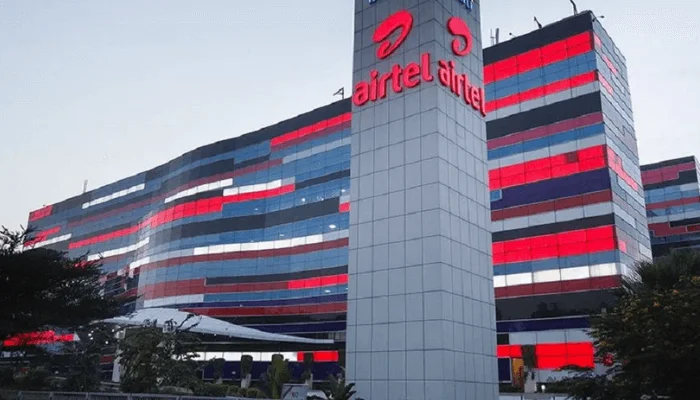
Airtel Africa, which provides telecommunications and mobile money services across 14 African countries, saved 9.1 million litres of diesel in its 2025/2026 financial year. The company says the reduction is part of a broader push toward responsible growth that limits the environmental footprint of its network operations.
How the savings were achieved
The bulk of the reduction came from cutting the company’s dependence on diesel generators to power network sites. During the year, Airtel Africa converted 390 infrastructure sites from diesel to on-grid electricity, a shift that improves energy efficiency while lowering emissions across its footprint.
Group CEO Sunil Taldar announced the figures at a media roundtable in Lusaka, Zambia, where he unveiled the company’s Sustainability Scorecard. He framed the diesel cuts as one piece of a wider strategy that ties environmental performance to the company’s commercial growth, arguing that expanding connectivity and cutting carbon output can move together rather than in competition.
Waste and circular economy gains
Beyond energy, Airtel Africa also reported progress on waste management, recycling 94 percent of the total waste generated across its operations during the year. The company describes this as part of a circular economy approach that complements its energy transition work.
Connectivity and financial inclusion numbers
Airtel Africa’s network now reaches 81.9 percent of the population across the markets it operates in, extending access to connectivity, information and economic opportunity to a large share of the continent’s population.
On the mobile money side, Airtel Money now serves 54.1 million customers through a network of about 2.4 million agents, making it one of the largest digital financial services platforms in Africa. Women make up 44.1 percent of that customer base, a figure the company points to as evidence of the platform’s role in extending financial services to groups that have historically had limited access to formal banking.
Why it matters
Airtel Africa’s numbers reflect a pattern increasingly common among telecom operators on the continent: energy costs, particularly diesel, have long been one of the biggest operating expenses for network infrastructure in markets with unreliable grid power. Converting sites to on-grid electricity cuts both costs and emissions at once, which makes the business case for sustainability investment easier to justify internally.
The scale of Airtel Money’s customer base also underscores how mobile money has become inseparable from Airtel Africa’s core identity, arguably as central to the group’s growth story as traditional telecom services. With female customers approaching parity, the platform is increasingly cited as a case study in how mobile money can close financial access gaps that formal banking has struggled to reach in many African markets.
Whether these figures represent a meaningful dent in Africa’s broader telecom emissions picture, or a single operator’s contribution to a much larger continental challenge, is a separate question. But for a company operating in 14 markets with varying grid reliability, a 9.1-million-litre diesel cut is a tangible, measurable step, and one likely to draw comparisons from competitors as sustainability reporting becomes more standard across the sector.