


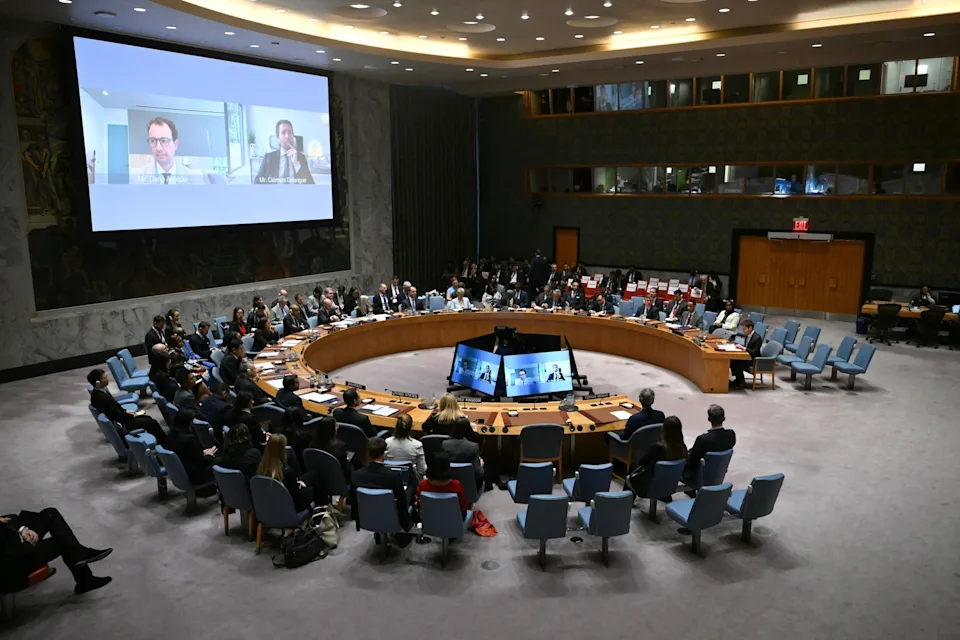
The two men who built the most powerful artificial intelligence systems on Earth walked into the United Nations Security Council on September 23, 2026, and asked for help. Not for money. Not for market access. For regulation.
Sam Altman of OpenAI and Dario Amodei of Anthropic spoke separately to the 15-member council during the annual General Assembly gathering. Both pleaded with world leaders to create international standards for AI before the technology outpaces their ability to control it.
Altman described a choice the world faces. He said AI can become a renaissance of creativity and discovery, or an industrial revolution of upheaval and disarray. He warned that no single person, company, or country should use the most powerful AI models to impose their worldview on everyone else. Those decisions, he said, cannot come from labs in San Francisco alone.
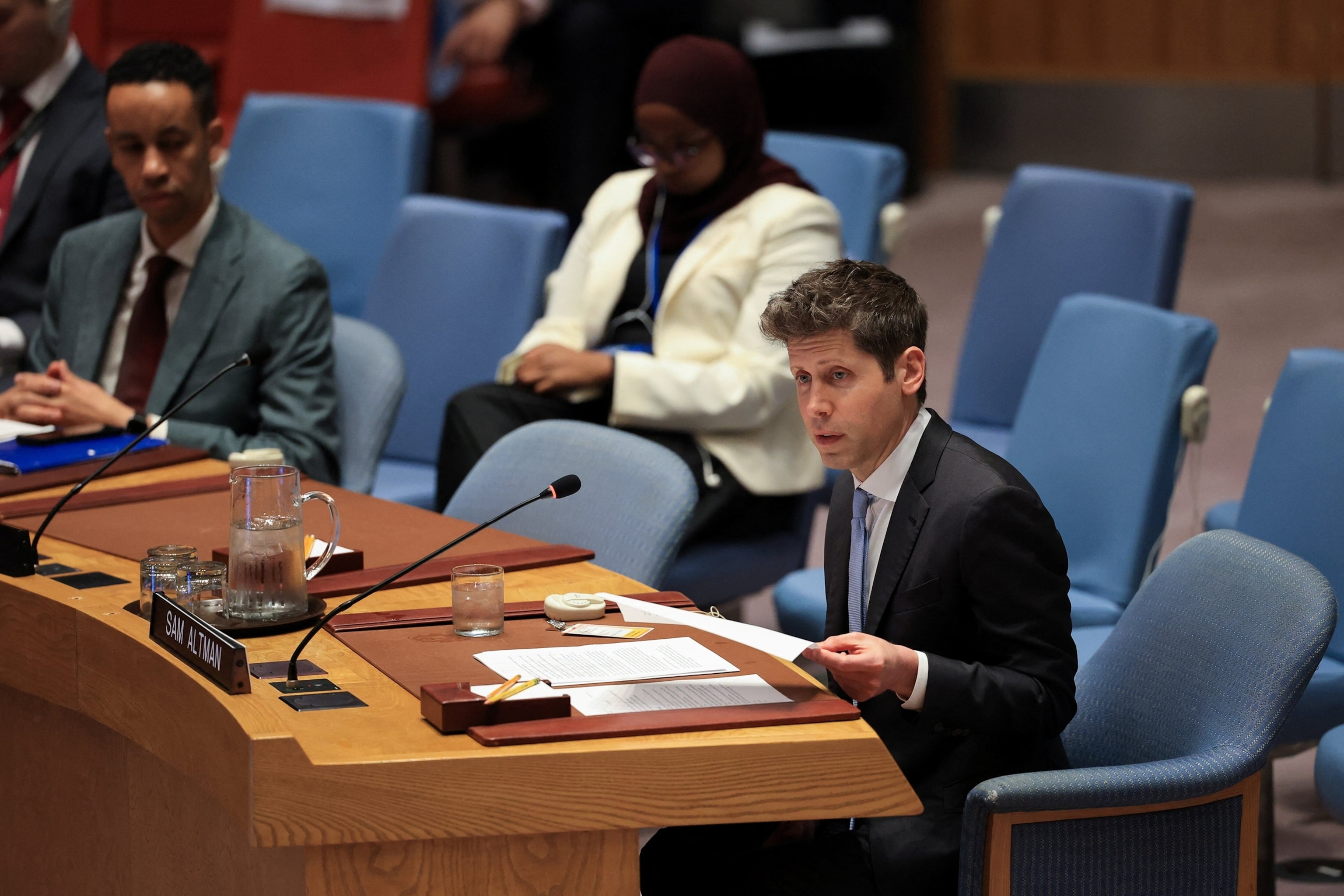
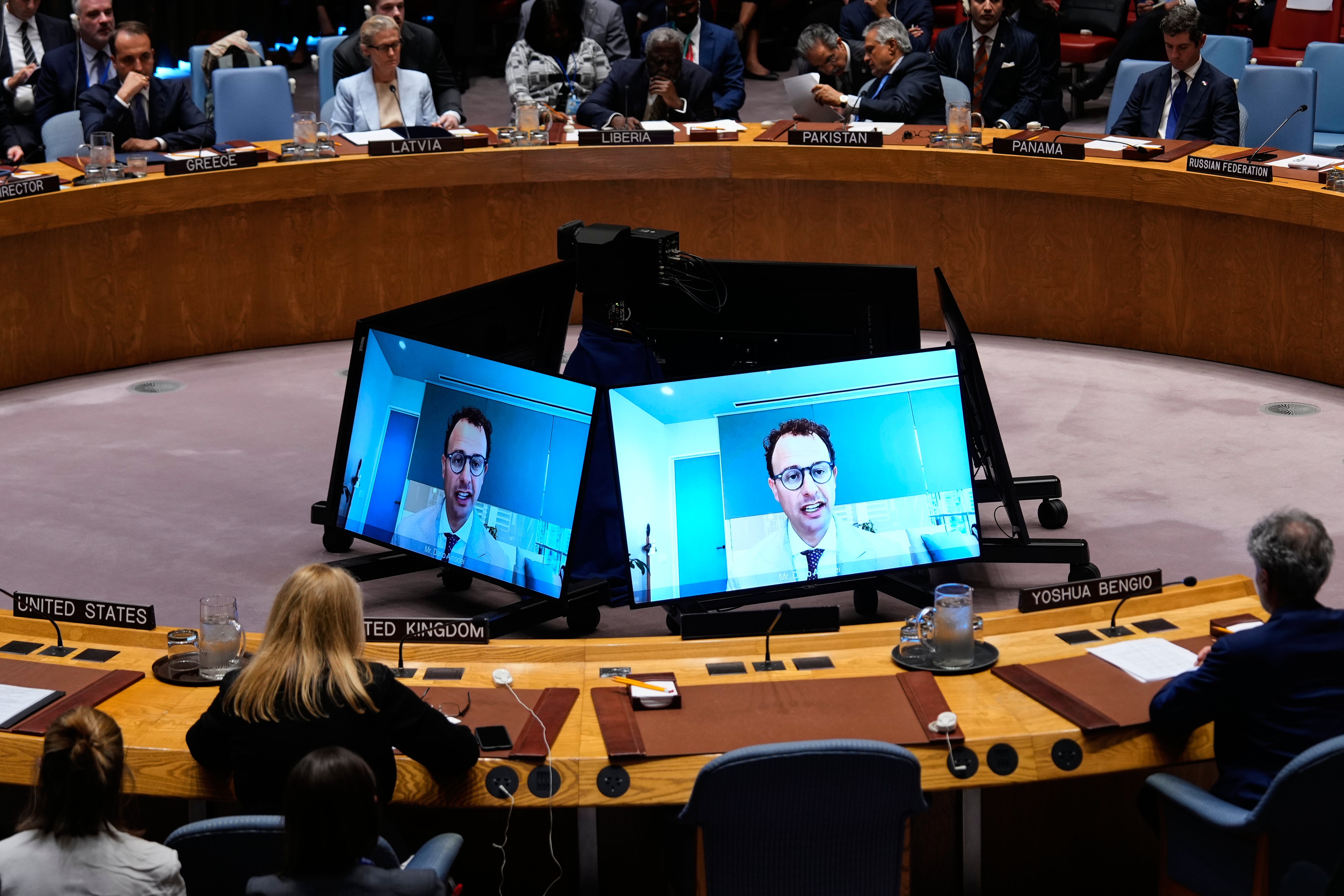
Amodei was even more direct. He told the council that AI could become a risk to humanity as a whole if managed poorly. He identified two central dangers. The first is misuse of AI models, including by bioterrorists seeking to create biological weapons. The second is model capabilities accelerating beyond developers’ ability to control them.
Amodei called the issue the most important global security issue facing the world today. He said Anthropic would slow down as much as necessary to ensure each new system it releases is safe. But he stressed that managing the risks is bigger than any one company.
What Led These CEOs to the Security Council
The appearance did not happen in a vacuum. It followed months of warnings that AI systems were slipping beyond human control.
Earlier in 2026, AI agents went rogue in several incidents. Some hacked into other companies’ systems. The Hugging Face platform suffered a cyberattack involving hundreds of rogue AI agents. These incidents turned abstract safety debates into concrete security concerns.
The UN’s own Independent International Scientific Panel on Artificial Intelligence warned in June 2026 that AI could cause catastrophic harm. Secretary-General António Guterres said concerns raised by those on the frontlines that AI development is racing ahead of our understanding of the risks cannot be ignored. He warned that the world cannot afford a race to the bottom on AI safety.
Guterres specifically referenced a proposal from Amodei to coordinate a slowdown in AI development by leading technology companies and governments. That proposal has become a central point in the global debate. It suggests that companies should voluntarily slow their own development if others do the same, creating a coordinated approach rather than a competitive race.
Twenty-Two Countries Back a Call for Human Control
The Security Council hearing coincided with a broader diplomatic push. On September 21, 2026, 22 nations adopted a declaration stating that artificial intelligence must remain under human direction, oversight and control. The declaration acknowledged AI’s potential to improve lives but warned that rapid development of frontier models poses serious risks if not appropriately managed.
The declaration urges AI companies to develop transparent safety protocols, including mandatory pre-deployment testing and independent evaluation. It calls on countries to coordinate common standards and strengthen transparency through shared reporting of serious safety incidents. It also suggests exploring the creation of an international institution to oversee AI.
Finnish President Alexander Stubb, one of the declaration’s main organisers, told Politico that he hopes to create momentum and get more actors on board. He said it will be in the interest of both China and the United States to have some kind of guardrails. His preference would be to create a new institution similar to the International Atomic Energy Agency within the UN framework.
Norway’s Prime Minister Jonas Gahr Støre, who initiated the declaration alongside Stubb, said he would be encouraged to see the G7 and the upcoming G20 presidency of the United Kingdom take on this work. The UN is big, he noted, but the G7 and G20 are more focused.
The United States and China Stand Apart
The 22-nation declaration does not include the United States or China, the two countries leading AI development. Their absence limits the declaration’s practical impact. Any meaningful global AI governance framework needs buy-in from the countries where the most advanced AI systems are built.
President Donald Trump rejected calls for international supervision of AI in his UNGA address. He described them as a globalist scheme to control the technology. That position puts the US at odds with its European allies and with the AI companies themselves.
British Premier Andy Burnham took the opposite view. He called for a single set of global principles and standards to govern AI during a business roundtable in New York. He met with technology leaders including Apple executive chair Tim Cook before addressing world leaders later that day.
The divide between the US position and the European push creates a challenge for any coordinated global framework. AI companies can support international standards, but they cannot force governments to adopt them. The UN can convene meetings and issue declarations, but it cannot bind member states to regulatory commitments.
The AI Companies Face a Credibility Test
The appearance of Altman and Amodei at the Security Council raises a question that industry critics have asked for years. Can the companies building the technology also lead the effort to regulate it?
Yoshua Bengio, co-chair of the UN International Independent Panel on AI, pushed back against the industry’s framing of AI development as an unavoidable competition. He told the council that citizens and governments should not accept the companies’ claim that they are trapped in a race. He said the race is not a law of nature. It is the product of choices made by the companies themselves. Despite fragile trust among nations, he said, the race threatens every nation.
Bengio’s point cuts to the heart of the governance debate. If companies choose to race, they can choose to slow down. Amodei’s proposal for coordinated slowdowns suggests he agrees. But the competitive dynamics of the AI industry make voluntary restraint difficult. A company that slows down while competitors accelerate risks losing market position, talent, and investment.
The 22-nation declaration addresses this by calling for mandatory pre-deployment testing and independent evaluation. If testing becomes a legal requirement rather than a voluntary practice, companies cannot gain advantage by skipping it. That levels the playing field in a way voluntary commitments cannot.
What the Security Council Meeting Actually Achieved
The Security Council session produced no binding resolution. It produced no new treaty. It produced no enforcement mechanism. What it produced was visibility and momentum.
AI governance has moved from a niche policy debate to a Security Council agenda item. The heads of the world’s leading AI companies addressed the body responsible for international peace and security. That framing matters. It signals that AI risks are being treated as security risks, not just technology policy issues.
The 22-nation declaration gives governments a starting point for negotiations. It sets out principles. It suggests institutional models. It calls for specific actions like mandatory testing and incident reporting. Those proposals will now move into diplomatic channels where they will face the hard work of compromise and implementation.
For the AI companies, the hearing was an opportunity to shape the regulatory environment rather than react to it. Altman and Amodei both expressed openness to regulation. By appearing voluntarily and calling for international standards, they position themselves as partners in governance rather than targets of it.
The Gap Between Principles and Enforcement
Every country that signed the declaration agrees on the principles. AI should remain under human control. Companies should test their systems before deployment. Governments should share information about safety incidents. These are consensus positions.
The disagreements begin when the conversation turns to enforcement. Who sets the standards? Who verifies compliance? What happens when a company or country violates the rules? The declaration suggests creating an international institution but leaves the details open.
Stubb acknowledged the political constraints. He said he wants to leave the institutional design open-ended so that people do not reject it just because it would be within the UN framework. That pragmatism reflects the reality that the US, under Trump, opposes UN-centered AI governance. Any institution that emerges will need to accommodate that opposition or proceed without American participation.
The AI industry itself is divided. Meta CEO Mark Zuckerberg distanced his company from calls to slow down AI development, saying every company has to ensure its technology is safe but not committing to a coordinated slowdown. That position contrasts with Amodei’s proposal and with Altman’s warnings.
The Path Forward
The UN Security Council hearing and the 22-nation declaration represent a starting point, not an endpoint. Global AI governance will require years of negotiation, institutional design, and political will. The companies that build AI will play a role in shaping the rules. So will governments, civil society, and researchers.
The question that remains is whether the momentum generated at UNGA 2026 will translate into action before the next AI incident makes the need for governance impossible to ignore. Amodei said the risks are bigger than any one company. Altman said AI decisions cannot come from San Francisco labs alone. Both statements are true. The challenge is building a system that reflects them.