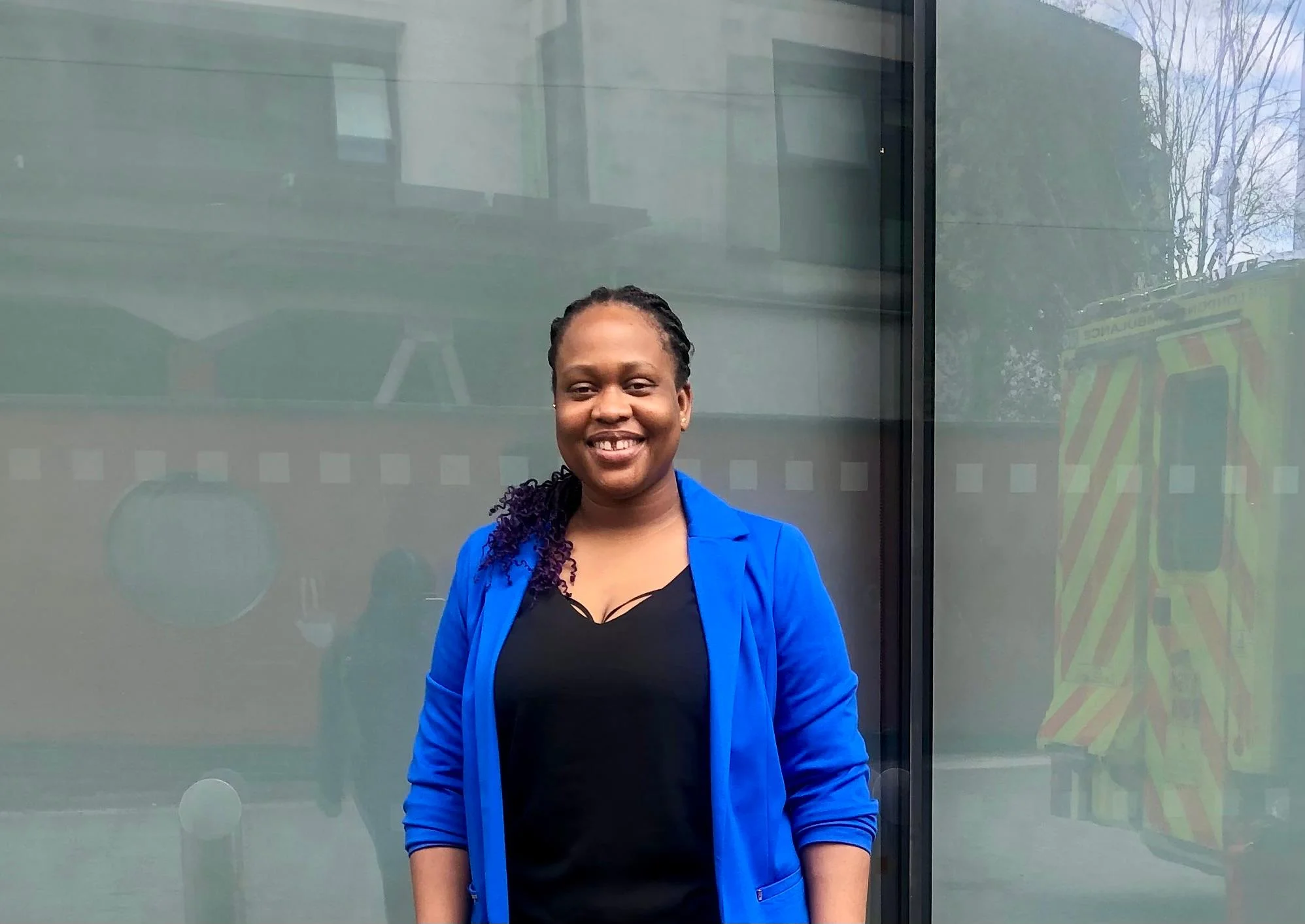

It is 11:47 p.m. in Lagos. A young founder named Oluwaseun stares at his billing dashboard the way a gambler watches a roulette wheel. Every second, another API call flashes red at $0.002 per request. He blinks, refreshes, and sighs. By morning, his chatbot, which is trained to understand Nigerian Pidgin, will have spent $430 translating user messages through a foreign AI API hosted somewhere between Dublin and Oregon. Oluwaseun does the math, and that is half his team’s weekly lunch budget and roughly ₦320,000 just for “intelligence”. The irony? The bot still misinterprets “How far?” as a geography question.

The Dependency Dilemma
This is not a fable. It is the daily arithmetic for dozens of African startups racing to build “AI-powered” solutions for real problems. From Lagos to Nairobi and Accra to Kigali, young founders pay in dollars for every byte of smartness they ship. Africa’s digital economy blossoms, but its most critical layer, which is artificial intelligence, is still rented from abroad. According to the GSMA Mobile Economy Report 2023, Africa had about 489 million mobile internet users, but the continent hosted less than one per cent of global data centre capacity. AWS, Microsoft Azure, and Google Cloud together maintain only about a dozen large data centres across Africa when compared to more than 500 in North America. With such a gap, it is hardly surprising that most startups send data thousands of miles away for processing, plus cost, latency, and privacy risk.
A 2023 Tech Intelligence survey of 120 African startups found that 82% depended on foreign APIs for at least one core business function, with more than half citing “unavailable or unreliable local alternatives” as their main reason. But this dependency is not cheap. OpenAI’s GPT-3 API costs $0.02 per 1,000 tokens for text completion. A typical chatbot exchange consumes around 800 tokens, roughly $0.016 per message. A startup processing 30,000 queries per day spends about $480 daily or $14,400 per month, over ₦11million at the exchange rate. Google’s Vision API charged $1.50 per 1,000 image requests, and AWS Comprehend billed $0.0001 per language unit. It is like paying rent for your brain every time your app “thinks.” Smart, yes, but sustainable? Barely.
The consequences of this digital dependency appear everywhere. Tawi Health, a Nairobi-based telemedicine platform, once relied on a European AI model to triage symptoms in Swahili and English. During Kenya’s 2023 election season, network congestion turned their system sluggish; patients waited up to ten seconds for results. Many gave up and tried competing apps. In Lagos, an edtech firm called EduBot Africa built a voice-learning assistant using foreign speech APIs. Unfortunately, the model trained on American accents often turned “I want to pass” into “I want a bus.” Students laughed, but the company did not. One founder joked at the Africa Tech Summit that year, “We built an African AI company, but our brains live in California.” The audience laughed, but the truth stung.
Defenders of the status quo argue that foreign APIs save time and guarantee reliability. Why re-invent the wheel when it is already rolling smoothly? But many founders have learnt that a wheel spins on someone else’s axle. Convenience in the short term creates vulnerability in the long run. Hidden beneath the glossy speed of integration lie unpredictable pricing changes, privacy concerns, and vendor lock-in. In early 2023, OpenAI briefly restricted free-tier access in some regions, but dozens of African SaaS products went dark for hours. When your startup’s core intelligence lives in someone else’s cloud, you do not truly own your product; you rent it.
The Root of the Problem
Four connected factors keep this dependence alive. The first is infrastructure scarcity. Africa’s collective data centre power density was just 1.3 megawatts per million people in 2023, compared to 50 megawatts per million in Europe, according to Xalam Analytics. GPUs are expensive, and electricity is unreliable. Second is the talent gap. Only about 3% of global AI researchers came from Africa, according to Stanford’s AI Index Report 2023. Many trained engineers emigrate to where infrastructure and research funding already exist. The third factor is data scarcity. Less than 0.1% of the world’s labelled datasets are in African languages, according to 2023 UNESCO. Without data, there can be no homegrown models. Finally, capital incentives are misaligned. Investors reward traction and user growth, not multi-year infrastructure building. Why build an AI lab when a foreign API demo secures your next funding round faster?
The consequences go beyond cost and control. Most African countries still lack robust AI-specific data laws. Nigeria’s NDPR and Kenya’s Data Protection Act give partial frameworks, but sensitive information from financial transactions to medical consultations routinely travels across borders. It is like exporting crude oil only to import refined petroleum, where Africa sends out raw data and buys back processed intelligence at a premium.
The Way Forward
But there is another way, one that does not require billions but just coordination and courage. Imagine regional computer cooperatives shared GPU clusters jointly funded by universities, telcos and tech hubs. A 10-GPU hub using NVIDIA A100s costs roughly $200,000. That is steep for one startup but manageable for fifty sharing resources. Pay-as-you-go access in local currency could slash latency and dependency. The African Development Bank’s Coding for Employment Initiative could host the first of such hubs and call it “The African AI Foundry.”
Another realistic path is in smaller but smarter models. Open-source releases like BLOOM (176B parameters) and Falcon-7B demonstrated that performance does not always require trillion-parameter giants. African developers can fine-tune these open models using techniques like LoRA and quantisation (a geeky term meaning “compress without losing much intelligence”). On-device inference cuts recurring costs and preserves privacy. Open collaboration projects like Masakhane already lead the way, building datasets in Yoruba, Hausa, Swahili, and Amharic.
Governments, too, have a role. Rwanda and South Africa already offer cloud tax incentives; Nigeria and Ghana could do the same. Governments can nurture homegrown infrastructure by reserving a portion of public-sector contracts for AI solutions hosted locally. Even modest procurement quotas can transform incentives overnight. Development partners might redirect a slice of innovation grants to subsidise electricity or internet for regional AI clusters instead of one-off startup contests.
The realistic way forward is hybrid. Not every startup can host its own models tomorrow but they can start migrating core features gradually. Foreign APIs can handle non-sensitive tasks while local inference manages data-heavy or customer-facing functions. Case studies suggest hybrid strategies can cut recurring API costs by 40 to 60 percent within six months. More importantly, they reduce existential risk. If a global provider changes terms or throttles access, the lights stay on.
Africa’s challenge is not a lack of intelligence, but it is the absence of infrastructure where that intelligence can live. The continent spends billions importing “smartness,” but the smartest decision now is to start building it locally, one dataset, one GPU, one fine-tuned model at a time. As Oluwaseun would say, “It’s time we stop paying rent for our own brains.” So here is the question for every founder, policymaker, and investor reading this: do we want to keep renting our future or start building it slowly, deliberately, but sustainably? If Africa’s startups take even one small step today by fine-tuning an open model, contributing a dataset, and joining a cooperative cluster, that collective motion could change the centre of gravity of global AI. The future of African AI should be built here, for here, and owned here. The only question left is whether we will build it or keep paying for someone else’s dream.