


Startup Abuja has opened applications for its 2026 Innovation Challenge, and the offer goes far beyond a simple pitch contest. The program promises more than ₦100 million in combined cash, AWS credits, mentorship, business support, and visibility for startups, SMEs, tech innovators, and entrepreneurs. The official page says founders can apply for free, which lowers the barrier for early teams that need support but do not have room for extra costs.
Startup Abuja is offering more than prize money
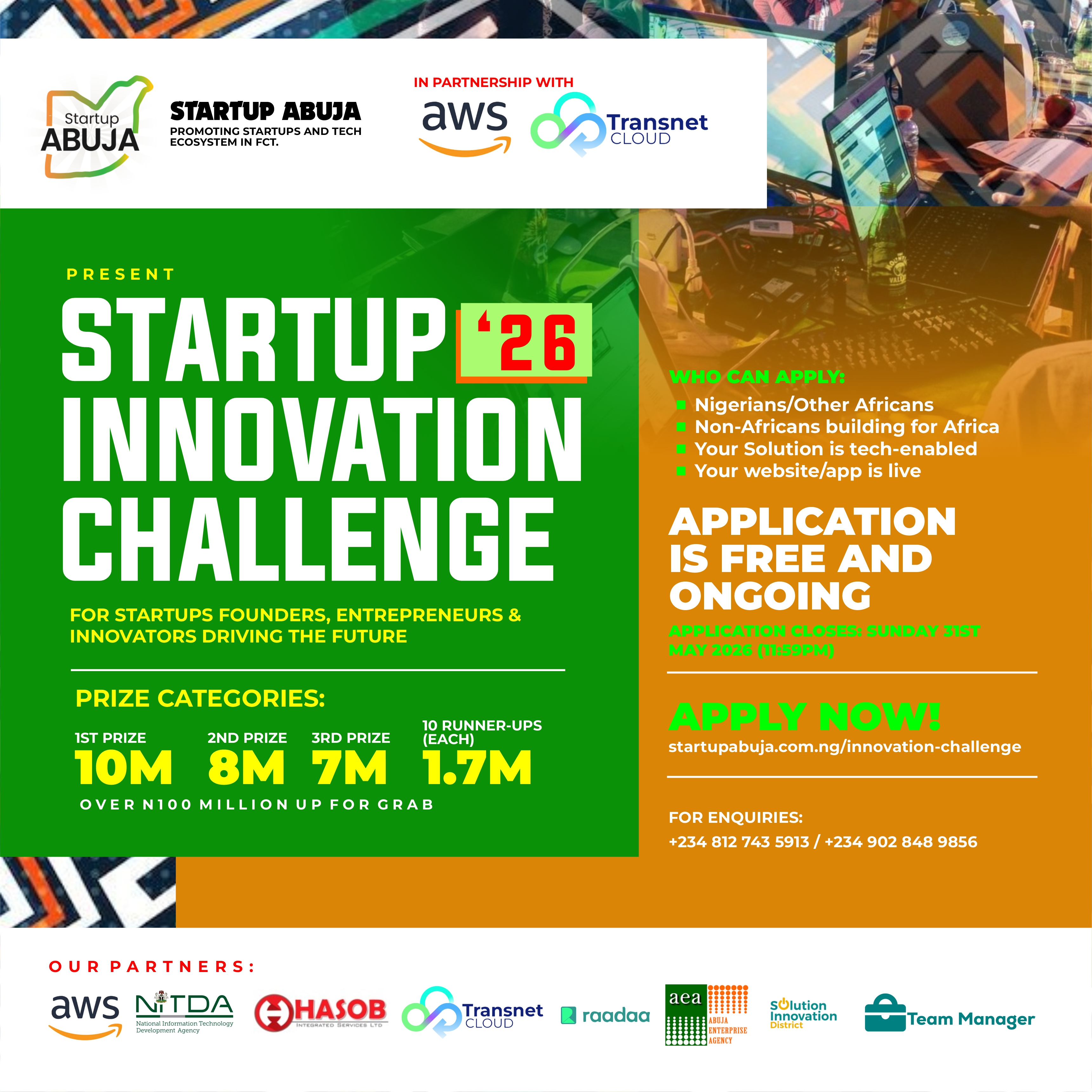
First place carries a total value of ₦10 million, made up of ₦5 million in cash, ₦4 million in AWS credits, and ₦1 million in mentorship and training. Second place carries ₦8 million in total value. Third place carries ₦7 million. Ten runners-up get ₦200,000 in cash plus ₦1.5 million in AWS credits each. All selected participants also get ₦500,000 worth of AWS credits. The challenge also offers a free AWS-powered build environment, mentorship, visibility, and investor-readiness support. This mix gives founders both short-term relief and tools they can keep using after the competition ends.
Many early startups do not fail on ideas alone. They struggle with product costs, cloud bills, market testing, and weak access to the right people. Cash helps, but cloud credits and guided support help founders keep building when fundraising takes longer than planned. In this case, Startup Abuja has packaged those needs into one program instead of treating them as separate problems.
Who should apply
Startup Abuja says the program is open to Nigerians, other Africans, and even non-Africans building for the African market. Applicants need a tech-enabled solution and at least a working prototype or MVP with a functional website. The official page also says applicants must keep their domain, website, and custom email active during the challenge. That requirement sounds basic, but it tells founders exactly what the organisers expect. They want teams that already look and operate like real businesses.
The listed categories include EduTech, HealthTech, FinTech, AgroTech, Web3 and blockchain, e-commerce, SaaS, logistics and transportation, and real estate, along with other tech-enabled solutions. That range gives room for both classic software startups and businesses that use tech to fix everyday problems in health, finance, food, mobility, and commerce.
Startup Abuja is building a local pipeline
Startup Abuja describes itself as a social enterprise and accelerator platform that supports founders and small businesses through training, mentorship, collaboration, ecosystem events, and funding exposure. On its main site, it says it has helped startups raise more than $800,000. It also says it does not directly fund startups as its standard model. Instead, it helps founders prepare for grants, investors, corporate partners, and public programs. This challenge fits that approach, but adds clear prize value and cloud support that founders can use right away.
Nigeria’s official Startup Nigeria portal says the Nigeria Startup Act aims to improve startup viability, simplify access to government services, and support a Startup Investment Seed Fund managed by the Nigerian Sovereign Investment Authority. Those policy tools matter, but founders still need local programs that turn policy into action. They need practical platforms that help them build, pitch, and get seen. The Startup Abuja Innovation Challenge sits in that gap.
What founders should fix before they apply
Founders should treat this application like a live business test. The official page already sets the baseline with a working product, a functional website, and active digital presence. A separate Easygrant listing for the same program highlights the qualities that strong entries usually show, including innovation, feasibility, scalability, team strength, and business model clarity. That means applicants should make it easy for judges to understand the problem, see the product, and trust the team.
In practical terms, founders should fix broken links, update product pages, show what the MVP actually does, and explain the revenue path in plain language. They should also make sure their website feels current and their custom email works. Judges do not need polished noise. They need direct proof that the startup can solve a real problem and keep moving after the challenge ends.
The Startup Abuja Innovation Challenge deserves serious attention because it matches the mood of the market. Funding still exists, but founders have to earn it with clarity and traction. This program gives early teams a better chance to do that through cash, credits, coaching, and exposure in one place. For founders who already have an MVP and a live website, this is the kind of open call worth taking seriously before the deadline closes.