

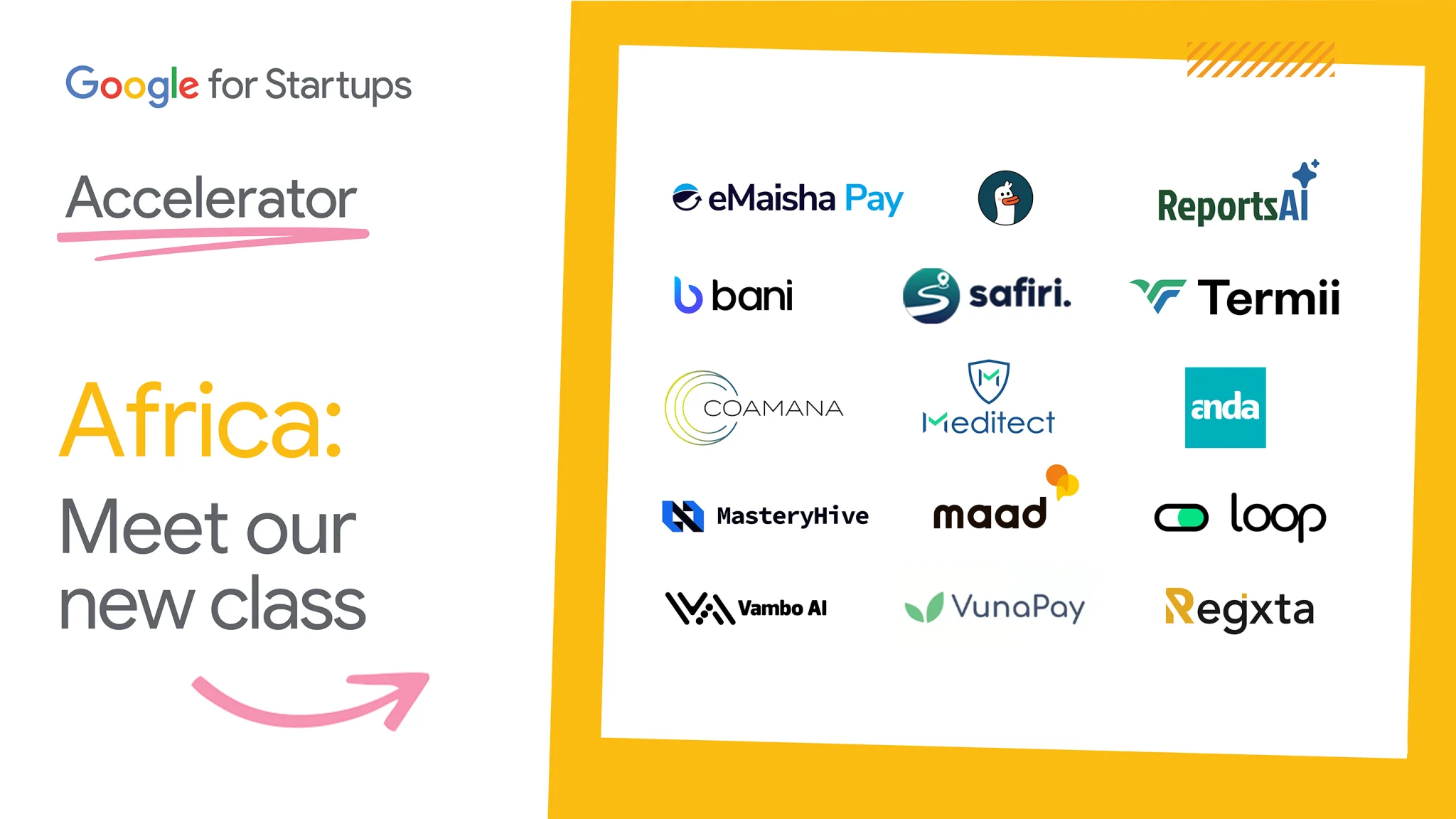
Nearly 2,600 startups applied. Fifteen got in. That is an acceptance rate of less than one per cent — tighter than most elite universities, tighter than most venture funds, tighter than almost any other structured programme on the continent. Four of those fifteen spots went to Nigerian startups, making Nigeria the most represented country in the entire cohort.
That is the number worth starting with. Not from a boastful angle, but as context. Because what these four startups are building, and how they are building it, is the more interesting story.
What The Programme Actually Is
The Google for Startups Accelerator Africa is now in its tenth cohort, and this edition marks a deliberate shift. Previous years focused broadly on digital transformation. Class 10 is specifically oriented around deep tech and AI-native solutions. Google describes the theme as finding founders who are using AI not as a feature but as the foundation of what they are building.
The programme is equity-free, which means participating startups give up nothing to join. It runs from April 13 to June 19, 2026, combining mentorship from industry experts with hands-on technical workshops focused specifically on machine learning and AI implementation. Startups also receive Google Cloud credits and access to Google’s global network.
Since 2018, the accelerator has supported 106 startups across 17 African countries. Those companies have collectively raised over $263 million and created more than 2,800 jobs. Getting selected is not just a credential. It is statistically one of the highest-leverage things an African startup can do.
The Four Nigerian Startups — And What They Are Actually Building
All four Nigerian startups selected for Class 10 are working on infrastructure problems. Not consumer apps. Not marketplaces. The kind of foundational, unsexy, critically important plumbing that everything else runs on.
Bani is building cross-border payments infrastructure designed to eliminate settlement delays for African businesses trading globally. If you have ever run a business in Nigeria that pays suppliers abroad or receives payments from international clients, you know the problem. Transactions that should take hours take days. Money disappears into correspondent banking chains. Bani is building the rails to fix that.
MasteryHive AI is an AI-native platform automating transaction reconciliation, fraud detection, and anti-money laundering monitoring for financial institutions. Banks and fintechs in Africa process enormous transaction volumes, but the back-office systems that verify, match, and flag those transactions are often manual, slow, and expensive. MasteryHive is automating that layer.
Regxta combines alternative data-driven credit scoring with a hybrid digital-agent distribution model to deliver financial products to unbanked micro businesses. Traditional credit scoring requires a formal financial history, which most small Nigerian businesses lack. Regxta uses alternative data, such as transaction behaviour, mobile usage patterns, and business activity signals, to build a picture of creditworthiness for people the formal system cannot see.
Termii is an AI-native communications infrastructure platform ensuring reliable financial messaging for banks and fintechs. Every time you receive a login PIN, a payment OTP, or a fraud alert from your bank, that message has to travel through a communications infrastructure that can fail. Termii builds and maintains that infrastructure so financial transactions do not break down at the last mile.
Gbolade Emmanuel, CEO of Termii, was direct about what the programme means in practice. “At Termii, we’re building AI-powered infrastructure that ensures financial transactions don’t fail, from login PINs to payment OTPs and fraud alerts,” he said, per Business AM Live. “The Google Startup Accelerator is helping us accelerate our AI roadmap and scale globally, and even in the first week, access to technical support and insights has been incredibly valuable.”
This Is Not AI For Hype’s Sake
There is a version of this story that writes itself badly. Four Nigerian startups make a competitive cohort, everyone celebrates, the article ends. That version misses the point.
What is worth paying attention to is specifically how these four companies are using AI. None of them are building chatbots. None of them have bolted “AI-powered” onto a pitch deck to attract attention. They are applying machine learning to problems that are structural, specific, and deeply African in character: settlement delays that add cost to every cross-border transaction, credit invisibility that locks millions of small businesses out of capital, fraud patterns that are unique to emerging market financial infrastructure, and communications failures that break down at the exact moment a financial transaction needs to be completed.
That specificity is what got them in. The problems they are solving are real. The technology they are using is doing actual work. And the competitive field they beat to get here — 2,596 other applications — was continental.
Folarin Aiyegbusi, Head of Startup Ecosystem for Google Africa, put the broader picture clearly. “African startups are driving essential economic growth and social development,” he said. “Our role is to serve as a supportive partner, providing these developers and founders with the technical infrastructure, mentorship, and global network they need to scale their solutions and amplify their real-world impact.”
Four of fifteen. Less than one per cent. All four building infrastructure. All four Nigerian. That is definitely not a coincidence. I’ll leave you here to think about it.