Techsoma Homepage
  • Reports
  • Reports
Home FinTech & Digital Money

Piggyvest Reports Gen Z as Nigeria’s Most Vulnerable Generation, While Middle Children Bear the Heaviest “Black Tax”

by Covenant Oluwadunsin Aladenola
March 26, 2026
in FinTech & Digital Money
Reading Time: 4 mins read
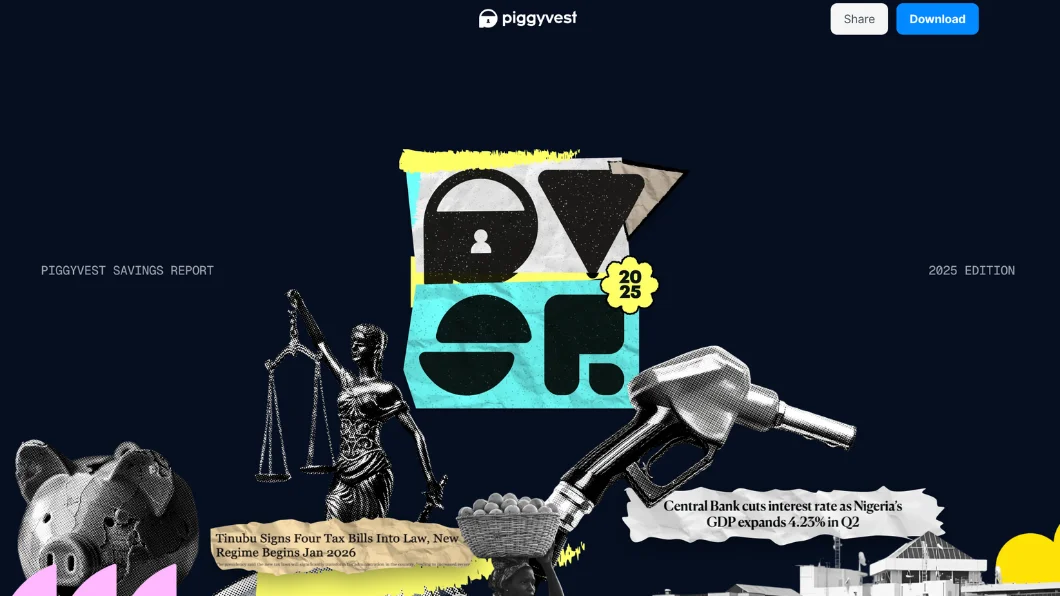
Piggyvest Savings Report 2025

If you spend enough time on Nigerian social media space, you’d think every young person is a tech bro or creator with five different side hustles. You’d also think the firstborns are the only ones suffering from family billing.

But the new Piggyvest Savings Report 2025 shows that the internet is lying to us.
Piggyvest Savings Report 2025

Piggyvest asked over 26,000 Nigerians about their money, and the truth is pretty harsh. Gen Z is actually the most broke and vulnerable age group right now. And surprisingly, middle children are the ones carrying the heaviest family billing, not the firstborns.

Here is what the numbers actually say.

The Gen Z “Multiple Income” Myth

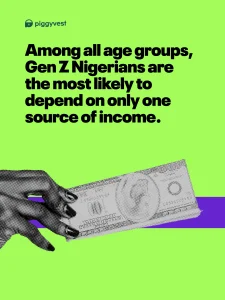
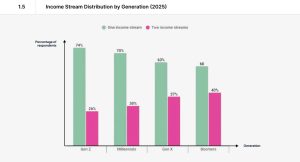
The biggest lie about young Nigerians is that everyone has multiple side hustles. The reality? Gen Z is the most likely age group to rely on just one source of income.
Piggyvest Savings Report 2025

A massive 74% of Gen Z survive on just one income stream. Only 26% actually have that second or third hustle.

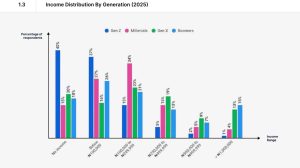
And the money they do make isn’t a lot. Gen Z is the most likely to earn below ₦100,000 or have no income at all.
Piggyvest Savings Report 2025

Just look at the breakdown:

  • 40% have absolutely zero monthly income.

  • 37% earn below ₦100,000 monthly.

  • 15% earn between ₦100,000 and ₦249,999.

  • Only 1% earn ₦1,000,000 or above.

Because of this low pay, they have almost no safety net. Only 31% of Gen Z have an emergency fund. If a sudden bill or medical emergency drops, the vast majority have absolutely nothing to fall back on.

The “Middle Child” Black Tax

While Gen Z struggles to make ends meet, another quiet crisis is happening with family billing.
Piggyvest Savings Report 2025

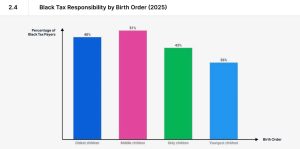
We usually pity the firstborns when it comes to the “Black Tax” (sending money back home). But the data shows we’ve been looking at the wrong siblings. Today, middle children are actually carrying the heaviest burden.

Here is exactly who is funding the family:

  • Middle children: 51% pay black tax.

  • Oldest children: 48% pay black tax.

  • Only children: 43% pay black tax.

  • Youngest children: 36% pay black tax.

The fact that half of all middle children are actively paying black tax shows that family billing doesn’t just stop at the oldest child anymore. It has shifted heavily onto the siblings in the middle.

The Takeaway

The Piggyvest Savings Report 2025 gives us a major reality check. The rich Gen Z techie with multiple incomes is the exception, not the rule. Most young Nigerians are just trying to survive on low pay with no backup funds. Meanwhile, middle children are quietly stepping up to fill the family gaps.

If we want to talk about surviving the Nigerian economy, we need to start being honest about who is actually carrying the weight.

Read the full findings and insights: Click here to read the Piggyvest Savings Report 2025

ADVERTISEMENT
Covenant Oluwadunsin Aladenola

Covenant Oluwadunsin Aladenola

Covenant Aladenola is part of Techsoma’s senior editorial team, where he helps shape the publication’s storytelling direction and editorial strategy...

Recommended For You

Rwanda fintech hub gains ground as new law backs digital finance
FinTech & Digital Money

Rwanda fintech hub gains ground as new law backs digital finance

by Faith Amonimo
April 9, 2026

Rwanda is backing its fintech ambition with new virtual asset rules, stronger payment rails, and cross-border deals that give Kigali a clearer path into Africa’s fintech race.

Read moreDetails
The Cost of No Credit History: Inside Nigeria’s High Fintech Loan Rates

The Cost of No Credit History: Inside Nigeria’s High Fintech Loan Rates

April 7, 2026
Tayo Oviosu. Global CEO of Paga

Tayo Oviosu Steps Up as Group CEO, Paga Names Interim Nigeria Lead

April 7, 2026
Payment Gateway in Nigeria

How to Choose a Payment Gateway for a Nigerian Online Business

April 6, 2026
Flutterwave banking license

Beyond the Gateway: Flutterwave’s Masterplan for the Future of African Finance

April 2, 2026
Next Post
mobile money report 2026

Africa Leads as Global Mobile Money Transactions Hit $2 Trillion

8 Must-Attend African Tech Events in February 2026 That Will Transform Your Business

7 African Tech Conferences to Attend in April 2026

Leave a Reply Cancel reply

Your email address will not be published. Required fields are marked *

ADVERTISEMENT

Subscribe to our Newsletter

Recent News

pewbeam open source alternative

Pewbeam Has an Open-Source Rival – and That’s a Threat Every AI Startup Should Take Seriously

April 10, 2026
South African Startup Refiant Raises $5M to Make AI Burn Less Energy

South African Startup Refiant Raises $5M to Make AI Burn Less Energy

April 10, 2026
Rwanda fintech hub gains ground as new law backs digital finance

Rwanda fintech hub gains ground as new law backs digital finance

April 9, 2026
Africa's Data Centre

Africa’s Data Centre Gap Is One of the Biggest Infrastructure Investment Opportunities Right Now

April 9, 2026
Muse Spark Announcement

Meta Superintelligence Labs Releases Muse Spark, Its First Major AI Model After Billion-Dollar Overhaul

April 9, 2026

Where Africa’s Tech Revolution Begins – Covering tech innovations, startups, and developments across Africa

Facebook X-twitter Instagram Linkedin

Quick Links

Advertise on Techsoma

Publish your Articles

T & C

Privacy Policy

© 2025 — Techsoma Africa. All Rights Reserved

Add New Playlist

No Result
View All Result

© 2026 JNews - Premium WordPress news & magazine theme by Jegtheme.