

For years, moving money across African borders has been slow, costly, and unpredictable. Flutterwave wants to change that.
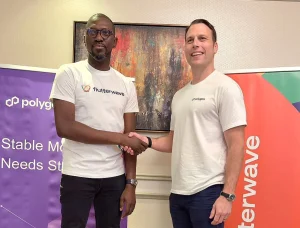
The Nigerian fintech giant has partnered with Polygon Labs, the blockchain developer behind one of the world’s leading Layer 2 networks, to launch a stablecoin-powered cross-border payment system across multiple African countries. The pilot phase begins with enterprise clients, with a wider consumer rollout expected after testing.
Instead of routing transactions through correspondent banks, Flutterwave’s new system will use blockchain rails built on Polygon to settle payments in stablecoins such as USDC and USDT. That shift could cut settlement times from days to near-instant speeds.
Africa’s remittance market is worth more than USD 95 billion annually, according to the World Bank, and the average fee for sending money remains among the highest globally at about 8 percent per transaction. For millions of small traders, freelancers, and families, those costs add up fast. Flutterwave’s blockchain play aims to make cross-border transfers as seamless as sending a text message.
Why Remittances Still Hurt
Africans send billions across borders every year; to pay suppliers, support relatives, or receive overseas income, yet the process remains expensive and slow.
Most transfers rely on a chain of banks or remittance providers that take multiple cuts along the way. A merchant in Lagos paying a supplier in Nairobi can lose up to 10 percent of the value in transaction fees and foreign-exchange spreads, with settlement taking several days.
These hurdles have kept many small businesses informal and cash-based. They also limit trade within the continent, even as the African Continental Free Trade Area (AfCFTA) pushes for deeper integration.
By moving settlements to the Polygon blockchain, Flutterwave hopes to bypass those barriers. The company says the new system will deliver near-instant settlement capability and drastically lower costs by replacing legacy payment intermediaries with blockchain infrastructure.
How It Works
Instead of relying on intermediary banks, Flutterwave will allow businesses to convert local currency into stablecoins, send them via Polygon’s low-cost Layer 2 network, and withdraw funds as local currency in another country.
The platform’s first phase targets exporters, importers, and regional businesses that transfer money frequently. Retail users will follow once the system scales.
Polygon provides the blockchain infrastructure; Flutterwave handles compliance, KYC, liquidity, and fiat conversion. The result is a payment flow that feels familiar to users but runs on decentralised rails behind the scenes.
For years, blockchain advocates have promised instant, borderless money. Flutterwave is now testing what that actually looks like in Africa’s most active fintech market.

What This Means for Africa’s Fintech Landscape
This partnership is more than a technical upgrade. It signals where African fintech is heading.
For the first time, a major regulated payment processor on the continent is adopting stablecoins for settlement. That puts Flutterwave in the same experimental space as Stripe, which began supporting stablecoin payments for global merchants in 2024.
If it works, Flutterwave could become the first African company to process stablecoin settlements at scale. The implications are broad. Businesses could pay suppliers instantly, freelancers could receive USD payments directly into digital wallets, and remittance operators could plug into the same rails rather than build their own.
Under AfCFTA, governments have sought cheaper intra-African payments for years. Flutterwave’s model could finally offer one, and do so without relying on Western banking networks.
Competitors like Chipper Cash and MFS Africa still depend largely on traditional corridors. Flutterwave’s pivot suggests that the next leap for African fintech may come from blockchain infrastructure rather than mobile apps alone.
The Regulatory and Market Questions
Most African countries still lack clear rules for stablecoins, even as digital-finance regulation advances. Flutterwave’s payment-service licences offer some protection, but cross-border use of crypto-backed assets adds complexity.
Liquidity is another challenge. Converting between fiat and stablecoins requires reliable access to USD reserves, which can be difficult in markets with dollar shortages.
Some central banks remain wary of stablecoins, fearing capital flight or reduced control over currency flows. Flutterwave will need to prove its system is transparent and compliant to win regulators’ trust.
Still, its track record and scale give it an advantage. If the pilot succeeds, it could set a model for how blockchain-based payments operate legally and safely across the continent.
The Beginning of Blockchain Payments in Africa
Flutterwave’s partnership with Polygon marks a turning point in African payments. It shows that blockchain can move beyond speculation to become real financial infrastructure.
By using stablecoins to power cross-border transfers, Flutterwave is transforming blockchain into a utility, one that can make money move faster, cheaper, and borderless across a continent where payments have long lagged behind innovation.
If it works, sending money in Africa might finally be as quick as sending a message.