
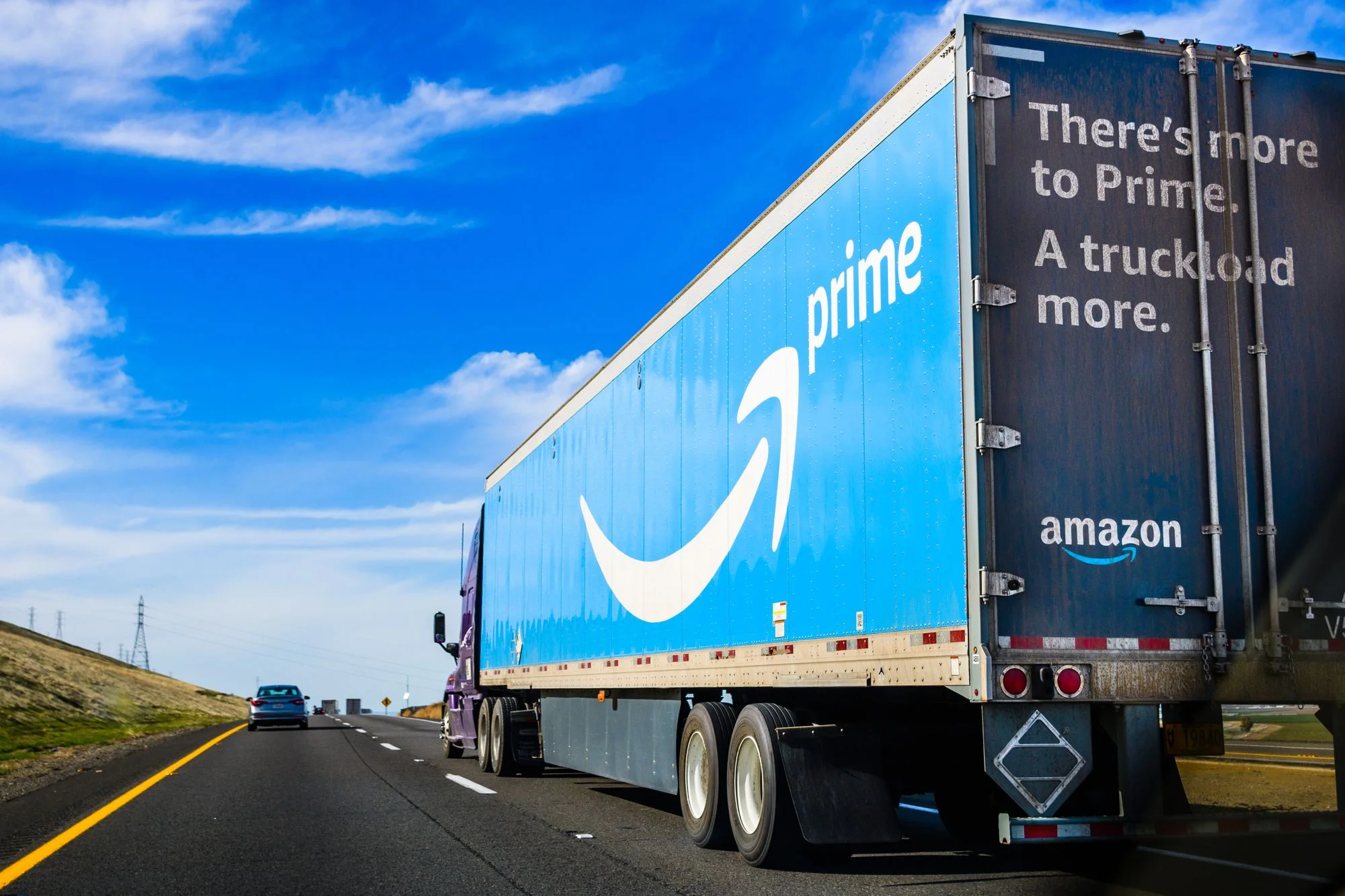
Amazon has long been the quiet backbone of global e-commerce logistics. Now, it is making that backbone available to the world. The company on Monday announced the launch of Amazon Supply Chain Services (ASCS), opening its freight, distribution, fulfilment, and parcel shipping capabilities to businesses of all types and sizes.
The move positions Amazon as a direct competitor to established logistics giants like UPS and FedEx, and signals the company’s intent to turn decades of internal infrastructure investment into a standalone commercial product.
From Internal Tool to Market Offering
Amazon and its marketplace sellers have been using the capabilities now featured in ASCS for years. Still, those services are now accessible to any business, including retailers, manufacturers, healthcare shippers, and automotive companies.
The playbook mirrors Amazon’s approach with Amazon Web Services, in which it built out cloud computing infrastructure for its own needs before offering access to other businesses. It is a familiar Amazon strategy: build for yourself, then sell to everyone else.
What ASCS Actually Offers
Amazon Supply Chain Services leverages Amazon’s network of over 200 U.S. fulfilment centres, 80,000 trailers, 24,000 intermodal containers, and 100-plus aircraft.
The services on offer include full truckload, less-than-truckload and intermodal transport; air freight; inbound shipping from China to the U.S., including customs clearance; two-to-five-day parcel shipping; and bulk storage and distribution. Businesses can pick and choose which components they need, with the flexibility to scale up or down as demand changes.
By extending the global infrastructure, technology, and operational expertise behind Amazon’s own supply chain, ASCS is designed to help businesses improve performance, reduce complexity, and operate more efficiently.
Early Adopters Already On Board
Amazon is launching the new service with several major businesses, including Procter & Gamble, 3M, Lands’ End, and American Eagle Outfitters. For 3M and P&G, Amazon’s freight services will ship products from manufacturing sites to distribution networks, and fulfil orders directly to customers for Lands’ End and American Eagle.
The early sign-ups are notable. These are not small players testing a new tool, they are some of the largest consumer goods and retail brands in the world, lending credibility to Amazon’s pitch that ASCS is enterprise-ready from day one.
A Massive Market Opportunity
Third-party logistics services represent a global market estimated at more than $1.3 trillion, and Amazon’s scale advantage is difficult to overstate. The company already surpassed the U.S. Postal Service as the top domestic delivery provider by volume in 2025, according to ShipMatrix data. The company operates over 500 fulfilment centres globally and delivers to millions of addresses daily. That density, built and paid for through years of consumer retail, gives Amazon a cost structure that traditional logistics providers would struggle to match.
ASCS is a major growth opportunity for Amazon, supported by continued investment in forecasting, automation, and AI to enhance the speed and accuracy of its supply chain solutions.
What It Means for the Logistics Industry
The announcement is a direct challenge to UPS, FedEx, and the broader third-party logistics sector. Amazon is not merely offering an alternative; it is offering infrastructure that most competitors cannot replicate at an equivalent scale or cost.
For global businesses weighing logistics partnerships, the calculus is shifting. ASCS gives them access to a network that has already been stress-tested by one of the world’s largest retailers. Whether that is enough to pull contracts away from established providers will depend on pricing, reliability, and how aggressively Amazon markets the service in the months ahead.
What is clear is that Amazon is no longer content to be just a retailer with a good logistics arm. It wants the logistics business itself.