
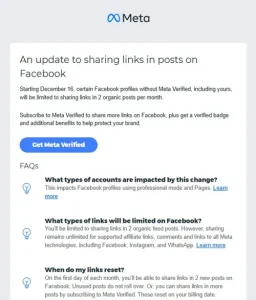
Meta now limits non-paying Facebook users to just two link posts per month. Want to share more? That’ll cost you $14.99 monthly for Meta Verified.

Social media strategist Matt Navarra first spotted the restriction in action. The test targets professional accounts and Facebook Pages specifically. These business-focused profiles suddenly face strict limits on their core marketing strategy.
Meta Verified Becomes Gateway for Content Creators
Meta’s paid subscription service now holds the keys to unlimited link sharing. The company confirmed that this test aims to boost Meta Verified subscriptions by adding “additional value” for paying users.
Business owners face subscription costs ranging from $14.99 to $499 monthly. The entry-level plan costs $14.99 on mobile apps or $11.99 through Facebook’s website. Premium tiers reach $149.99 monthly, with the maximum plan hitting $499.
Meta’s “Other” revenue stream, which includes Meta Verified subscriptions, jumped to $690 million in Q3. That’s double the amount from when the service launched in 2023.
Publishers Dodge the Bullet for Now
Good news for news organizations: Meta excluded publishers from this current test. The company specifically told reporters that publisher Pages won’t face these restrictions at this stage.
This decision protects news outlets that rely heavily on Facebook traffic. Many publishers share multiple article links daily to drive readership.
Facebook Users See Tiny Link Post Engagement
Meta’s own data reveals why the company feels confident about restricting links. According to their transparency report, posts with external links account for less than 2% of all Facebook views in the US.
The vast majority (98%+) of Facebook engagement comes from native content without external links. YouTube, TikTok, and GoFundMe topped the list of most-shared external domains.
This low engagement gives Meta cover to experiment with restrictions. The company can limit links without significantly hurting overall platform activity.
Social Platforms Wage War Against External Links
Facebook joins other platforms in restricting external content. X (formerly Twitter) actively reduces visibility of posts containing external links. The platform’s algorithm now penalises link-heavy content.
LinkedIn also limits reach for posts with external links, cutting visibility by up to 35%. These platforms want users to stay on their sites longer, not clicking away to other websites.
The trend reflects a broader shift toward platform-native content. Social media companies make more money when users remain engaged within their ecosystems.
Small Businesses Face Tough Choices
The link restrictions hit small businesses hardest. Many rely on Facebook to drive traffic to their websites, blogs, and online stores.
Business owners now must choose between several costly options:
- Pay $15 monthly for Meta Verified
- Limit themselves to two strategic link posts monthly
- Post links in comments (which Meta may also restrict)
- Abandon Facebook marketing entirely
Affiliate marketers and content creators face similar dilemmas. Their business models depend on driving traffic to external platforms and products.
Content Strategy Pivots Become Necessary
Smart marketers are already adapting their Facebook strategies. Instead of sharing external links, they’re focusing on:
- Native video content and Reels
- Image carousels with key information
- Text-based posts that build brand awareness
- Community engagement without external traffic goals
This shift requires rethinking content calendars and engagement metrics. Businesses must prioritise brand building over direct traffic generation on Facebook.
Meta Tests Waters for Broader Rollout
While currently limited to select users, this test could expand platform-wide. Meta rarely announces major changes without gradual testing phases.
The company’s statement emphasises learning whether unlimited link posting “adds additional value” for paid subscribers. This language suggests Meta sees link sharing as a premium feature.
Business owners should prepare for the potential expansion of these restrictions. Early adaptation could provide competitive advantages as others struggle with sudden changes.
Revenue Strategy Behind the Restriction
Meta’s move makes financial sense from a platform perspective. The company generates revenue through:
- Advertising from users staying on Facebook
- Meta Verified subscription fees
- Reduced server costs from fewer external redirects
External links pull users away from Facebook’s ad-rich environment. Restricting these links keeps eyeballs on Meta’s profitable content streams.
The strategy mirrors other tech companies monetising previously free features. Twitter/X charges for advanced features, while Instagram limits certain business tools to paid accounts.