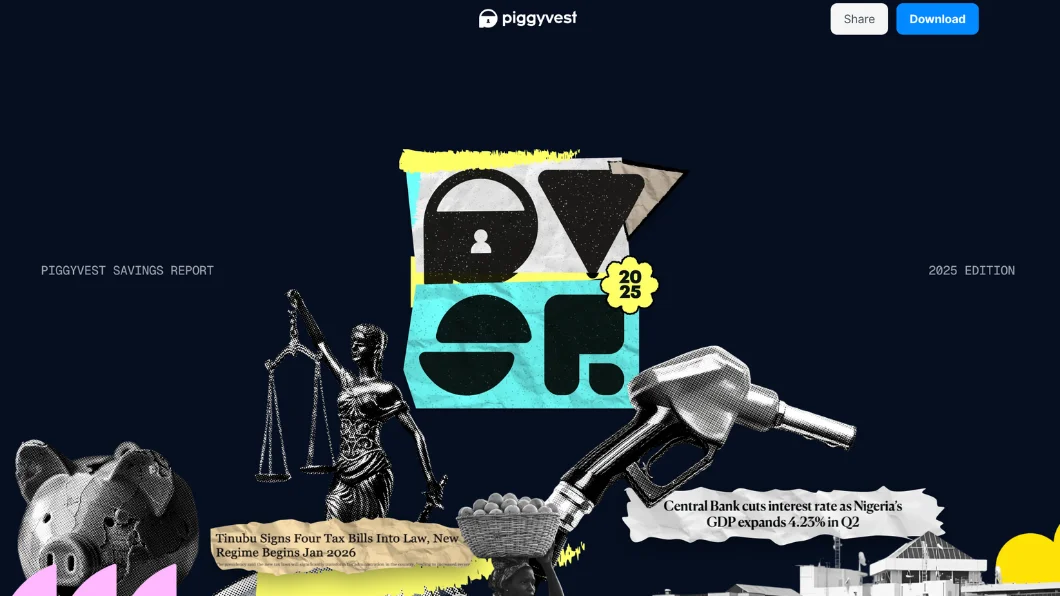
Just weeks ahead of its 10th anniversary, Piggyvest has released the third edition of its highly anticipated annual Savings Report. To capture a true picture of the Nigerian economic reality, the fintech giant expanded its scope significantly, interviewing over 26,000 respondents in rural and urban areas across all six geopolitical regions.


The findings lay bare the crushing scale of financial pressure facing the country today. Most alarmingly, the report reveals that only a meager 6% of Nigerians currently feel secure and confident in their financial situation.
But beneath that headline figure lies an even more drastic shift in everyday financial behavior: saving money, once a standard financial baseline, is rapidly becoming a luxury.
The Collapse of the Savings Culture
The data indicates a stark three-year downward trend in the ability of Nigerians to put money aside. In 2023, a solid 64% of respondents reported saving consistently every month. By 2025, that figure has plummeted to just 40%.
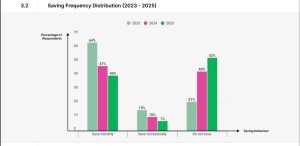
Conversely, the percentage of Nigerians living with zero financial buffer has skyrocketed. Today, 53.50% of Nigerians report that they do not save at all. This is more than double the 21% who reported not saving just two years ago in 2023.
It’s Not Indiscipline; It’s Survival
When asked why they aren’t putting money away, 60% of non-savers state bluntly that they simply do not earn enough to save. A closer look at this group reveals a severe income squeeze: 57% of those who don’t earn enough to save currently have no monthly income at all, while another 29% earn below ₦100,000.
As Odun Eweniyi, COO of Piggyvest, points out, this trend is a glaring indicator of a macroeconomic struggle rather than individual financial recklessness.
“Nigerians don’t have a savings problem, we have a systems problem. People are actively choosing to put money aside… the intent is there,” she explains. “What we’re seeing at scale is that even people with the discipline and intent to save are being forced to redirect those funds toward the basics: food, fuel, rent, school fees”.
This reality has given rise to what financial experts in the report label “rational short-termism”. When more than 50% of the population enters a new month, uncertain if their earnings will even cover basic expenses, survival needs inevitably crowd out the capacity to save or invest.
The Weight of the Black Tax
Compounding the pressure of rising living costs and stagnant earnings is the cultural reality of the “black tax.” The report highlights that more than 3 in 5 income-earning Nigerians are currently providing financial support to family members beyond their immediate household.
When your income is already stretched thin by inflation, carrying the financial weight of an extended family makes building an emergency fund nearly impossible, which explains why only 4 in 10 Nigerians currently have a financial safety net to fall back on.
Looking Forward
Despite the sobering numbers, there is an underlying tenacity to how Nigerians are navigating these economic headwinds.
“The resilience reflected in this report, the willingness to save despite constraints, to invest in businesses despite risk, and to support one’s family despite limited margins — speaks to a population determined to build stability even in uncertainty,” noted Joshua Chibueze, Chief Marketing Officer and Co-founder of Piggyvest. “Our commitment is to continue developing tools that make that stability more achievable, more accessible, and more sustainable for millions more Nigerians.”
As the economic landscape continues to shift, the path to wealth creation in Nigeria has clearly changed. It is no longer just about generating multiple streams of income; it is about surviving the margins long enough to build a buffer.
Read the full findings and insights: Click here to read the Piggyvest Savings Report 2025