

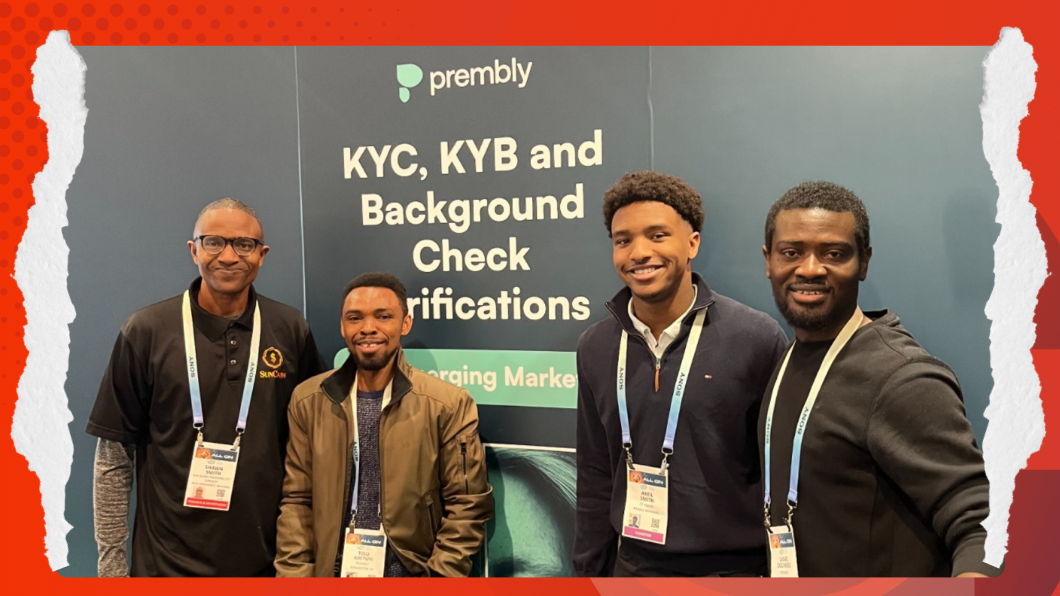
Prembly has launched FraudLens, Africa’s first open-source fraud intelligence bank. The platform pools verified fraud data across financial institutions, so that when a fraudster hits one bank or fintech, every other institution on the network gets to know about it immediately.
The Silent System That Keeps Fraudsters Safe
Nigeria’s financial fraud problem is not just a technology failure. It is a communication failure.
When a bank or fintech detects fraud, the common instinct is to deal with it quietly. No press release. No report. No warning to other platforms. Lanre Ogungbe, CEO of Prembly, has watched this play out repeatedly across the industry.
“They use the same tactics on another platform because you were quiet about it,” Ogungbe told WeeTracker. “We’ve seen this multiple times play out, enabled by your silence.”
The incentive to stay quiet runs deep. Nigerian consumers carry the memory of the 1990s, when banks collapsed and people lost their savings. So institutions still fear that any public acknowledgement of a fraud event will trigger a customer panic and a mass withdrawal. The result is a system where fraudsters are documented nowhere, which means they simply move on to the next platform and do it again using the same credentials.
As Ogungbe puts it directly, “Fraud really works when data is hidden.”
How FraudLens Works in Practice
FraudLens has two distinct layers, public and private.
The public layer is a live dashboard that displays fraud trends, reported event counts, and geographic patterns across Nigeria. Anyone can access it. It shows data points such as the 451 fraud events reported in a given week, unusual activity in Niger State, and Lagos leading in attempted identity compromises.
The private layer is where actual intelligence sharing happens. Verified, regulated businesses that subscribe to Prembly’s platform gain access to a shared database of flagged actors. When a business onboards a new customer, the system checks whether that person’s phone number, national ID, or device fingerprint has already appeared in a fraud report submitted by another institution. The business then decides how to proceed, but at a minimum, it knows what it is walking into.
Every report submitted to the private layer must include vetted evidence. Businesses cannot simply flag someone without documentation. A chargeback fraud report requires the transaction record. An identity fraud report requires proof of the ID mismatch. Ogungbe is direct about why this standard exists: “We can’t just have somebody submit something false. If you wrongly claim a consumer committed fraud, there’s a liability process. There’s a retrieval process if we made a mistake.”
Why Competitors Will Still Agree to Share Intelligence
Sharing fraud data with competitors sounds counterintuitive. Banks spend heavily competing for the same customers. Exposing a fraud event also exposes an internal weakness. So the natural question is, why would any institution cooperate?
Ogungbe’s answer points to what already happens behind closed doors. The Bank Verification Number (BVN) system is jointly owned and run by Nigerian banks. The Nigeria Inter-Bank Settlement System is a private entity also owned by banks. Compliance officers from every major financial institution meet monthly and exchange information. The competition visible in marketing campaigns does not extend to the back rooms where fraud is discussed.
“From a public market perspective, it has to appear as though there’s a war between everybody,” Ogungbe said. “But what really happens at the back end is different.”
Credit bureaus already share default payment data by law. Fraud intelligence, Ogungbe argues, is the next logical layer of that existing infrastructure. FraudLens is not asking institutions to do something they have never done before. It is giving them a structured, verified, technically sound platform to do it better and more openly.
The Three Groups FraudLens Serves
FraudLens serves three distinct user groups, each with a different need.
Financial institutions and fintechs gain access to verified intelligence on known bad actors, including personally identifiable information linked to documented fraud cases and supporting evidence. Researchers and policymakers can use the aggregated repository to design better compliance policies and prevention strategies. Consumers can access the public side of the platform as a fraud awareness resource, learning to recognise common scam patterns and warning signs before they become victims.
This multi-stakeholder design reflects Prembly’s broader intent. The goal is not just to help banks protect themselves. It is to raise the baseline level of fraud awareness across the entire digital financial ecosystem.
The Safeguards Prembly Built to Prevent Abuse
Any database of alleged fraudsters raises legitimate concerns. Who decides someone is a fraudster? What happens when an institution gets it wrong? Ogungbe does not dismiss these questions.
The system currently restricts access to businesses with proper compliance structures. Individuals cannot report other individuals. The private database stays with verified institutions only, and each flagged entry requires supporting evidence before it goes live. Ogungbe acknowledges the system is not yet airtight, particularly for individual-level protections. “Can it be weaponised? Yes,” he said. “Have we been able to close the loop from an individual perspective? No. That’s why we’re not releasing that to the public.”
Prembly plans to expand the individual consumer-facing features as the safeguards mature.
Prembly’s Rollout Starts in Nigeria, Then Spreads Across Africa
Prembly, founded in 2021 by Lanre Ogungbe, Niyi Adegboye, and Tolu Adetuyi, originally operated as IdentityPass before rebranding. The Y Combinator-backed company raised a $2.8 million seed round in 2022, led by MaC Venture Capital with participation from Y Combinator, Soma Capital, and others. It currently serves over 800 businesses monthly across Africa, using AI-powered tools including IdentityPass, IdentityRadar, and Background Checks.
FraudLens launches first in Nigeria, one of Africa’s largest digital financial markets, before the company scales it to other African countries in the coming months.
Prembly is not alone in the identity verification and fraud detection space. Other companies, including Smile ID and Dojah, are also building tools to help African financial institutions manage fraud risk. However, the open-source, shared intelligence model that FraudLens introduces has not previously existed at this scale on the continent.
Prembly Measures Success by How Much Trust It Creates
Ogungbe does not describe success in terms of product metrics or press attention. He measures it by a different standard, one grounded in everyday financial behaviour.
He wants to see the Opay rider accept a transfer without waiting to confirm it arrived. He wants the POS operator to trust that the money actually moved. He wants the ordinary consumer to stop opening their banking app with a feeling of dread.
“That is what we’re tracking,” he said. “Create more trust within the consumer space.”
Fraud will not disappear entirely. Fraudsters adapt, build new tactics, and find new systems to exploit. Ogungbe is clear-eyed about that reality. The aim is to make fraud harder to repeat at scale and to introduce accountability into a system that currently rewards silence. “If we can reduce fraud losses by half or more in five years, that’s a winning streak for us,” he said.
For a financial system that once watched the same fraudster walk through five front doors in the same week, a shared intelligence network is a meaningful first step toward changing that.