The tech industry once measured progress in gigahertz and transistor counts. Today, it measures it in API calls and monthly subscriptions. This shift from hardware innovation to cloud dependency represents one of the most significant transformations in computing history, and it’s changing how we think about ownership, capability, and progress itself.

The Economics of Instant Gratification
Hardware innovation follows a brutal timeline. Designing a new chip takes years. Manufacturing requires billion-dollar fabrication plants. Distribution demands global supply chains. By the time a device reaches consumers, it’s already outdated by internal roadmaps.
Cloud services operate on a different clock. A company can deploy new features to millions of users overnight with no manufacturing delays, no inventory risk, and no physical distribution. When OpenAI improves GPT, every user gets the upgrade instantly. When AWS launches a new machine learning service, it’s immediately available worldwide. This velocity makes traditional hardware cycles look glacial.
The economic incentives are equally compelling. Hardware companies face the nightmare of commoditization; each new processor generation delivers diminishing returns while costs remain astronomical. Cloud providers, meanwhile, enjoy recurring revenue streams and network effects that grow stronger with scale. Why invest billions in marginally faster chips when you can build services that customers pay for monthly?
The Illusion of Ownership
We’ve traded ownership for access, often without realising it. Your smartphone is powerful, but it’s increasingly just a window to remote servers. Photo processing happens in the cloud. Voice assistants phone home for answers. Even mobile games often require a constant connection to servers to function.
This dependency runs deeper than convenience. Modern “smart” devices like thermostats, cameras, and door locks are often useless without their cloud services. When companies shut down these services, as they inevitably do, expensive hardware becomes electronic waste. We’re not buying products anymore; we’re renting temporary access to functionality that can be revoked at any time.
When Innovation Means Subtraction
Hardware companies now compete by removing capabilities. Laptops ship without upgradeable RAM. Phones eliminate headphone jacks and expandable storage. The justification is always the same: you don’t need local capability because the cloud provides it.
Sometimes this trade-off makes sense. Cloud backup is more reliable than external drives. Collaborative documents eliminate version control nightmares. But we’ve crossed into territory where the cloud replaces functions that worked perfectly well offline. Photo editing that once happened instantly on your device now requires uploading gigabytes to remote servers. Simple tasks demand internet connections and subscription fees.
The Centralisation Problem
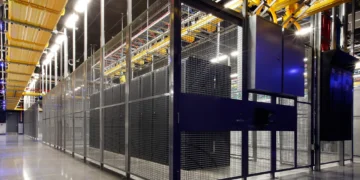
Cloud dependency concentrates power in unprecedented ways. A handful of companies (Amazon, Microsoft, Google) control the infrastructure underlying modern computing. When AWS experiences an outage, significant portions of the internet disappear. This centralisation creates vulnerabilities that hardware diversity once prevented.
It also shapes what’s possible. Cloud providers decide which applications to allow, which features to enable, and which business models to permit. They can change terms of service, raise prices, or discontinue services with minimal recourse for users. The open-ended potential of a computer you truly own has been replaced by carefully managed experiences designed to maximise recurring revenue.
What We’ve Lost
There’s something profound about a device that works regardless of internet connectivity, corporate decisions, or subscription status. A quality camera from 2010 still takes photographs. A laptop from 2015 still runs software. They may be slower or less feature-rich, but they remain functional.
Cloud-dependent devices have no such guarantee. They work only as long as their parent companies choose to support them. We’re building a disposable technology ecosystem where obsolescence is enforced by remote servers rather than physical limitations.
The Path Forward
The solution isn’t rejecting cloud services entirely because they offer genuine benefits. But we should question the assumption that everything must be cloud-dependent. Local processing, open standards, and user control shouldn’t be casualties of progress.
Hardware innovation hasn’t stopped because it’s impossible. It’s slowing because the business model favours recurring cloud revenue over one-time device sales. Understanding this distinction matters. We’re not witnessing inevitable technological evolution; we’re watching deliberate economic choices reshape computing’s future. Whether that future serves users or shareholders remains an open question.