Spiro just closed the largest funding round in African electric mobility history. The Dubai-based company secured $100 million to expand its electric motorcycle network across the continent, setting a new benchmark for clean transport investment in Africa.
The Fund for Export Development in Africa (FEDA) led the round with $75 million, while strategic investors contributed the remaining $25 million. This funding pushes Spiro’s total capital raised to over $280 million since inception.
CEO Kaushik Burman Drives Spiro’s Rapid African Expansion
Kaushik Burman took charge of Spiro two years ago when the company operated just 8,000 electric bikes across two countries. Today, Spiro runs 60,000 motorcycles and 1,500 battery swap stations in six African nations including Kenya, Nigeria, Rwanda, and Uganda.
The former Gogoro executive brings deep experience from Asia’s battery-swapping markets. Burman previously helped scale Gogoro’s operations across Taiwan, India, Indonesia, and the Philippines before joining Spiro’s African mission.
“These drivers spend 10 to 12 hours on the road every day, covering 150 to 200 kilometers while paying high fuel costs,” Burman explained. “At the end of each day, most barely save anything. Electric mobility through battery-swapping fits this segment perfectly.”
Battery Swapping Network Powers Spiro’s Business Model
Spiro’s success stems from solving Africa’s unique mobility challenges. Motorcycle taxi drivers known as “boda bodas” in Kenya or “okadas” in Nigeria form the backbone of urban transport across the continent. However, fuel costs consume most of their daily earnings.
Spiro’s electric bikes cost 40% less upfront than gasoline motorcycles. In Kenya and Rwanda, traditional gas bikes sell for $1,300-$1,500 while Spiro’s electric models cost around $800. Operating costs drop 30% per kilometer since battery swaps cost less than fuel refills.
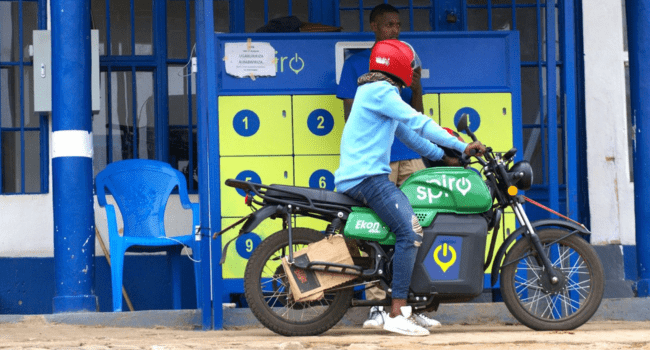
The company generates revenue through bike sales and battery swapping fees. Riders purchase or lease Spiro motorcycles, then pay only for energy consumed during battery swaps. Each swap station houses dozens of batteries that charge continuously, ensuring zero downtime for drivers.
Battery swaps surged from 4 million in 2022 to over 27 million in 2024. This growth demonstrates strong demand for Spiro’s affordable electric transport solution.
Local Manufacturing Strategy Boosts African Employment
Spiro operates assembly facilities in Kenya, Nigeria, Rwanda, and Uganda. These plants build motorcycles and key components including traction motors, controllers, and batteries using proprietary battery management systems.
Local sourcing jumped from 10% to 30% over the past year. Spiro plans to increase African component sourcing to 70% within two years, covering plastics, helmets, and brake parts. This strategy creates jobs while reducing import dependence.
“We’re not just importing a product. We’re building an ecosystem, training technicians, supporting local energy networks, and laying the groundwork for Africa’s e-mobility future,” Burman noted.
Africa’s Electric Motorcycle Market Shows Massive Growth Potential
Africa operates approximately 25 million motorcycles compared to India’s 320 million, despite similar population sizes. This 13-fold gap represents enormous untapped opportunity for electric vehicle adoption.
Spiro targets deployment of 100,000 electric motorcycles by end-2025, marking 400% year-over-year growth. The company currently operates in Benin, Togo, Rwanda, Kenya, Uganda, and Nigeria, with pilots planned for Cameroon and Tanzania.
Africa’s electric two-wheeler market projects 24.78% compound annual growth through 2031, growing from $441.69 million in 2024. Nigeria alone operates an estimated 5.1 million motorcycles, creating substantial market opportunity for electric alternatives.
Daily Savings Drive Rider Adoption Across African Cities
Motorcycle taxi operators save up to $3 daily through Spiro’s electric bikes and battery swapping network. These savings accumulate quickly, allowing drivers to purchase additional bikes or start small businesses.
Spiro riders typically recover their investment faster than gasoline motorcycle owners. Lower maintenance requirements and cheaper energy costs improve daily profitability for Africa’s millions of motorcycle taxi drivers.
The company locates swap stations at gas stations, shopping centers, and community buildings. This partnership approach creates local employment while expanding Spiro’s network reach across urban and rural areas.
Competition Focuses on Gasoline Motorcycles Rather Than Electric Rivals
Burman views traditional fuel-powered motorcycles as Spiro’s primary competition, not other electric vehicle startups like Ampersand, Roam, or BasiGo.
“Our competition is the gasoline bike segment, both new and secondhand bikes, plus millions of potential riders who don’t yet own motorcycles or lack access to affordable transportation,” Burman explained.
This perspective reflects Africa’s early electric mobility adoption stage. Most riders still choose gasoline motorcycles due to familiarity and established refueling infrastructure. Spiro’s battery swapping network addresses infrastructure concerns while offering superior economics.
FEDA Investment Supports Pan-African Trade Integration
Professor Benedict Oramah, Afreximbank president, emphasized the strategic importance of Spiro’s expansion for African economic integration.
“We are laying the groundwork for a new era of intra-African trade and industrialization by stimulating local vehicle manufacturing, strengthening regional integration, and enhancing trade flows,” Oramah stated.
FEDA’s $75 million investment represents more than financial backing. The development finance institution views electric mobility as crucial for reducing Africa’s dependence on imported fossil fuels while creating local manufacturing capacity.
Renewable Energy Integration Ensures Network Reliability
Spiro integrates renewable energy sources and storage systems to maintain operations during power outages. This approach addresses Africa’s unreliable electricity grid challenges while reducing operational costs.
Battery charging stations use solar power and backup storage to ensure continuous availability. This infrastructure investment distinguishes Spiro from competitors relying solely on grid electricity.
The renewable energy strategy also supports Spiro’s environmental mission. Clean electricity generation for battery charging maximizes carbon emission reductions compared to gasoline motorcycles.