We have all done it. You feel a strange symptom or get a confusing prescription, and you immediately type it into ChatGPT. You know fully well that it is not a health app and definitely not a doctor, but you ask anyway because you need clarity. OpenAI is well aware of this habit. In fact, the company revealed that over 230 million people already use the platform to ask health and wellness questions every single week.

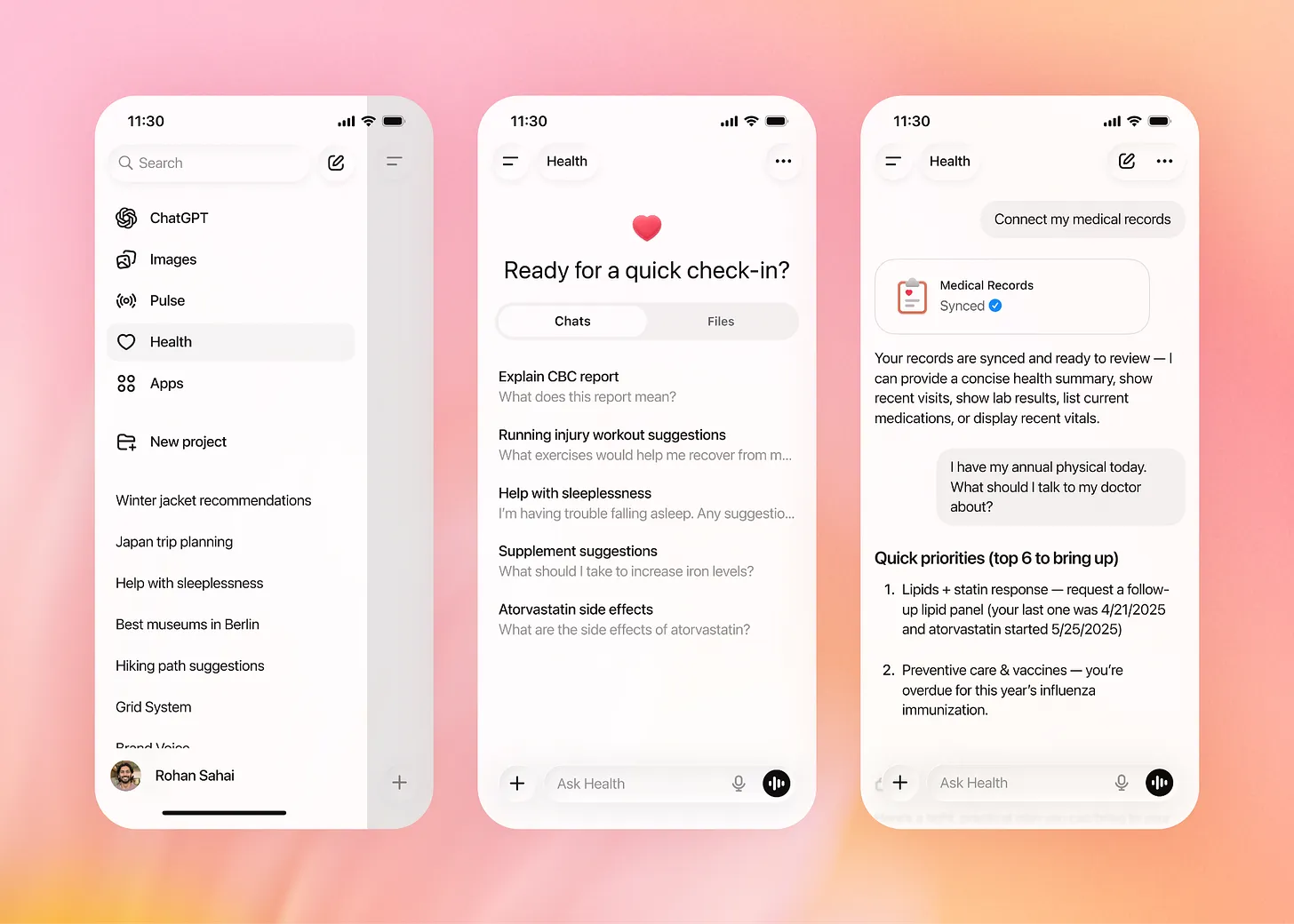
To turn those casual queries into structured insights, OpenAI has introduced ChatGPT Health. It is a dedicated experience designed to help you organize your health information, prepare for doctor appointments, and understand your wellness metrics without the confusion.
A Central Hub for Your Health Data
The modern healthcare experience is often fragmented. Your fitness data is on your watch, your blood test results are in a PDF, and your diet logs are in a separate app. ChatGPT Health aims to bring all that context together.
Users can securely connect external apps like Apple Health, MyFitnessPal, and Function directly to the platform. Once connected, you can ask questions grounded in your specific data. You could ask it to analyze your cholesterol trends over the last year, summarize a complex bloodwork report before you see your doctor, or create a meal plan based on your actual activity levels.
Privacy Behind a Walled Garden
The biggest question with any AI health tool is privacy. OpenAI is aware of the sensitivity here and has built ChatGPT Health as an isolated environment.
When you enter this dedicated space, your conversations and data are stored separately from your standard ChatGPT history. OpenAI states that conversations within ChatGPT Health are not used to train their models. The system uses purpose-built encryption, and while you can see your health chats in your history, the data does not bleed into your other conversations. You also have the power to delete memories or disconnect apps instantly if you change your mind.
Support, Not Diagnosis
It is important to clarify what this tool is not. ChatGPT Health is not a diagnosis tool. It is designed to support clinical care, not replace it.
OpenAI developed this feature in collaboration with over 260 physicians across 60 countries. They created a framework called HealthBench to evaluate how the model responds to medical inquiries, ensuring it prioritizes safety and clarity. The goal is to help patients feel more informed and prepared when they do speak to a professional, rather than trying to act as the professional.
What This Means for African Users
OpenAI is rolling this out gradually through a waitlist for users on Free, Plus, and Pro plans. The good news for the African tech community is that while the UK and Europe are currently excluded from this launch, our region is not.
This means users in Nigeria and across the continent can join the waitlist to test the feature. While the direct integration with hospital records is currently limited to the US healthcare system, the ability to analyze your own fitness data, interpret uploaded medical PDFs, and organize personal health metrics will be available to global users who get access.
READ ALSO: OpenAI Launches App Store for Developers: Submissions Now Open