
Intel has signed a Memorandum of Understanding with Origin Research and Innovation Labs, a Kenya-based innovation organisation, in a move aimed at building a skilled AI workforce across the continent. The partnership formalises what has already been a working relationship, and signals a more structured push to embed AI capability within African academic institutions at scale.
What the Deal Covers
The two firms plan to empower educators and students at academic institutions by providing them with practical technology capabilities and supporting the creation of an inclusive AI ecosystem on the continent. The collaboration spans faculty enablement, curriculum integration, hands-on training, and mentorship with a deliberate emphasis on ensuring that AI skills do not remain confined to lecture rooms.
The aim is to ensure that training flows out into innovation hubs and into startups that address local challenges, with solutions that can then be scaled to reach a wider audience.
Early Results Already Showing
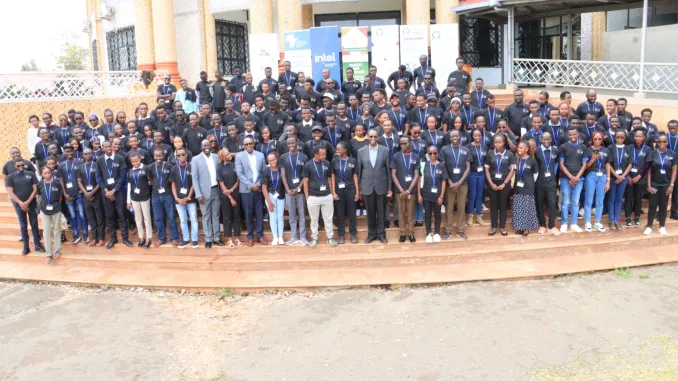
The MoU formalises a collaboration that has already produced measurable outcomes. Together, Origin Labs and Intel have supported 30 universities in Kenya, helping 65 faculty members deliver AI content directly to students and train additional trainers within their institutions. A team of 15 lead facilitators has also been trained, some of whom have gone on to train 25 TVET tutors. Intel has additionally supported several OriginFest Hackathons at universities, in which 405 students participated.
Those numbers are modest relative to the scale of the challenge, but the structure of the programme is designed to multiply impact over time. By embedding AI-literate educators inside institutions, the partnership creates a self-sustaining pipeline rather than a one-off intervention.
Why It Matters
The Intel-Origin Labs deal arrives at a moment when Africa’s AI skills gap is drawing significant attention from global institutions. The continent hosts less than one percent of global data centres, and the majority of its AI talent has historically been developed through programmes designed elsewhere, for conditions that differ substantially from those on the ground in Africa.
What distinguishes this partnership is its focus on locally grounded delivery. Origin Labs operates with a clear mandate around domain-driven platforms aligned with East African priorities. That focus shapes how AI training is contextualised, making it more likely to produce graduates who apply skills to relevant problems rather than abstract ones.
The partnership sets a strong precedent for the collaborations Africa will need as AI becomes central to the global economy. With Kenya already established as East Africa’s technology hub, scaling AI training capacity there creates a potential model that other African markets can adapt. The harder question is whether the pace of skill development can keep up with the pace at which AI is reshaping the sectors (finance, agriculture, healthcare) that African economies depend on most.