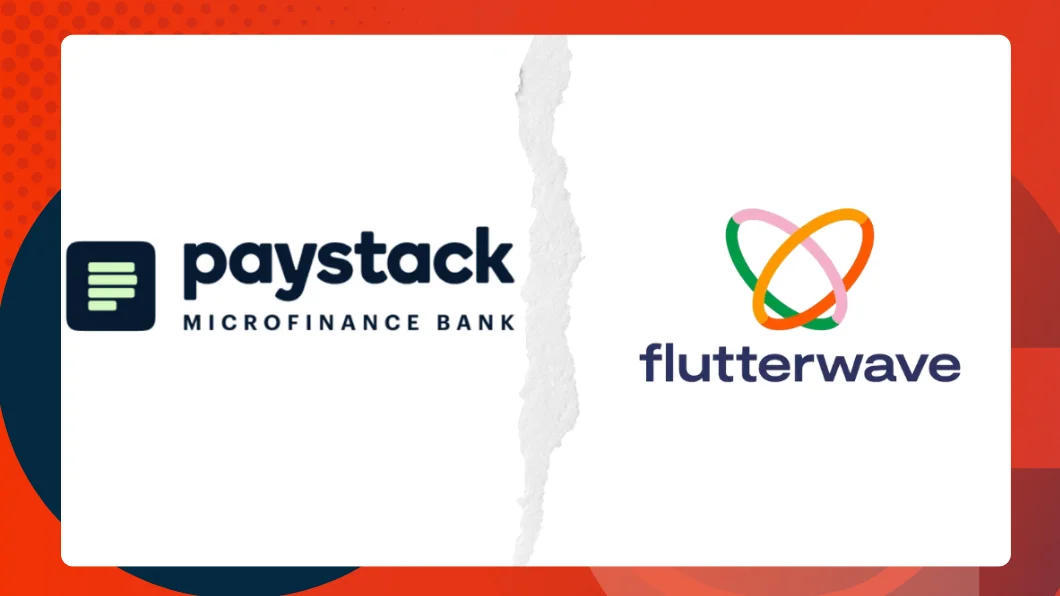
But the real debate is not about M&A activity. It is about whether Nigerian fintechs can survive by merely moving money, or if the era of the “payment gateway” is officially dead. These deals signal a fundamental shift in the architecture of African finance: the “Big Two” are no longer content with being the pipes. They are building the reservoir.

The “Rent vs. Own” Dilemma: Why Infrastructure is the New Moat
For a decade, Paystack and Flutterwave operated on a “rental” model. They built beautiful interfaces, but they rented the banking rails from commercial banks and the identity verification from third-party APIs.
That model works for a startup. It is a liability for a unicorn.
When you process billions of dollars, renting your infrastructure creates two existential risks: margin compression and regulatory vulnerability.
-
Paystack’s Move: By transitioning into Paystack Microfinance Bank, the company has stopped renting the vault. They can now legally hold deposits, issue loans, and manage treasury without asking a partner bank for permission. This is not just an expansion; it is an immunity shield against the kind of regulatory friction that led to the “Zap” fine in 2025.
-
Flutterwave’s Move: By acquiring Mono, Flutterwave has stopped renting the data layer. Mono is the “Open Banking” infrastructure that allows apps to read bank balances and verify identities. By owning this, Flutterwave vertically integrates the “Know Your Customer” (KYC) process. They don’t just move the money; they now own the eyes that verify where it comes from.
The Moniepoint Effect: The Silent Threat Driving These Deals
You cannot analyze these acquisitions without looking at the elephant in the room: Moniepoint.
While Paystack and Flutterwave were conquering the internet, Moniepoint won the streets by acting like a full-service bank for merchants. They offered POS terminals, working capital loans, and expense cards, effectively locking merchants into a closed loop.
Paystack and Flutterwave realized that being a “gateway” isn’t sticky enough. If a merchant uses Moniepoint for banking, lending, and payments, they have no reason to use Paystack.
These acquisitions are a defensive counter-strike. Paystack’s bank license allows them to look at a merchant and say, “Don’t just use us to accept payments. Keep your money with us, and we will give you a loan.” It is a move from transactional utility to financial captivity.
Regulatory Sovereignty: Buying Licenses Instead of Asking for Permissions
The Central Bank of Nigeria (CBN) has made one thing clear in the last 24 months: License determines destiny.
Innovating outside your license scope is no longer a “growth hack”; it is a death sentence. The CBN’s crackdown on “wallet” operations by non-banks forced the hand of every major player.
-
The Compliance Hedge: Paystack didn’t just buy a bank; they bought a regulatory pass. Applying for a new banking license in Nigeria can take years of bureaucratic purgatory. Buying an existing player like Ladder is a “fast-track” to legitimacy.
-
The Data Question: Flutterwave’s purchase of Mono also solves a compliance headache. With stricter anti-money laundering (AML) and fraud rules, owning the proprietary tech that vets users (Mono) gives Flutterwave a tighter, legally defensible grip on their network.
The Risks: Does Vertical Integration Kill Innovation?
There is a downside to this consolidation. Mono was an “impartial” infrastructure provider—a utility company for the whole fintech ecosystem.
Now that it is owned by Flutterwave, a massive conflict of interest emerges.
-
Will Mono’s data insights be prioritized for Flutterwave’s benefit?
-
Will competing fintechs feel comfortable piping their user data through a subsidiary of their biggest rival?
Just as AWS powers Netflix (even though Amazon competes with them via Prime Video), Flutterwave will argue that Mono remains neutral. But in a market as cutthroat as Nigeria’s, “neutrality” is often the first casualty of war.
The Verdict: The Super-App Ambition
This is the end of the “specialist” phase of Nigerian fintech. The era of “We just do payments” or “We just do data” is over.
Paystack and Flutterwave are effectively closing the loop. They are becoming “Super Financial Institutions”—banks with better code, better data, and global reach.
For the ecosystem, the message is clear: Build infrastructure that the giants need to own, or build a product so niche that they can’t be bothered to copy it. Anything in between is now an endangered species.