
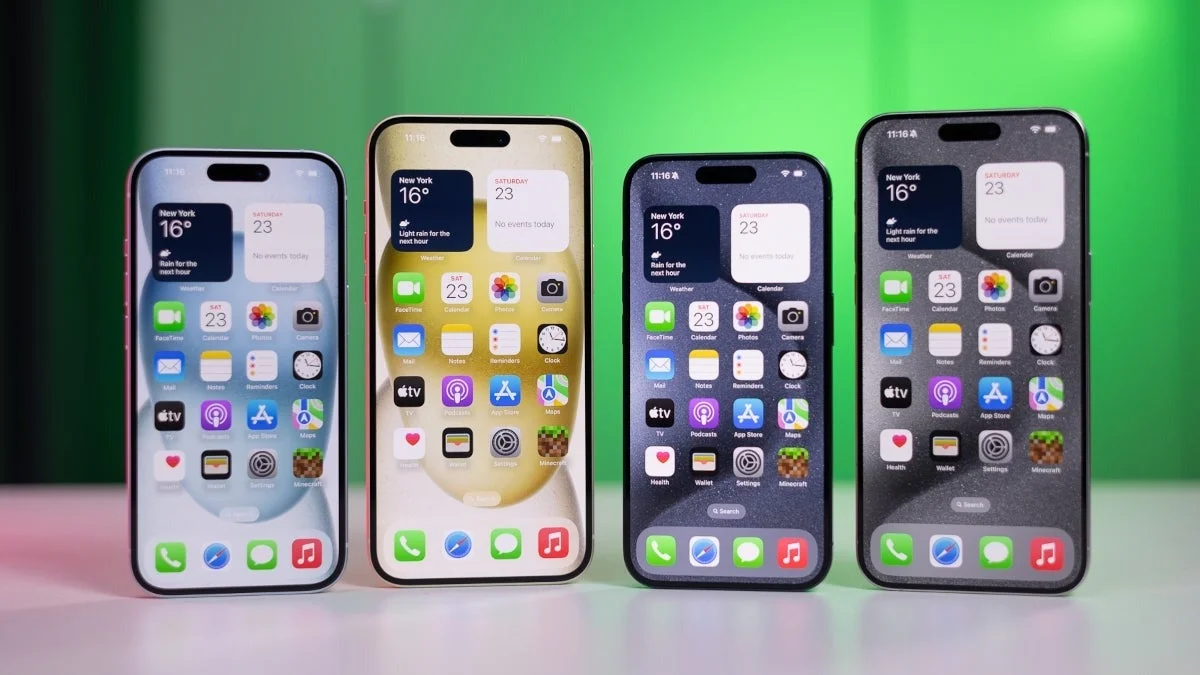
For over a decade, the annual smartphone unveiling was a genuine spectacle. Each generation has brought transformative changes that have fundamentally altered how we interact with technology. The iPhone 4 introduced the Retina display. The iPhone 5s brought Touch ID. Samsung pushed screen sizes to new frontiers. Google revolutionised computational photography.

But somewhere along the way, the revolution became an evolution. And that evolution has slowed to a crawl.
Today’s flagship smartphones are remarkable devices, sleek, powerful, and capable. Yet they’re also increasingly indistinguishable from models released two, three, even five years ago. The uncomfortable truth facing the entire industry is that smartphones have reached a fundamental plateau in hardware innovation. The breakthroughs that once came annually now arrive in years-long intervals, if at all.
The Hardware Wall
Consider the core components that define a smartphone. Displays reached 4K resolution and 120Hz refresh rates years ago; improvements beyond this point are imperceptible to human eyes. Battery technology, constrained by the physics of lithium-ion chemistry, has plateaued despite incremental gains in efficiency. Processors have become so powerful that even midrange chips can handle virtually any task a typical user throws at them.
Camera hardware tells a similar story. Sensor sizes are limited by the phone’s physical dimensions. We’ve already squeezed in multiple lenses, added optical image stabilisation, and pushed megapixel counts well beyond practical utility. Apple, Samsung, and Google have spent years tweaking camera bump designs, but the fundamental hardware improvements have become marginal.
The smartphone form factor itself has become calcified. After brief experiments with foldable screens (interesting but plagued by durability concerns and high costs), the industry has settled back into the familiar glass rectangle. The reason for this is that it works. But it also means that holding the latest flagship feels almost identical to holding a phone from 2020.
Enter Artificial Intelligence
If hardware innovation has stalled, software, specifically artificial intelligence, has become the industry’s last frontier. This shift represents a fundamental change in how smartphone companies compete and differentiate their products.
Modern smartphones are increasingly defined not by their physical components but by the AI models running on them. Google’s Pixel phones, for instance, have made their reputation not through superior camera hardware but through computational photography algorithms that can enhance images in ways optical systems cannot. Features like Magic Eraser, Best Take, and Audio Magic Eraser are purely software achievements, powered by machine learning models that process images in ways that would have seemed impossible just a few years ago.
Apple has embraced this shift with its Apple Intelligence features, bringing large language models directly to the iPhone. The promise is that your phone will become more capable not because it has a better processor or more RAM, but because it can understand context, anticipate needs, and perform complex tasks through natural language interaction.
Samsung has followed suit with Galaxy AI, positioning artificial intelligence as the defining feature of its latest devices. From real-time translation to AI-powered photo editing and content generation, Samsung is betting that AI features will convince consumers to upgrade when hardware improvements no longer can.
The AI Arms Race
This pivot to AI represents both the industry’s greatest opportunity and its most significant challenge. Unlike hardware improvements, which have clear limits and diminishing returns, AI capabilities can theoretically continue improving indefinitely as models become more sophisticated and training data expands.
But this shift also reveals a troubling dependency. Smartphone manufacturers are increasingly reliant on advancements in AI that they don’t entirely control. The breakthrough models powering many on-device AI features come from research labs and AI companies, not from hardware manufacturers themselves. Apple, Samsung, and Google are in a race to integrate AI capabilities that are being developed elsewhere, hoping to differentiate through implementation and user experience rather than fundamental innovation.
Moreover, many of the most impressive AI features require cloud connectivity and remote processing. This undermines one of the smartphone’s core value propositions: a self-contained device that works anywhere, anytime. As phones become more dependent on AI features that require data centres to function, they become less like independent computers and more like thin clients for remote intelligence.
What This Means for Consumers
For consumers, the smartphone standstill has mixed implications. On one hand, it means your current phone is probably good enough. The performance gap between a three-year-old flagship and the latest model has narrowed dramatically. Unless your device is physically broken or suffering from severe battery degradation, there’s little practical reason to upgrade.
This is reflected in lengthening upgrade cycles. Where consumers once replaced phones every two years, many now wait three, four, or even five years. The market has noticed. Smartphone sales have stagnated in developed markets, and manufacturers have resorted to aggressive trade-in programs and payment plans to maintain revenue.
On the other hand, the shift toward AI could eventually bring genuinely transformative changes to how we use our phones. Imagine a device that can truly understand your needs, anticipate tasks before you think to perform them, and serve as a genuinely intelligent assistant rather than a glorified search engine. These possibilities remain largely unrealised, but they represent the industry’s best hope for rekindling the innovation that once defined smartphone development.
The Road Ahead
The smartphone industry stands at a crossroads. Hardware innovation has reached the point of diminishing returns, and manufacturers have collectively accepted that the next wave of improvement will come from software, specifically artificial intelligence. Whether this strategy succeeds depends on whether AI can deliver experiences compelling enough to justify new purchases in the absence of meaningful hardware upgrades.
For now, we’re in a transitional period. Phones are still improving, but incrementally. The excitement of unwrapping a new device has been replaced by the mild satisfaction of slightly better battery life and marginally improved cameras. The annual upgrade cycle, once a ritual for tech enthusiasts, has become harder to justify.
The age of hardware innovation in smartphones hasn’t ended completely, but it has certainly slowed to a pace that would have been unthinkable a decade ago. Whether AI can fill that void remains to be seen. But one thing is clear: if you’re waiting for the next truly revolutionary smartphone, you might be waiting a long time.