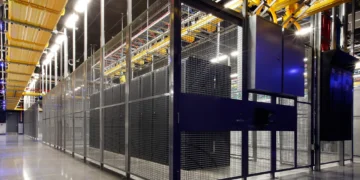

The artificial intelligence industry is building data centres faster than it can power them. South African-founded startup Refiant thinks that is the wrong answer, and it has just raised $5 million in seed funding to prove it.

The round was led by VoLo Earth Ventures, a climate-focused fund backing technologies that reduce resource intensity. Refiant plans to throw more hardware at AI’s growing demands, and make the models themselves dramatically leaner.
Nature-Inspired Compression
Refiant uses nature-inspired algorithms to radically compress AI models, slashing the hardware and energy required to run them. The startup claims its compression algorithms can slash the energy requirements of most models by more than 80%. The approach centres on model weights and retraining, targeting the underlying architecture of AI systems rather than the infrastructure supporting them.
The scale of what Refiant is pushing back against is significant. The world’s biggest technology companies are set to spend nearly $700 billion this year building data centres to power artificial intelligence, with global data centre energy consumption expected to double by 2028, as AI workloads drive the majority of that growth.
Why Africa Stands to Gain
Refiant believes the continent’s AI ambitions are currently bottlenecked by limited data centre infrastructure and reliance on foreign cloud providers. Its approach is to help AI models run locally on hardware that is already available, without sending sensitive data overseas or depending on energy-intensive facilities located thousands of miles away.
The implications are material. Replacing racks of GPU servers drawing thousands of watts with standard laptops, multiplied across thousands of organisations, makes the energy savings significant at the grid level. For countries with constrained infrastructure, local AI execution becomes viable rather than aspirational.
Validation From the Industry
Refiant’s timing benefits from broader market signals. Google recently introduced its TurboQuant algorithm, achieving a sixfold reduction in memory requirements for AI models. While such developments validate the efficiency approach, they also intensify competition, raising questions about whether startups can maintain an edge as incumbents pivot toward similar solutions. Refiant maintains that its techniques allow it to achieve comparable results with fewer resources.