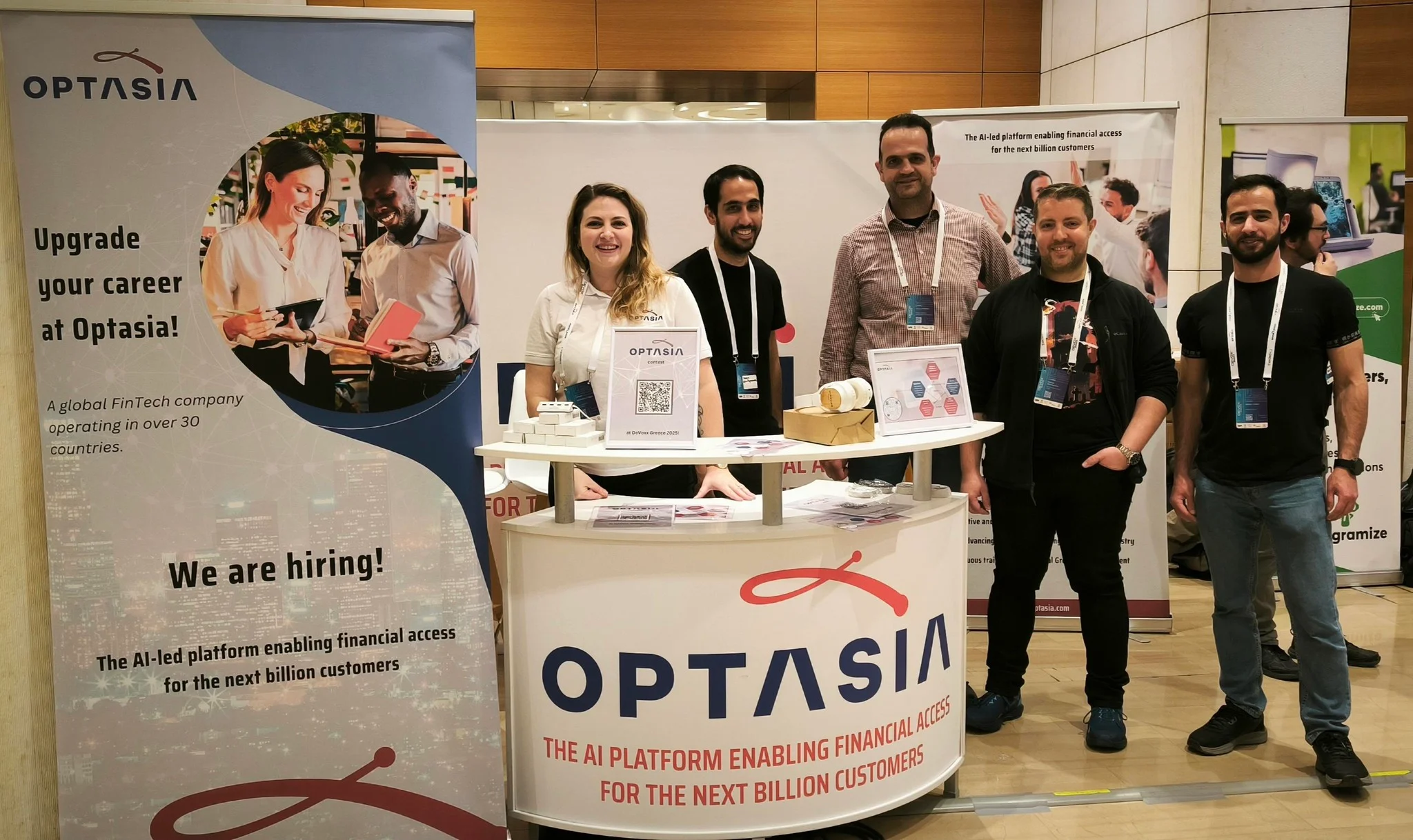
Optasia isn’t a household name, but its technology powers financial access for millions. Headquartered in Dubai, the AI-driven fintech operates in 38 countries, partnering with mobile operators to deliver instant microloans and airtime credit to people without traditional bank access. Its reach cuts across Africa, Asia, and Latin America, with a particularly strong presence in markets like Nigeria, Ghana, and Kenya.

The company’s platform uses artificial intelligence and telecom data to assess creditworthiness within seconds, helping mobile subscribers borrow small sums or top up airtime instantly. According to Reuters, Optasia works with major partners such as MTN, Vodacom, and Airtel, reaching 121 million monthly active users and processing around 32 million daily loan transactions.
In short, Optasia has become one of the world’s largest credit-access platforms operating through telecom networks. Its algorithmic underwriting replaces traditional paperwork, allowing mobile subscribers to access short-term credit in regions where financial infrastructure is thin.
Optasia Eyes A Johannesburg Listing
Now, fintech wants to take that scale public. On 8 October 2025, Optasia announced plans to list on the Johannesburg Stock Exchange (JSE), aiming to raise up to R6.3 billion (USD 375 million). The capital will be secured through a mix of new share issuance and private placement.
Reuters reports that roughly R1.3 billion will come from an initial public offering, while another R5 billion will be raised from existing investors. If completed, it would mark one of the largest fintech listings on the African continent in recent years.
The listing is a strategic signal. For a company born in Dubai but built around African users, the JSE offers not only visibility but also legitimacy in the markets where its products are most used.
A Market That Feels Like Home
Choosing Johannesburg over Dubai or London isn’t random. South Africa is one of Optasia’s most active markets, and the Johannesburg Stock Exchange (JSE) remains Africa’s financial gateway. Listing there positions the company closer to its users and to investors who already understand telecom-led lending.
For fintechs, the JSE offers depth, liquidity, and a growing investor appetite for technology-driven companies, something rare on the continent. In recent years, African exchanges have been working to attract digital-first firms, but few have reached the scale that would make investors take notice. Optasia’s move could change that.
It’s also a symbolic decision. A company that built its business around African subscribers is choosing to anchor its growth story on an African exchange. It’s a vote of confidence in the region’s ability to support and value homegrown digital finance.
Scaling Trust In AI Credit
Optasia’s system works on a simple idea: mobile data can tell lenders more about a customer than paperwork ever could. By analysing how people use their phones — calls, airtime top-ups, and data patterns — the platform predicts repayment ability and offers small, short-term loans instantly.
That model has opened credit access for millions, but it also raises questions about accuracy and fairness. Telecom-based lending depends heavily on the quality of mobile data and the integrity of the scoring algorithm. A misread pattern can easily deny or misprice credit for a low-income user.
Optasia says its focus is on financial inclusion with responsible lending, positioning its algorithms as tools to bridge rather than widen inequality. Yet as the company grows, it faces a patchwork of regulatory environments. Each country has different rules on data privacy, interest rates, and digital lending, making scale as much a compliance challenge as a technical one.
The company’s push to go public may help address those concerns. A listing on a major exchange like the JSE brings transparency and oversight that private fintechs often lack. For investors and regulators, that’s where trust begins.
A Listing That Could Redefine African Fintech
Optasia’s Johannesburg listing is a signal that African fintech is maturing beyond venture funding and beginning to test the public markets. If successful, the move could encourage other cross-border fintechs to seek listings in African exchanges rather than overseas.
The upside is clear: greater access to long-term capital, stronger governance, and visibility across the continent. But the risks are just as real. Optasia operates across dozens of jurisdictions, each with its own data laws and lending standards. Any compliance gap could dent investor confidence fast.
There’s also the challenge of perception. Listing in South Africa will invite closer scrutiny of the company’s loan practices, user data handling, and revenue sustainability. In a sector often criticised for opaque algorithms and uneven regulation, transparency will be as valuable as the funds raised.
Still, if Optasia pulls it off, the listing could mark a turning point. It would show that fintech built for emerging markets can grow up, go public, and compete on credibility, not just novelty.