The path to IT leadership looks nothing like what most tech professionals imagine. While junior developers obsess over coding languages and certifications, three Chief Information Officers recently revealed the real factors that separate career survivors from those who reach the executive suite.
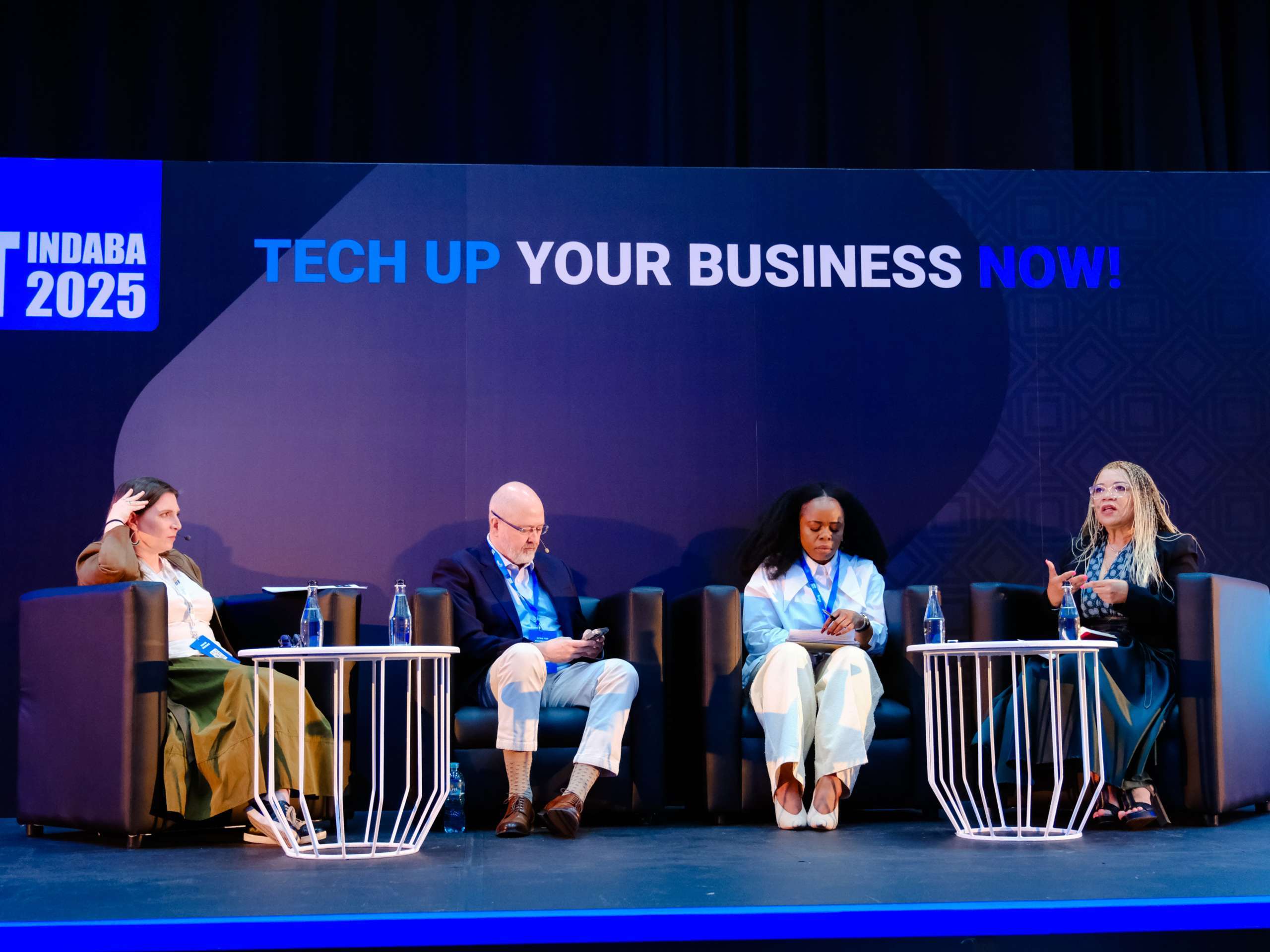
Speaking at South Africa’s first-ever IT Indaba, Josh Souchon from Opp-Gen, Faith Burn from Landbank, and Mary Mahuma from Philip Morris Southern Africa shared the unfiltered truth about building lasting tech careers.
Three Clear Paths Every Tech Professional Must Choose From
Josh Souchon’s career journey reads like a masterclass in strategic pivoting. After moving from mining to startups to financial services, he identified three distinct paths that determine every IT professional’s trajectory.
Souchon explained that the developer path focuses on technical expertise, where you build coding skills and gradually embrace leadership responsibilities. This traditional route emphasizes deep technical knowledge while developing team management capabilities.
The business analyst path takes a different approach. “This focuses on guiding business products through their digital transformation journey,” he noted. These professionals become the bridge between technical teams and business stakeholders, translating complex requirements into actionable solutions.
The delivery path, which Souchon chose personally, centers on project management and successful execution. “Even if others are stronger coders than me, I can focus on delivering projects successfully,” he said. This path leverages organizational and leadership skills rather than pure technical depth.
Industry data support these distinct pathways. Robert Half’s 2025 technology hiring trends show that candidates who combine technical skills with business acumen or project management experience command significantly higher salaries and faster career progression.
The Curiosity Factor That Changes Everything
Faith Burn’s story challenges the conventional wisdom about technical careers. Her first encounter with a computer happened during her university years. This is a subtle reminder that successful IT leaders don’t always start with childhood programming experiences.
“I chose computer science not because it was well thought out, but because it sounded interesting since I had never seen a computer before,” Burn recalled. That curiosity became her career accelerator.
Instead of limiting herself to job descriptions, Burn consistently volunteered for additional responsibilities. “Whenever my CTO gave me jobs to do, I didn’t limit myself. I felt that anything I could do to help was valuable,” she explained.
This approach led to unexpected expertise across multiple areas. “Before I knew it, without even intending to, I had learned the entire value chain, not just the application management side I was responsible for,” Burn said.
Her experience aligns with 2025 IT career research showing that professionals who develop cross-functional knowledge advance 40% faster than those who remain in specialized silos.
The Leadership Skills That Tech Education Never Teaches
Mary Mahuma shifted the conversation to what distinguishes senior IT professionals from true executives. Her message was that technical skills alone won’t sustain long-term career growth.
“Your technology skills alone will not sustain you at higher levels. You need self-development, self-awareness, and agility,” Mahuma emphasized. Her own education strategy included studying digital marketing, law, IT, and supply chain management, areas that seemed unrelated but proved essential for strategic leadership.
The most striking insight came when Mahuma addressed the future of IT leadership by orchestrating human-AI collaboration. “As CIOs, we must influence conversations about which work is done by people, by systems, and by AI,” she explained.
This perspective reflects industry trends. Gartner’s 2025 research indicates that 75% of CFOs plan to implement AI to enhance decision-making, making human-AI collaboration a critical leadership skill.
The Reality Check Most IT Professionals Need
The three executives’ stories reveal a common theme that contradicts popular career advice. Success comes from embracing opportunities outside your comfort zone, not from perfecting technical skills in isolation.
Souchon emphasized the importance of learning from failure: “Learn to fail fast. Don’t bet everything on a perfect solution. Get knocked over, get up, learn and continue.” This mindset shift from perfectionism to experimentation proves crucial for leadership development.
Burn highlighted resilience and emotional intelligence as non-negotiable skills. “Digital thinking and mindsets require that we don’t act in silos. Collaborating is critical,” she noted. Research from Information Week confirms that professionals who excel at human-machine partnerships advance faster in AI-integrated workplaces.
The Skills Gap That Creates Opportunities
Current market data reveals significant opportunities for IT professionals who understand these principles. South African employers in 2025 prioritize AI, cloud computing, cybersecurity, and data analytics skills, with Cloud Solutions Architects earning up to R125,000 monthly.
However, the executives’ insights suggest that technical skills represent only the entry requirement. The real differentiator lies in combining technical competence with business understanding, emotional intelligence, and adaptability.
Building Your Strategic Career Plan
The IT Indaba discussions provide a practical framework for career planning that extends beyond traditional advice:
Start with small projects: Souchon advised getting involved in projects regardless of size to build experience incrementally. “These paths are available to everyone, but you need to find your inflection point,” he noted.
Expand beyond job descriptions: Burn’s success came from consistently volunteering for additional responsibilities, which provided a comprehensive business understanding.
Develop strategic thinking: Mahuma’s emphasis on understanding trade, supply chains, and business models enables the transition from technical enabler to strategic business partner.
The Future-Ready IT Professional
As AI integration accelerates across industries, the most successful IT professionals will be those who can navigate the intersection of technology and human needs. The three executives demonstrated that career longevity comes from adaptability, continuous learning, and the ability to see technology as a tool for solving business problems rather than an end in itself.
Their collective wisdom reveals that the IT professionals who thrive in 2025 and beyond will be those who combine deep curiosity, cross-functional knowledge, and emotional intelligence to lead human-AI collaboration efforts.
For emerging IT professionals, this means shifting focus from purely technical mastery to developing the hybrid skill set that enables strategic leadership in an AI-enhanced world.