Ghana’s homemade drones are now flying over the northern regions of the West African nation. The military has deployed the AeriusPro, a locally designed surveillance drone, to track security threats in Bawku and Binduri. These areas face ongoing community conflicts and potential extremist threats from the nearby Sahel region. The drone project shows Ghana’s push toward military independence through local technology development.

The 93 Signal Regiment manages the technical operations of the Ghana homemade drone system. They work alongside the Army Special Brigade and Northern Command to provide real-time surveillance data. This deployment allows Ghana to monitor its borders and critical infrastructure without depending entirely on foreign suppliers.
Ghana Built The AeriusPro Without Foreign Help
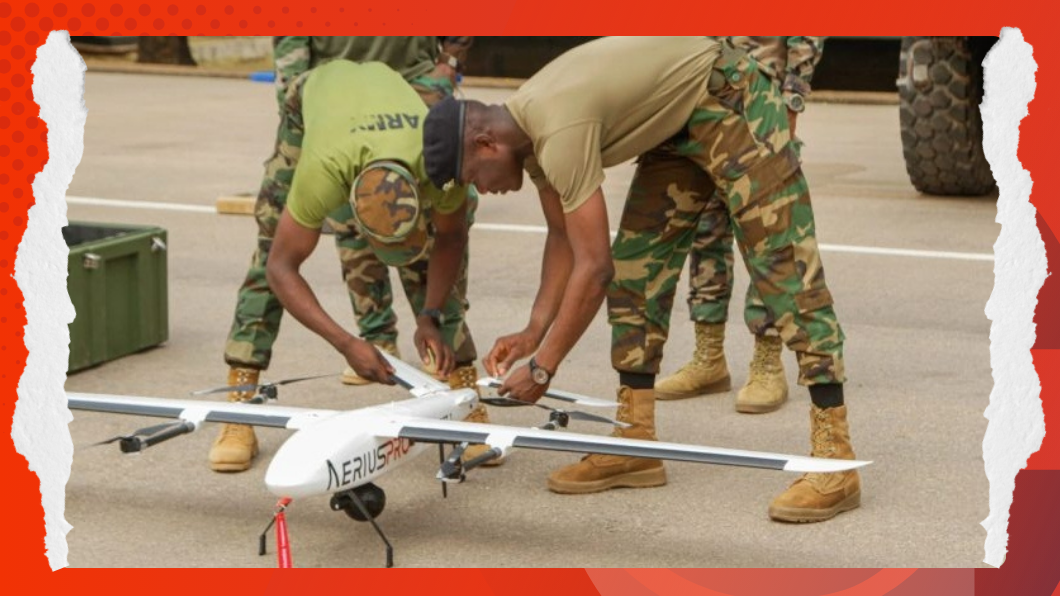
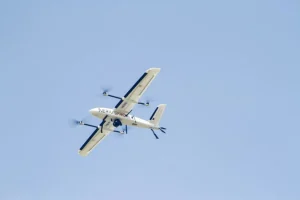
Ghana designed and built this unmanned aerial vehicle entirely within its borders. The drone combines two flight methods into one platform. It takes off vertically like a helicopter, then switches to horizontal flight like an aeroplane. This hybrid approach works well in rough terrain where runways don’t exist.
The system can stay airborne for up to three hours, covering significant distances with a 40-kilometre control range. This extended flight time gives military commanders continuous coverage of sensitive areas. The drone reaches altitudes of 4,000 meters and carries advanced sensors for both day and night operations.
Ghana’s homemade drones use carbon fiber and engineering plastics to keep weight down while maintaining strength. The platform needs only three minutes to set up, allowing rapid deployment when security situations change quickly.
Bawku And Binduri Face Ongoing Security Problems
The northern regions where Ghana’s homemade drones now operate have experienced repeated security incidents. Bawku and Binduri sit near Ghana’s border with Burkina Faso, where extremist groups have grown more active in recent years. Community tensions in these areas sometimes escalate into violence, requiring military intervention.
Ground patrols in these regions face challenges from difficult terrain and the risk of ambush. Roads are limited, and some areas remain hard to access during certain seasons. Traditional security methods struggle to maintain constant awareness of what’s happening across wide expanses of territory.
The deployment of Ghana’s homemade drones addresses these gaps. The platform can monitor key routes and border crossings continuously. When suspicious activity appears, commanders receive immediate alerts through the integrated command system.
Recent reports from the Ministry of Interior show curfews have been necessary in Binduri to maintain order. The drone surveillance adds another layer of monitoring that helps security forces respond faster to emerging threats.
Advanced Sensors Track Multiple Threats At Once
The AeriusPro carries different sensor packages depending on the mission. For security operations, Ghana’s homemade drones use thermal imaging and high-definition cameras. The thermal sensors detect heat signatures from people or vehicles, even in complete darkness. This capability proves essential for nighttime border monitoring.
The surveillance system includes 4K video quality with 10x optical zoom and 40x hybrid zoom. Operators can identify targets from significant distances without alerting those being watched. The camera’s automatic tracking function follows moving objects and can relocate targets within three seconds if they temporarily disappear.
For mapping illegal mining sites, Ghana’s homemade drones use a different camera system. The mapping payload includes a 20.1-megapixel sensor with professional lens optics. This setup creates detailed aerial maps that help authorities locate unauthorised mining operations in remote areas.
The newest sensor option, called the UniPod MT11, combines multiple capabilities in one package. It features dual 48-megapixel cameras, thermal imaging, a laser rangefinder, and built-in artificial intelligence for object recognition. This multi-sensor approach gives operators comprehensive information about what’s happening on the ground.
Sigtrack Software Turns Data Into Decisions
Ghana’s homemade drones connect to the Sigtrack situational awareness platform. This software functions as the brain of the entire system. It takes live video feeds and flight data from the drone and displays everything on digital maps.
The Sigtrack platform creates what military planners call a Common Operating Picture. This means everyone from field operators to headquarters commanders sees the same information at the same time. The system eliminates delays in sharing critical intelligence during fast-moving security incidents.
The software uses military-grade encryption to protect data transmission. This security measure ensures that sensitive surveillance footage and operational plans remain within Ghana’s control. Foreign actors cannot intercept the communications between Ghana’s homemade drones and ground control stations.
Operators can plan missions directly in the software using 3D terrain maps. The system calculates optimal flight paths and alerts pilots to potential obstacles. Real-time GPS coordinates with precision correction help track exactly where incidents occur.
Local Manufacturing Brings Strategic Benefits
Building Ghana’s homemade drones inside the country provides advantages beyond cost savings. When foreign-made drones break down, repairs require sending them back to the manufacturer or waiting for specialized technicians to arrive. This process can take weeks or months, leaving capability gaps.
With the AeriusPro, Ghana’s military engineers can perform maintenance and repairs locally. The 93 Signal Regiment works directly with the drone’s designers when issues arise. This arrangement keeps more drones operational more of the time.
Local production also protects against supply chain disruptions. International tensions or export restrictions cannot suddenly cut off Ghana’s access to critical surveillance technology. The country maintains operational independence regardless of global political shifts.
The AeriusPro project builds technical skills within Ghana’s workforce. Engineers gain experience in aerospace design, sensor integration, and software development. These capabilities can extend beyond military applications into agriculture monitoring, disaster response, and infrastructure inspection.
Ghana Operates Multiple Drone Types For Different Missions
The military also operates the Chinese-made ZMO-120, another VTOL fixed-wing drone. This provides a comparison point for evaluating AeriusPro’s performance and reliability.
The armed forces use the DeltaQuad Pro from the Netherlands for certain missions. This platform offers long-range telemetry and ease of operation. The navy specifically employs DeltaQuad drones for maritime surveillance missions.
Latvia’s FIXAR 007 drone serves in the Ghanaian fleet as well. This model uses a unique fixed-angle motor design that simplifies the mechanical structure. Simpler mechanisms can mean lower maintenance requirements in dusty environments.
Having multiple drone types allows commanders to select the best tool for each specific mission. The Ghana-made drones excel in situations where local maintenance and secure communications matter most. Foreign platforms might offer different capabilities that suit other operational needs.
Illegal Mining Surveillance Adds Non-Military Mission
Illegal mining, often called galamsey, damages water sources and destroys forests across Ghana. These operations typically occur in remote areas where regular ground inspections prove difficult.
The AeriusPro’s long endurance and high-resolution cameras make it effective for locating illegal mining sites. The drone can survey large areas in a single flight, creating detailed maps of mining activity. Officials use this information to coordinate enforcement actions with civilian authorities.
The Western Regional Minister recently advocated for expanded drone use to stop illegal mining near river sources. The military’s surveillance capabilities can help protect critical water resources from contamination. This demonstrates how security technology can support environmental protection efforts.
The persistent surveillance provided by Ghana homemade drones also deters illegal activity. When operators know drones regularly patrol an area, they face higher risks of detection and arrest. This psychological effect enhances the technology’s practical monitoring capabilities.
Export Potential Could Support African Peacekeeping
The success of Ghana homemade drones opens possibilities beyond national borders. Ghana regularly contributes troops to United Nations peacekeeping missions across Africa. These operations require surveillance capabilities to protect civilians and monitor cease-fire agreements.
The AeriusPro could serve in these peacekeeping roles, providing Ghanaian contingents with intelligence advantages. This would demonstrate the platform’s reliability in diverse operating environments. Successful peacekeeping deployments would serve as an international proof of concept.
Other African nations face similar security challenges with limited budgets. Ghana’s homemade drones could offer these countries a more affordable alternative to expensive Western or Chinese platforms. Regional sales would support Ghana’s aerospace industry while helping neighbours improve their own security capabilities.
The platform’s design suits African conditions specifically. High temperatures, humidity, dust, and limited infrastructure all influenced AeriusPro’s engineering. These same conditions exist across much of the continent, making the drone potentially more suitable than platforms designed for different environments.
The Bigger Picture Behind Ghana’s Homemade Drones
The AeriusPro deployment represents more than just acquiring new equipment. It signals Ghana’s determination to develop indigenous defence capabilities rather than depending entirely on imports. This approach builds long-term national capacity while addressing immediate security needs.
The project demonstrates that African countries can design and manufacture sophisticated military technology when they commit resources and talent to the effort. Success in Ghana may inspire similar initiatives across the continent. A network of local defence industries could emerge, reducing Africa’s dependence on external suppliers.
For Ghana specifically, the Ghana homemade drones project compresses decision-making cycles during security crises. Commanders receive intelligence directly from systems they control completely. No foreign government or company can restrict access or monitor how Ghana uses its own surveillance capabilities.
The technology serves Ghana’s constitutional democracy rather than regime protection. This distinguishes the current program from military equipment acquisitions during earlier periods of military rule. Democratic oversight ensures surveillance capabilities support legitimate security needs rather than political repression.
Ghana’s investment in Ghana homemade drones provides tools to address future challenges. The northern borders require constant vigilance, and the AeriusPro offers a cost-effective way to maintain that watch. The platform’s success in these operational conditions will determine whether Ghana expands the program and pursues even more ambitious indigenous defence projects.