Welcome to Digital Work-Life Series (#2)!
Digital Work-Life is a weekly interview series that explores the real stories behind people's work and how it shapes their lives. Each episode focuses on the the experiences, challenges, lessons, and impact of professionals across different industries, communities, teams, and beyond. It highlights how they balance work and life, giving insights and inspiration from real life and work experiences.
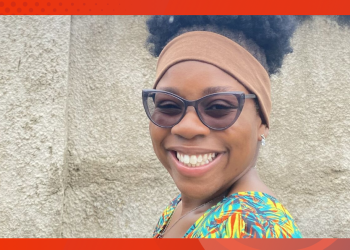
Chiamaka Aniweta-Nezianya is a first-class Electrical and Electronics Engineering graduate who found her true calling in creativity. From creating content during lockdown to becoming a sought-after short-form video editor, Chiamaka shares her journey of following her passion, overcoming challenges, and building a career that truly aligns with her life.

Be the first to get top stories, insights, trends, events, and conversations shaping the future of tech and innovation across Africa, and beyond.
Q: Who is Chiamaka? Can you tell us a bit about your background and your journey so far?
Chiamaka: My full name is Chiamaka Aniweta-Nezianya. I studied Electrical and Electronics Engineering at Bells University of Technology in Ogun State. During the COVID lockdown, like many people, I started creating content, mostly dancing on TikTok. At the time, it was just for fun. But in 2022, during my final year, I decided to take content creation more seriously. I began documenting my life, working with brands, and treating it as something professional rather than just a hobby.
In 2024, I transitioned into video editing professionally. I became the video editor for an online community for women in their 20s. Beyond editing, I also managed their social media and occasionally created content for them. That role was significant for me because it was the first time I edited videos for someone else.
I also worked with a UK-based radio station where I created content, some videos featured me, while others were purely visual content. Through these experiences, I realized that while I loved being a content creator, I was becoming drawn to video editing itself. The idea that I could edit videos for others and get paid for it made me even more interested in developing that skill.
At the beginning of 2025, I became more intentional about my growth. Twitter had always intimidated me, but once I filtered out the noise and followed people sharing valuable insights, I started learning about platforms like Upwork and LinkedIn.
LinkedIn, especially, was a journey. I had left and returned multiple times because it often felt overwhelming, like everyone was constantly announcing big achievements. But when I came back with a clearer mindset, I focused on connecting with the right people, expanding my network beyond Nigerians to include international professionals. I paid attention to how they positioned themselves, the balance between sharing achievements and being personable.
For about a year, I consistently posted on LinkedIn while applying for jobs. Sometimes I reached out; other times opportunities came to me. In video editing, you’re often given test projects, and I used every test as a chance to build my portfolio. Each project helped me grow.
At the same time, I kept improving my skills through my personal content. Video editing is a core part of content creation, so everything I learned, I applied to my own videos. I made it a goal to try something new in every video. I also drew inspiration from other creators. Whenever I saw something I liked, I studied it and recreated it in my own way. I’m especially passionate about short-form content. Right now, that’s my focus.
Q: You studied Electrical and Electronics Engineering and graduated with a first-class honors. What drew you to video editing, and how did that transition come about?
Chiamaka: Growing up, I had a huge imagination. I actually started out as an art student, but people kept telling me, “You fit science more. You’re very smart, you should be in science.” Eventually, I switched.
I was good at math and physics. I got an A in Further Mathematics and an A in Physics in my WAEC. Even then, I still didn’t know exactly what I wanted to do. Everything felt distant and unclear. My mom suggested engineering since I was strong in math, and Electrical and Electronics Engineering seemed like a reasonable path.
To be honest, the course was extremely demanding. It really stretched me. But I’m grateful I graduated with a first-class degree. Even though I’m not actively using it right now, that qualification is something I can always build on if I decide to further my studies.
The shift began when I started creating content. It awakened a part of me that had felt locked away for years ever since I became an adult. As I kept making videos, I realized I genuinely enjoyed the editing process. I loved playing around with clips, structuring ideas, and shaping how a story unfolds.
That’s why when I describe myself as a video editor, I emphasize that I’m a storyteller. For me, it’s not just about special effects. It’s about the story. What is this video saying? What should the audience feel? How do you arrange the clips to communicate that emotion or message effectively?
Of course, especially in short-form content, attention-grabbing visuals and effects matter. As someone with a short attention span myself, I understand the importance of keeping viewers hooked. But beyond the effects, storytelling is the foundation.
The transition happened naturally from content creation to realizing I loved the editing process even more. And as with any creative skill, the more you practice it, the better you become. Over time, what started as content creation evolved into a deliberate decision to build a career in video editing.
Q: Looking back, what experiences or challenges during your education or early career shaped your perspective on work and life?
Chiamaka: I think from the get-go, even before I graduated from university, I knew that the traditional 9-to-5 life wasn’t for me. The idea of spending most of my time in an office, sometimes just being physically present without necessarily doing meaningful work didn’t appeal to me.
I’ve always valued flexibility. Ideally, I wanted something hybrid or fully remote. Remote work especially stood out to me because I have other interests and hobbies. I enjoy creating content not just as a job, but also as something I genuinely love doing in my free time. I didn’t want a career that would limit that part of me.
That’s one of the reasons video editing made so much sense. It allows me to work remotely, you don’t need to be in an office to edit videos. That flexibility is a major advantage.
More broadly, being a creative has shaped how I see work. While I identify primarily as a video editor, I’m also a content creator. I’ve helped people with social media planning and worked on content strategy as well. So for me, it’s not just about one role, it’s about having a skill set that gives me options and creative freedom.
Those experiences helped me realize that I don’t just want a job; I want a lifestyle that aligns with who I am and how I like to work.
Q: Can you describe a typical day in your life as a video editor? What aspects of your work do you enjoy most?
Chiamaka: At the moment, I’m mostly freelancing. Beyond video editing, I also do mobile videography. I shoot weddings, birthdays, events, and everything in between. On top of that, I still take on brand collaborations as a content creator. So I’m balancing multiple creative roles at once.
On a typical workday, if I have a client project, I start by speaking with the client to understand exactly what they want. I ask detailed questions so I can properly scope the project by how complex it is, how much time it will require, and what the expectations are. That helps me determine my pricing and timeline. Once everything is agreed on, I begin editing. Depending on the complexity, a project usually takes me one to two days to complete.
When I’m not editing, I’m often creating content for myself. Content creation is still very much a hobby for me. I document my daily life, my workouts, my meals, and my routines. I live a healthy lifestyle because I have PCOS, and that’s something I also share on social media. So my day might include waking up, working out, preparing meals, filming parts of my routine, and then getting into client work.
After work, I usually go for a walk. It’s something I really enjoy because it’s therapeutic for me and part of maintaining my health. It helps me clear my head after long hours of editing.
Socially, I don’t go out very often, maybe once every two weeks or once a month. I typically live in Abuja, but I’m currently in Lagos with my sister, who is more social than I am. So being in Lagos has definitely meant more outings than usual.
What I enjoy most about my work is the flexibility and the creativity. I like that my days aren’t rigid. I can work on client projects, shoot events, collaborate with brands, and still create content for myself. That balance makes the work feel aligned with my lifestyle.
Q: How has your engineering background influenced the way you approach video editing or creative work, if at all?
Chiamaka: I would say engineering has contributed a great deal to the way I approach creative work. I don’t regret studying engineering at all. A technical course like that teaches you skills that go beyond the classroom, and I’ve found that many of them apply directly to video editing.
Video editing is creative, yes, but it’s also technical. It’s a different kind of technical compared to engineering, but it still requires structure, logic, and precision. In engineering, you learn how to think critically, how to innovate, and most importantly, how to solve problems. And creativity, at its core, is problem-solving.
Engineering trained me to dig deep, to figure things out, and to not stop at “I don’t know how to do this.” I’m naturally resourceful, but I also believe engineering strengthened that trait. If there’s something I want to achieve in a project, I’ll keep searching, testing, and experimenting until I find a solution.
So in many ways, my engineering background hasn’t just influenced my work, it’s shaped how I approach challenges in life generally.
Q: What’s one of the biggest lessons you’ve learned from shifting from engineering to creative work?
Chiamaka: One of the biggest lessons I’ve learned is that if you have a passion, and it’s something you can realistically chase, you should chase it.
Engineering wasn’t my passion. It was more of a practical decision at the time. I knew I had the skills to succeed in it, and I understood that the degree would be valuable long-term. I don’t regret it at all, especially because I have other interests beyond creative work. I’m also interested in tech. I even earned an online diploma in data analytics, and that’s still something I’d like to explore further.
Right now, though, I’ve made a conscious decision to focus on growing my creative career. I believe you can’t effectively grow two major paths at the same time. You have to build one to a solid level before fully diving into the next. So I told myself that last year and this year would be dedicated to developing my video editing and content creation career.
Another lesson is that progress takes time. It’s taken longer than I expected to get to where I want to be, and honestly, I’m still not there. But I’ve improved significantly compared to last year. And because I genuinely enjoy what I do, I’m willing to keep going. That passion makes the journey sustainable.
At the same time, I also believe in exploring your other interests. If there’s something else you’re curious about, learn it. Try to monetize it if possible. I’ve always considered myself a tech girl at heart. Video editing is technical, yes, but I’m also interested in coding and deeper tech skills. Engineering introduced me to coding, and that interest has stayed with me. So behind the scenes, I’m still finding ways to improve in that area, too.
Q: How do you see your work impacting others?
Chiamaka: To be honest, I think I’m still learning to fully believe in the impact I’m making. I consider myself a confident person, but at the same time, I still see myself as a newbie in many ways. I’m still figuring things out, and I don’t always feel as advanced as people assume I am.
Sometimes I’ll post a video and think, “This is very basic.” Then people respond with, “Oh my God, I love your editing!” and I’m genuinely surprised. Recently, someone even asked me to mentor them, and I was shocked. I thought, “Me? You want me to mentor you?” I still see myself as intermediate, someone who is learning and growing. So the idea of being a mentor feels strange because I’m used to being the one looking for mentors.
I’ve also received requests to host a class, but I’ve hesitated because I feel like I still have so much to learn. I want to grow my audience more and sharpen my skills further before stepping fully into that space.
On LinkedIn especially, I’ve been posting consistently for a long time, leaving, but always returning. The video that went viral wasn’t even something I expected to perform that way. I had been writing posts for a while that didn’t get much traction. But my goal was always visibility. And you can’t build visibility without consistency.
Coming from short-form platforms like Instagram and TikTok, I’m already used to low numbers. On those platforms, you just keep posting until one video sticks. That mindset, consistency over perfection really shaped how I approached LinkedIn, too.
So in terms of impact, I think what my work shows people is that growth is possible when you stay consistent. Even if you feel small or unseen at first, things can shift. I’m really proud of myself because I never imagined it would reach this level. And I’m excited about what’s ahead, because for me, it truly feels like it’s only up from here.
Q: Can you share a story of a project or moment that made you feel your work truly mattered or made a difference?
Chiamaka: Yes! Remember I worked as a video editor, social media manager, and content creator for an online community for women in their twenties. Part of my role as the social media lead was to create the visibility I’ve talked about earlier.
At one point, we were ready to officially launch the community and attract new members. The challenge was that the community was still new, and we didn’t have any visuals yet. AI tools were just starting to emerge, so I couldn’t rely on them to create videos. I had to build everything from scratch.
I sourced stock footage, wrote the script, recorded my own voiceover, selected background music, everything. It was pure storytelling, from start to finish.
That video ended up performing incredibly well. Today, it has over 200,000 views, and the community has grown to 200 members. For me, that project was a huge milestone. It showed me the real impact of my work and is something I’ll never forget.
Q: What advice would you give to someone considering a career shift into a field that seems unrelated to their original studies?
Chiamaka: Honestly, I’d say go for it, but with some preparation. Make sure you have a solid support system and the financial stability to sustain the transition. For example, I was working as a Special Projects Engineer for an aerospace startup, not far from my engineering background but I was also pursuing video editing at the same time. It wasn’t easy juggling both, and it’s only recently that I fully stepped away from the engineering role to focus on my creative work.
Having support made a huge difference. My mom, for instance, has been incredibly encouraging from the very beginning. Even if she doesn’t fully understand the creative field, she believes in me and backs me. She’s been one of my biggest cheerleaders. She’s even one of the first to like my YouTube videos!
So my advice is, have a clear plan, ensure you have the support and resources you need, and be ready to put in the work.
Q: Where do you see your career and personal growth heading in the next few years?
Chiamaka: Looking ahead, I see myself growing and finding success in both creative work and tech. I know I’ll remain a creative, but I also want to explore tech further—and ideally, I’d love to find a way to combine the two. If not, I plan to balance both paths strategically.
In terms of video editing, upskilling is a big focus for me. For example, I currently edit primarily using CapCut. People are often surprised by that, but it works for me, especially in the short-form industry where CapCut is widely used. What matters is finding the tools and workflow that suit you, and being willing to research and experiment.
I also think it’s important to recognize that the creative and digital space is broader than it seems. Video editing isn’t just about YouTube videos; there are countless niches and styles. Similarly, there are new roles like email marketing or virtual assistance that didn’t exist in the same way before. Researching untapped markets and understanding what works for you is key.
My immediate plan is to continue upskilling and expanding my versatility. The more tools, styles, and editing techniques I know, the more opportunities I can take on. My next goal is to get a device capable of running DaVinci Resolve, so I can learn advanced editing techniques.
Meanwhile, I’m documenting my journey of becoming a better video editor, sharing the process of learning and improving. I focus on general editing techniques as well as exploring AI-assisted editing. I believe growth never stops, you can’t assume you know everything. Continuous learning is what gives you an edge and allows you to stay ahead in a field.
Q: If you could give one actionable piece of advice to someone trying to find their place in a career that aligns with their life and passions, what would it be?
Chiamaka: If I were to give advice, it would be: use your 20s to really explore and figure out your life. I didn’t expect to be doing what I’m doing now when I was 15. Back then, I thought I might become a lawyer or pursue a more “traditional” career. But passions often emerge unexpectedly, and it’s okay to follow them, even if others don’t understand. Many people thought I’d become a doctor or a scientist, but I found joy and purpose in being a creative, and that’s what matters.
Your 20s are your first real years of adulting. For me, at 20, I was stepping into adult responsibilities for the first time. It’s a time to experiment, to test things out, and to discover what truly motivates you. But your work must align with something you’re passionate about. If it doesn’t, it will show, and you won’t persevere. I’ve been building my creative career for two years, and it’s only recently that I’ve started gaining visibility. If I didn’t genuinely enjoy it, I wouldn’t still be here.
At the same time, learn to be versatile. Continuously upskill, explore new tools, and expand your skill set. For me, that means learning new editing techniques and improving my overall video editing craft. Versatility allows you to pivot if one path isn’t working out, or to balance multiple interests.
For example, I recently completed a diploma in data analytics and still plan to deepen my tech skills, including AI applications. Balancing creative work with tech exploration keeps me adaptable and opens more opportunities in the future.
That’s a wrap on Chiamaka’s inspiring journey! Her story reminds us that passion, persistence, and versatility can open doors you never imagined. If you’re looking to explore your own path or pivot into a career that excites you, stay curious, keep learning, and follow what truly drives you.
The Digital Work Life Series will continue to spotlight digital professionals who shape their lives through the work they choose and the values they uphold. Their journeys offer practical insight for anyone building a career in today’s digital economy.
If you want to share your own story of work, life, and impact, send an email to faith@techsoma.net or connect on LinkedIn. Your experience can help someone else make a clearer, more confident decision.