
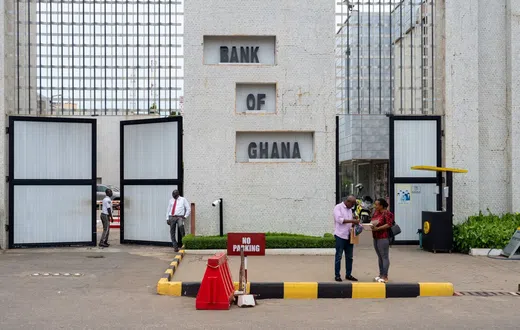
The Bank of Ghana has suspended nine major financial institutions including Flutterwave and United Bank for Africa, Ghana. The coordinated crackdown targets persistent violations in Ghana’s $11.5 billion remittance sector.
Companies Face Immediate Suspension
The Central Bank’s enforcement action strikes at the heart of Ghana’s digital payments ecosystem. Flutterwave, Cellulant Ghana, TapTap Send, Afriex, and four other companies must halt remittance operations for one month starting September 18, 2025.
Flutterwave, Africa’s most valuable fintech unicorn, and Cellulant Ghana face charges for violating paragraphs 5 and 7.1-7.3 of Ghana’s Updated Guidelines for Inward Remittance Services by Payment Service Providers.
TapTap Send receives harsher treatment. The company already faced sanctions in November 2024 for running unauthorized Cedi Remittance Wallets. This repeat offense signals deeper compliance issues within the fast-growing remittance sector.
Halges Financial Technologies gets the harshest penalty. The Bank imposed an indefinite suspension, barring the company from remittance services until it secures fresh approval.
UBA Ghana Loses Foreign Exchange Trading Rights
United Bank for Africa Ghana suffered collateral damage in the Bank’s enforcement sweep. The commercial bank loses its foreign exchange trading license for one month after serving as settlement bank for the suspended companies’ unauthorized transactions.
The suspension affects UBA Ghana’s ability to conduct forex trades during a critical period when Ghana’s currency stability remains under scrutiny.
Ghana’s $11.5 Billion Remittance Stakes
Ghana expects to receive $11.5 billion in remittances during 2024, making diaspora transfers the second-largest source of foreign currency after gold exports.
These money flows account for 27-32% of Ghana’s total foreign earnings. Every dollar matters when remittances represent nearly one-third of all foreign currency entering the country.
The suspended companies handled significant portions of digital remittance traffic. Their temporary absence creates immediate challenges for Ghanaians abroad trying to send money home and families depending on these transfers for basic needs.
Regulatory Violations Target Unauthorized Forex Swaps
The Bank of Ghana identified specific violations driving the enforcement action. Companies engaged in foreign exchange swaps within remittance business operations without proper authorization. Others terminated remittances through unapproved channels and applied unauthorized exchange rates.
These infractions threaten Ghana’s foreign exchange market stability. When remittance companies bypass official channels, they undermine the Central Bank’s ability to track and manage foreign currency flows.
The violations also included companies processing remittances for institutions without Bank of Ghana approval. This unauthorized intermediation creates regulatory blind spots in a sector handling billions of dollars annually.
Weekly Reporting Requirements Tighten Oversight
The Bank of Ghana implements immediate changes to prevent future violations. All banks, Dedicated Electronic Money Issuers, and Enhanced Payment Service Providers must submit weekly transaction reports by Money Transfer Operator.
These reports must include daily individual remittance transaction logs and corresponding foreign exchange credits into Nostro accounts. The new requirement creates unprecedented visibility into remittance flows.
Companies failing to submit accurate, timely reports face administrative sanctions under Section 42 of the Payment Systems and Services Act and Section 93(3)(d) of Act 930. The Bank signals zero tolerance for incomplete compliance.
Fintech Sector Faces Compliance Reality Check
The suspensions expose growing pains in Ghana’s rapidly expanding fintech sector. Companies pursuing aggressive growth often struggle with complex regulatory requirements across multiple jurisdictions.
Flutterwave’s suspension particularly stings given its $3 billion valuation and expansion across 34 countries. The company’s Ghana operations generate significant transaction volumes, making the suspension costly for both the firm and users.
Cellulant Ghana’s inclusion highlights compliance challenges for established payment processors. The company operates across multiple African markets but stumbled on Ghana’s specific remittance regulations.
Impact on Ghana’s Digital Payment Ecosystem
The one-month suspensions create immediate disruption in Ghana’s digital payment systems. Users of suspended platforms must find alternative channels for receiving money from abroad.
Traditional money transfer operators like Western Union and MoneyGram may experience increased traffic during the suspension period. Local mobile money services could also see higher volumes as users seek replacement channels.
The suspensions test Ghana’s digital payment infrastructure resilience. If alternative channels cannot handle increased traffic smoothly, some remittance flows may shift to informal channels, reducing official foreign exchange receipts.
Bank of Ghana Demonstrates Regulatory Resolve
The coordinated enforcement action showcases the Bank of Ghana’s commitment to regulatory compliance. Governor Dr. Ernest Addison’s administration takes a firm stance against violations regardless of company size or market prominence.
The suspensions follow months of warnings about compliance failures in the remittance sector. The Bank’s earlier directive in July 2025 put companies on notice about persistent violations of foreign exchange regulations.
Recovery Path for Suspended Companies
Suspended companies face clear requirements for returning to operations. They must demonstrate full compliance with all regulatory guidelines and obtain fresh approvals from the Bank of Ghana before resuming remittance services.
The one-month suspension period provides time for comprehensive compliance reviews. Companies must audit their operations, implement proper controls, and train staff on regulatory requirements.
Halges Financial Technologies faces the longest path back to operations. Its indefinite suspension requires building compliance systems from the ground up before seeking new authorization.
Lessons for Ghana’s Fintech Future
Companies can no longer prioritize growth over compliance in such a regulated industry.
Successful fintech operations require robust legal and compliance teams familiar with local regulations. International companies entering Ghana must invest heavily in understanding and implementing local requirements.
The Bank of Ghana’s enforcement clearly shows that regulatory compliance is not optional regardless of company size, valuation, or market popularity. This reality check may slow fintech expansion but should result in more sustainable, compliant operations.
Ghana’s $11.5 billion remittance market remains attractive despite increased regulatory scrutiny. Companies willing to invest in proper compliance infrastructure can still capture significant opportunities in this growing sector.