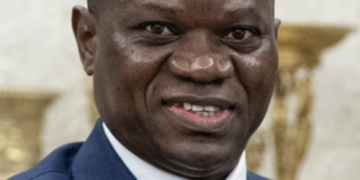

Tage Kene Okafor has moved from reporting on Africa’s venture market to shaping the story of one of its most politically sensitive companies. After five years at TechCrunch covering African startups, investors, and major transactions, Tage has joined Terra Industries as Director of Communications, following the company’s emergence with an $11.75 million raise led by 8VC, the US venture firm founded by Palantir co-founder Joe Lonsdale.


This is a deliberate shift in how Terra wants to be perceived. In defence and security adjacent markets, communications is not support. It is an operating strategy because legitimacy, regulation, and procurement credibility decide whether a company scales or gets boxed in.
Why is Joe Lonsdale in the headline?
Joe Lonsdale is in that headline because he is the global shorthand that makes an African story travel. As a Palantir co-founder and the founder of 8VC, he signals defence adjacent technology and government scale outcomes to international editors who do not have time to learn the market from scratch. It becomes an easy sell because it compresses the narrative into one clean line: a known US defence tech figure is backing a Nigerian-rooted defence company. That is also the global PR lesson sitting inside this story. If you want international coverage, you lead with a recognisable anchor, translate the local company in one sentence, then raise the stakes. Here, the anchor is Lonsdale, the translation is that Terra is building autonomous systems for security and critical infrastructure, and the stakes are sovereignty, control, and legitimacy. Once attention is secured, nuance can follow.
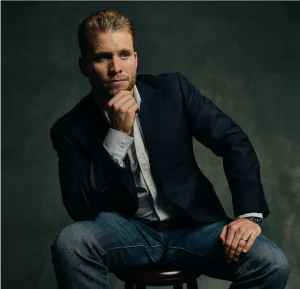
Africa tech will miss Tage at TechCrunch
Tage mattered because he was embedded enough to understand the market, yet disciplined enough to filter it. He was also accessible in a way most people at that level are not. If you were good friends in comms, you could get his WhatsApp and pitch him directly. He would start replying, then sometimes ghost you, and that was just the rhythm. But for people who had his ear and could pitch well, Tage was reachable to the ecosystem.
That reachability matters because Africa does not only need coverage. It needs continuity. Someone who knows the backstory behind a deal, the real operators behind a company, and the difference between noise, narrative, and genuine traction. When that person exits, the gap is not emotional. It is structural.
Who will be the next Tage at TechCrunch?
TechCrunch’s Africa coverage has always been disproportionately shaped by individual reporters who were willing to stay close enough to the ecosystem to understand it properly. Before Tage, there was Jake Bright, widely seen as sharp, fair, and genuinely interested in the continent, even if the optics of Africa’s biggest global tech microphone being mediated through non-African writers were always there. Tage’s tenure shifted that texture because he felt closer to the ground and more consistently present in the flow of African venture, which is why the real question now is not whether TechCrunch will still cover Africa, but whether it will still treat Africa as a beat with continuity, rather than a region it visits only when the numbers are too big to ignore.
On the Terra Industries funding story specifically, TechCrunch’s byline was Dominic-Madori Davis, a senior startup and venture reporter based in New York. A quick look at her public background shows a classic US media track, education in France, internships in New York, work at Business Insider, then TechCrunch. She does not appear to have built a visible body of Africa reporting before this Terra piece, and that shows up in the framing choices. The “Gen Zers” angle travels fast in US startup media, but it can land as a tone mismatch for a defence company in Nigeria, where the category is judged on capability, governance, restraint, and who ultimately holds control, not the founders’ age bracket. Still, one story does not define a reporter. A first outing on a continent does not automatically mean shallow coverage. If Africa coverage is rotating across TechCrunch’s wider venture team for now, these tonal mismatches are exactly how it happens. The fair posture is simple: clock the framing, note the gap, then give her the benefit of the doubt and watch what comes next.
READ ALSO: African defence startup Terra Industries raises $11.8m to build security tech in Nigeria
The real takeaway
Goodbye, Tage. Africa’s tech ecosystem will miss the consistency, the context, and the rare ability to translate the continent to a global newsroom without flattening it. Now the work changes. At Terra Industries, your job is no longer to report the story, but to hold the line between legitimacy and suspicion in one of the hardest categories a Nigerian company can operate in.
And that is exactly where the next conversation begins: can and should the Nigerian government kill or support Terra Industries now.