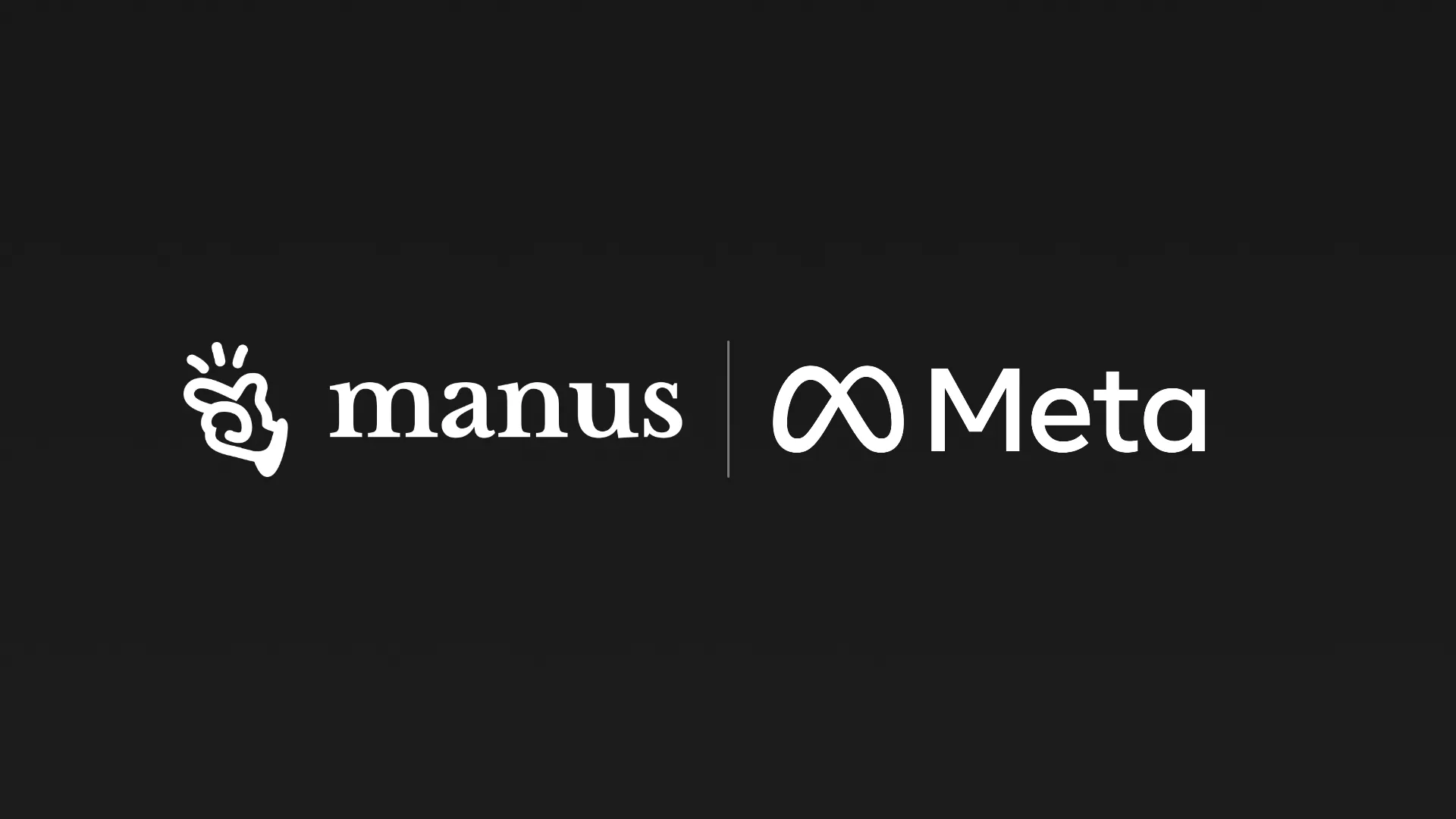
Meta acquires Manus, the Singapore-based AI startup that built one of the world’s first fully autonomous AI agents. The deal, valued between $2 billion and $3 billion, brings millions of paying users and advanced task automation technology into Meta’s ecosystem. This acquisition positions Meta to compete more aggressively in the autonomous AI market while expanding AI capabilities across WhatsApp, Instagram, and Meta AI platforms.

The company closed the deal in just 10 days, showing how urgently Meta wants to integrate autonomous AI agents into its business operations. Manus will continue operating as a standalone subscription service while Meta works to embed the technology across its product lineup.
Instead of building autonomous agents from scratch, Meta chose to buy proven technology that already serves millions of users worldwide.
Manus launched its General AI Agent in March 2025 and quickly gained attention for its ability to execute complex tasks without constant human supervision. The platform has processed more than 147 trillion tokens and created over 80 million virtual computers since launch. These numbers demonstrate real-world usage at scale, something Meta found attractive.
The acquisition brings Meta access to technology that can independently handle market research, coding, data analysis, and automation workflows. Unlike traditional AI chatbots that need detailed prompts for every action, Manus operates with minimal input and can make decisions autonomously.
How Manus AI Agent Technology Works
Manus built its reputation on autonomous task execution. The AI agent can tackle multi-step projects that typically require several hours of human work. Users give Manus a high-level goal, and the system breaks it down into actionable steps, executes them, and delivers results.
The technology operates asynchronously in the cloud, meaning users can assign tasks and return later to find completed work. This approach differs from conversational AI tools that require back-and-forth interaction. Manus functions more like a virtual assistant that works independently in the background.
The platform handles various task types, including report writing, spreadsheet creation, content localisation, data cleaning, and professional document crafting. It processes text, images, and code, making it versatile across different business applications.
Meta Acquires Manus to Compete in Autonomous AI Market
Meta faces intense competition from companies like OpenAI, Google, and Anthropic in the AI space. Each company races to build more capable AI systems that can handle real-world tasks with less human oversight.
The Manus acquisition gives Meta an immediate edge in autonomous agents. While competitors focus on improving language models and chatbots, Meta now has technology designed specifically for end-to-end task execution. This positions Meta to offer businesses AI tools that directly replace human labour for specific workflows.
CEO Mark Zuckerberg has publicly stated his vision for “agentic-rich” personal AI systems. The Manus technology aligns perfectly with this strategy. Meta plans to integrate autonomous agents into WhatsApp’s small business features, Instagram’s creator tools, and Meta AI’s consumer offerings.
How Meta Plans to Integrate Manus Across Its Platforms
Meta announced it will maintain Manus as a standalone subscription service while integrating the technology into existing products. This dual approach lets Meta monetise Manus’s current user base while building autonomous features into WhatsApp, Instagram, and Facebook.
For WhatsApp business accounts, Manus technology could automate customer service responses, handle appointment scheduling, and manage inventory inquiries. Small businesses often lack resources for dedicated staff, making AI automation particularly valuable for this segment.
Meta AI, the company’s consumer-facing chatbot, will incorporate Manus’s autonomous capabilities. This means users could request complex research projects or data analysis and receive completed work rather than just conversational guidance. The integration transforms Meta AI from an information tool into an execution engine.
What Business Users Gain from the Meta Acquires Manus Deal
The acquisition brings immediate benefits to businesses using Meta’s platforms. Autonomous AI agents can handle repetitive tasks that currently require human time, freeing staff to focus on strategic work.
Barton Crockett, analyst at Rosenblatt Securities, sees “a natural fit into Meta’s fast-growing, WhatsApp SMB footprint.” Small and medium businesses using WhatsApp for customer communication could deploy AI agents to handle routine queries, process orders, and manage customer relationships automatically.
Current Manus users should see no disruption to service. The company confirmed it will continue selling subscriptions through its app and website while operating from Singapore. Meta’s resources should accelerate product improvements and add new capabilities faster than Manus could achieve independently.
What Happens Next for Meta and Manus Users
Meta plans to scale Manus’s service to many more businesses across its platforms. The company serves billions of users globally, giving Manus technology unprecedented distribution potential. What started as a startup serving millions could reach hundreds of millions of users within Meta’s ecosystem.
Meta must adapt Manus technology to work within WhatsApp’s architecture, Instagram’s interface, and Facebook’s business tools. The company will likely roll out features gradually, testing with small user groups before wider releases.
Current Manus subscribers should watch for product announcements about new features and capabilities. Meta’s substantial resources could fund research and development that dramatically expands what the AI agent can do. The acquisition removes financial constraints that limited Manus as an independent startup.