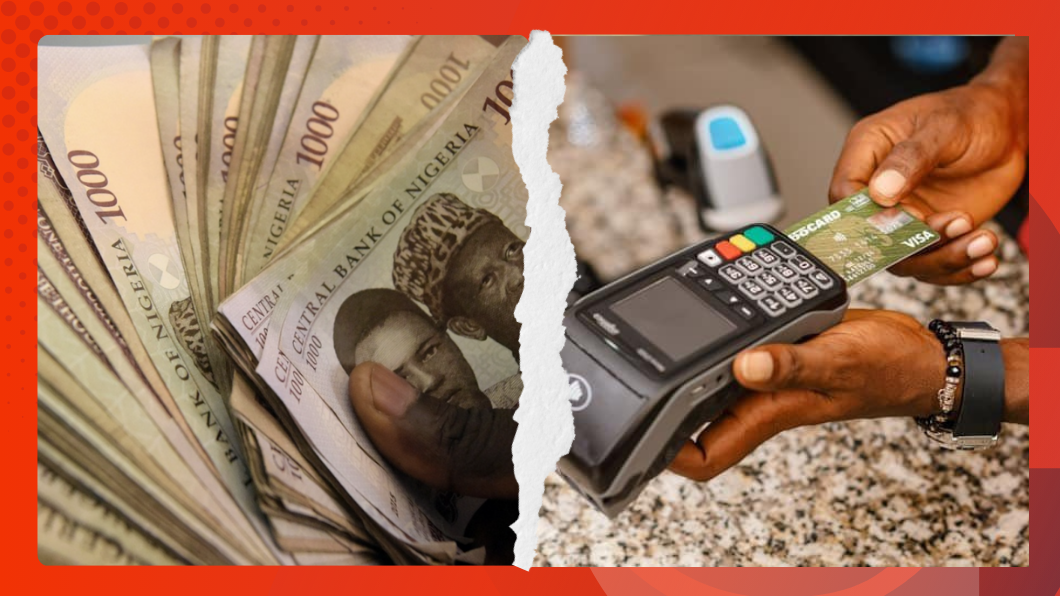
Nigeria’s federal government just pulled the plug on cash payments across all ministries, departments and agencies. Officials now have 45 days to install electronic payment systems or lose access to government financial platforms entirely.

The Accountant-General of the Federation, Shamseldeen Ogunjimi, signed four treasury circulars in late November that end decades of cash-based revenue collection. Starting January 2026, every naira paid to the government must flow through approved digital channels.
“Collections and acceptance of physical cash for all revenues due to the Federal Government is strictly prohibited,” states the directive dated November 24, 2025.
Federal Agencies Must Deploy POS Terminals Within 45 Days
Government entities collecting cash payments have until mid-January to deploy Point-of-Sale terminals and other electronic payment devices. The deadline applies to passport offices, vehicle inspection units, court registries, and hundreds of other revenue collection points nationwide.
Agencies that fail to comply face immediate disconnection from the Government Integrated Financial Management Information System (GIFMIS) and Treasury Single Account (TSA) – effectively cutting them off from government finances.
The directive requires all federal offices to display “NO PHYSICAL CASH RECEIPT” and “NO CASH PAYMENT” notices at service counters. Staff must inform citizens that only electronic payments are accepted.
Government Targets Revenue Leakages Through Unauthorized Deductions
The new policy addresses a major problem: agencies using payment platforms that deduct fees before sending money to government accounts. These unauthorized deductions have caused “significant revenue leakages” that undermine fiscal transparency, according to the treasury circular.
Under the old system, some agencies partnered with payment service providers who collected charges, commissions and fees upfront. Only the remaining amount reached the Treasury Single Account. This practice violated existing regulations and made it difficult to track actual government revenue.
The new rules demand gross revenue collection without any deductions. All fees must be paid separately from designated treasury accounts rather than subtracted at the point of collection.
Digital Receipt System Launches January 2026
Starting New Year’s Day, Nigeria will issue only electronic receipts for federal payments through the Federal Treasury e-Receipt (FTe-R) system. Paper receipts and manual documentation become obsolete.
The centralized e-receipt system operates through the Revenue Optimization (RevOP) platform, which integrates with the Central Bank of Nigeria, commercial banks, and the Federal Inland Revenue Service. Citizens receive digital receipts via SMS, email or mobile apps selected by each agency.
This unified receipt system aims to eliminate fake receipts and provide real-time tracking of all government revenue streams.
Revenue Optimization Platform Connects All Government Financial Systems
The RevOP platform serves as Nigeria’s new digital backbone for revenue collection. It connects the Treasury Single Account, banking systems, and tax authorities in one integrated network.
Government agencies must nominate three officers within seven working days to manage their RevOP integration. Existing payment systems need a connection to the platform for “instant harmonization” of government collections.
Only payment service providers licensed by the Central Bank and approved by the Treasury can operate within this system. Current providers have until December 31, 2025, to register and integrate with RevOP.
Citizens Must Prepare for Cashless Government Services
Nigerians accessing federal services need bank cards, mobile wallets, or other electronic payment methods. Cash will no longer be accepted at immigration offices, federal courts, tax offices, or any other government facility.
The policy covers payments in naira and foreign currencies. Citizens travelling abroad for passport services or businesses dealing with customs must use digital payment channels.
Government agencies are required to educate staff and the public about the new cashless system. However, concerns remain about digital payment infrastructure in rural areas where internet connectivity and banking services may be limited.
The accounting officers heading each government agency bear personal responsibility for ensuring compliance with the new electronic payment rules.