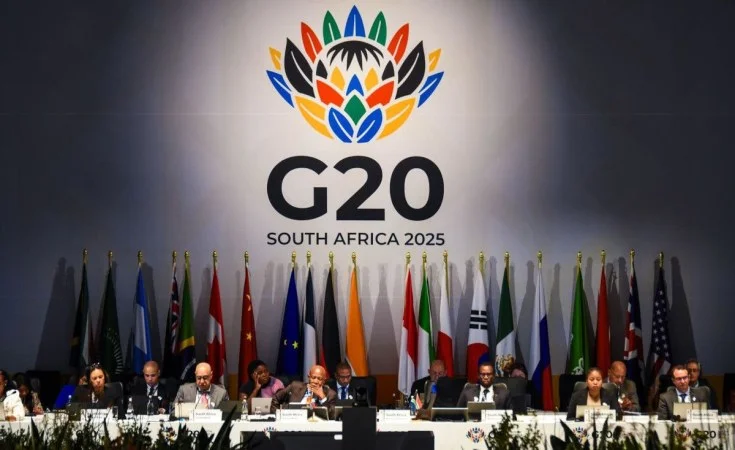
Africa played a significant role in shaping the technology agenda at the recently concluded G20 summit in Johannesburg. The conversations around digital inclusion, AI infrastructure, fintech, and clean-tech supply chains all pointed to one theme: the world now sees Africa as a central player in the next wave of digital growth.

A New Urgency Around Digital Inclusion
One of the strongest signals from the summit was the shift from talking about digital gaps to building real digital access across the continent. Leaders framed broadband infrastructure, reliable connectivity, and digital public platforms as the foundation for Africa’s development.
The message was clear: if Africa is to compete in a tech-driven global economy, digital access must move from ambition to execution.
The Push to Power Africa’s AI Moment
Artificial intelligence took centre stage, but unlike previous global forums, this summit focused on what AI means for developing regions.
Africa was positioned as a region that should not only consume AI tools but also build them. New commitments were discussed as part of an emerging “AI for Africa” framework.
For many African delegates, this was a turning point: global AI policy finally acknowledged the continent’s potential, not just its limitations.
Reimagining Fintech for Inclusion
The summit also leaned heavily into fintech innovation. Discussions highlighted how digital identity, secure data sharing, and modern payment rails can unlock financial inclusion at scale.
Africa’s fintech industry was used as a case study for how mobile-first economies can leapfrog traditional financial systems.
The G20 TechSprint reinforced this by exploring solutions for fraud prevention, privacy-first digital identity, and next-generation financial services.
Clean-Tech Supply Chains and Africa’s Strategic Minerals
Another key area was clean-tech infrastructure and the critical minerals that power it.
With Africa home to some of the world’s most valuable mineral reserves, leaders discussed how the continent could play a far bigger role in global battery production, renewable energy systems, and electric mobility supply chains.
The summit’s minerals framework placed strong emphasis on sustainable extraction, transparent governance, and long-term local value, opening the door to new industrial opportunities for African economies.
A Broader Vision Emerges
Throughout the summit, a single narrative became harder to ignore: Africa is no longer viewed as a peripheral participant in global tech policy. It is becoming a strategic partner, a growing market, and a testing ground for scalable innovation.
Across AI, digital finance, infrastructure, and clean-tech, the conversations pointed to a continent ready to influence the next decade of technological progress.